

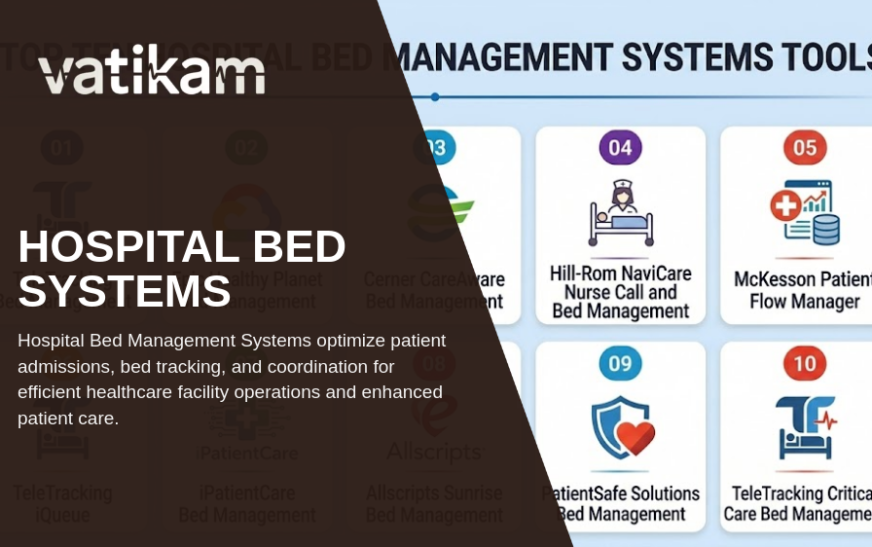
Top 10 Hospital Bed Management Systems in 2026: Features, Benefits & Comparison
Hospital Bed Management Systems are vital software solutions designed to efficiently manage patient admissions, monitor bed availability, and coordinate hospital resources. With rising healthcare demands in 2026, these systems harness real-time data and predictive analytics to ensure optimal patient flow, reduce waiting times, and maximize the utilization of hospital beds.
Why Hospital Bed Management Systems Matter
Managing hospital beds effectively is crucial for ensuring smooth patient care and operational efficiency. These systems address key challenges by:
- Optimizing emergency department bed assignment based on priority and availability.
- Monitoring ICU and critical care bed occupancy to allocate resources efficiently.
- Facilitating seamless patient transfers and discharge coordination.
- Aligning surgical scheduling with bed availability.
- Providing detailed reporting and analytics for hospital management.
Key Features to Look For
When selecting a hospital bed management system, key features to consider include:
- Real-time bed availability and occupancy tracking.
- Integration with Electronic Health Records (EHR) and Hospital Information Systems (HIS).
- Automated alerts and notifications for clinical and support staff.
- Advanced analytics and comprehensive reporting capabilities.
- Scalability to support multiple wards or hospital sites.
- User-friendly interfaces with intuitive dashboards.
- Accessibility through mobile and web platforms.
- Strong security measures with compliance to regulations like HIPAA and GDPR.
- Workflow automation with AI-driven recommendations.
- Reliable vendor support and training resources.
Emerging Trends in Hospital Bed Management
- AI-powered predictive analytics to anticipate bed occupancy and patient flow.
- Mobile-first dashboards enabling staff to receive instant updates.
- Cloud-native platforms facilitating multi-site deployments.
- Integration with telemedicine and Internet of Things (IoT) devices for enhanced monitoring.
- Automated alerts for cleaning, maintenance, and discharge readiness.
- Data-driven reporting supporting hospital accreditation and compliance.
- Improved patient experience via online bed status displays and pre-admission planning.
- Dynamic resource allocation for high-demand areas like ICUs.
- Subscription-based pricing models and API-first architectures enhancing extensibility.
Top 10 Hospital Bed Management Systems in 2026
1. TeleTracking Bed Management
A cloud-based solution for large hospitals offering real-time bed visibility and patient flow optimization.
- Pros: Highly scalable, detailed operational insights.
- Cons: Complex for small facilities, premium pricing.
2. Epic Healthy Planet Bed Management
Integrated within the Epic EHR suite, ideal for hospitals using Epic systems.
- Pros: Tight EHR integration, streamlined admissions.
- Cons: Limited to Epic ecosystem, requires certified training.
3. Cerner CareAware Bed Management
Provides real-time bed tracking integrated with Cerner EHR hospitals.
- Pros: Strong Cerner integration, real-time analytics.
- Cons: Restricted to Cerner, may need IT support.
4. Hill-Rom NaviCare Nurse Call and Bed Management
Combines bed management with nurse call systems to optimize workflow for mid-sized hospitals.
- Pros: Integrated patient flow and staff communication.
- Cons: Hardware dependencies, setup complexity.
5. McKesson Patient Flow Manager
Optimizes admissions and bed assignment across hospital networks with predictive analytics.
- Pros: Robust analytics, multi-site support.
- Cons: Requires experienced IT team, premium cost.
6. TeleTracking iQueue
Focuses on bed and operating room optimization for high-volume hospitals.
- Pros: Comprehensive queue and bed management.
- Cons: Complex implementation, costly.
7. iPatientCare Bed Management
Affordable cloud-based tool for mid-sized hospitals providing real-time bed tracking.
- Pros: Easy onboarding, cost-effective.
- Cons: Lacks advanced predictive analytics.
8. Allscripts Sunrise Bed Management
Part of Allscripts EHR, automates bed allocation and patient flow management.
- Pros: Workflow automation, EHR integration.
- Cons: Limited to Allscripts, enterprise-level complexity.
9. PatientSafe Solutions Bed Management
Cloud-based with emphasis on staff collaboration and ease of use.
- Pros: Mobile-friendly, affordable.
- Cons: Limited integrations, fewer predictive features.
10. TeleTracking Critical Care Bed Management
Specialized for ICU and critical care units, offering detailed analytics and real-time monitoring.
- Pros: ICU-focused features, real-time alerts.
- Cons: Higher cost, less suitable for general wards.
Choosing the Right System for Your Needs
Small Clinics: Consider iPatientCare or PatientSafe Solutions for simple, mobile-friendly bed tracking.
Mid-sized Hospitals: Solutions like Hill-Rom NaviCare and iPatientCare offer combined bed and staff workflow management.
Large Multi-Ward Hospitals: Platforms such as McKesson Patient Flow Manager and TeleTracking Bed Management provide predictive analytics and comprehensive dashboards.
Enterprise Networks: Enterprise-grade suites like Epic Healthy Planet, Cerner CareAware, and Allscripts Sunrise ensure deep EHR integration and scalability.
Frequently Asked Questions
- What pricing models are common? Subscription-based, per-bed licensing, or enterprise agreements.
- How long does implementation take? Weeks for small sites; several months for large hospitals.
- Do these systems integrate with EHRs? Yes, leading solutions work seamlessly with major EHR platforms.
- Can AI improve patient flow? Absolutely, predictive analytics can optimize bed assignments and discharge planning.
- Are mobile dashboards available? Most systems support mobile apps for real-time staff alerts.
- Is staff training required? Enterprise tools often require formal training, while simpler solutions need minimal onboarding.
- Are multi-hospital deployments supported? Yes, several solutions accommodate multi-facility coordination.
- Are these platforms secure? Leading vendors comply with HIPAA, SOC 2, and encryption standards.
- Can I switch systems easily? Migration requires careful workflow and data planning to ensure smooth transitions.
- Do IoT features exist? Some platforms integrate devices for real-time monitoring and alerts.
Conclusion
Efficient hospital bed management is crucial to enhancing patient care and operational effectiveness. The optimal system depends on your facility size, integration requirements, analytics needs, and budget considerations. Smaller clinics may opt for affordable, mobile-friendly tools, while large hospital networks often benefit from comprehensive, predictive, and fully integrated solutions. To ensure success, shortlist a few options, pilot test their workflows, and evaluate security and usability metrics before full deployment.