

How AI is Transforming Cancer Understanding but Challenges Doctor-Patient Trust
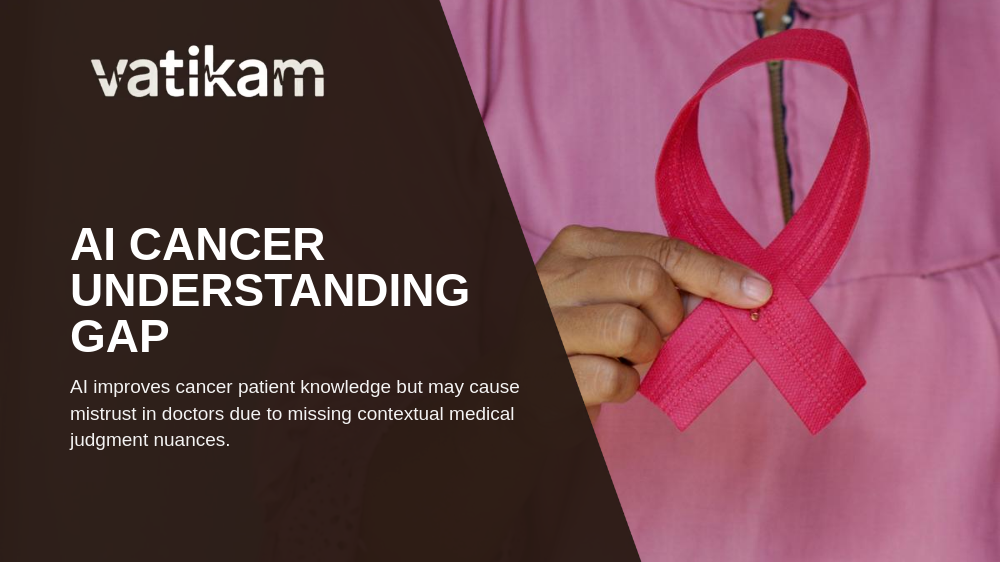
Artificial Intelligence (AI), especially large language models (LLMs) like ChatGPT and Claude, is revolutionizing how patients understand cancer. These technologies provide accessible explanations of complex medical terms and treatment options, breaking down barriers to cancer knowledge, notably in countries like India where specialist access is limited. However, this new era of information comes with significant challenges impacting trust and treatment decisions between doctors and patients.
The Promise: Democratising Cancer Knowledge
As an oncologist, I have witnessed how AI can make cancer comprehensible to patients in ways previously unachievable. When a patient receives a cancer diagnosis, they often encounter confusing medical jargon such as PDL1 status or neoadjuvant therapy. Traditionally, explaining these concepts was difficult, often leaving patients overwhelmed and turning to the internet, where misinformation or worst-case scenarios abound.
Now, patients frequently arrive informed, having used AI to clarify their pathology reports, ask about clinical trials, or understand prognosis. For example, patients better grasp the significance of immunotherapy trials or advanced treatment options by querying AI, facilitating informed and intelligent discussions during consultations. This shift empowers patients to actively participate in their care and decision-making.
LLMs even simplify complex clinical guidelines, staging systems, and treatment protocols into accessible language that does not require medical training. For patients in remote areas, this democratization can mean the difference between facing cancer with knowledge or ignorance.
The Challenges: Information Without Judgment
Despite these benefits, there is a critical drawback: AI provides information but lacks the ability to offer nuanced medical judgment. Cancer treatment decisions depend not just on statistics but on individual patient values, specific tumor biology, and tolerance for side effects.
For example, a patient with stage II oral cancer might receive AI explanations about treatment risks and benefits but not personalized recurrence risks tied to their tumor characteristics. Such decisions require in-depth clinical judgment, understanding of patient preferences, and experience, which AI cannot replicate.
The Trust Gap Between Patients and Doctors
AI’s simplistic presentation of information sometimes leads patients to question or distrust their doctor’s recommendations. For instance, AI might list chemotherapy’s side effects and mention alternative treatments without elaborating on why chemotherapy remains the best option in a particular case. This can create skepticism, with some patients perceiving doctors as biased or profit-driven while trusting AI as impartial.
Worryingly, some patients delay or avoid necessary medical treatment because AI seemed to validate a “wait and see” approach, particularly dangerous in oncology where timely intervention is crucial. Studies have shown that people using AI for health-related decisions may experience worsening outcomes or hesitancy towards professional care.
Real-World Consequences: Cases of Misguided Decisions
- A patient reassured by AI that lung nodules are generally benign skipped follow-up, resulting in a late-stage lung cancer diagnosis months later.
- A breast cancer patient stopped hormone therapy early based on AI suggestions about “natural approaches,” leading to cancer relapse.
These cases highlight the risks of unregulated AI use in medical contexts, where generalized information may not suit individual needs.
AI Cannot Replace Doctor’s Judgment
While AI is valuable for spreading cancer knowledge and supporting patient education, it cannot replace the judgment developed through years of clinical experience. This judgment involves interpreting complex diagnostics, understanding patient individuality, monitoring outcomes over time, and making calls under uncertainty—things AI is currently incapable of doing.
The risk lies in patients becoming increasingly informed but misinformed, trusting algorithms that lack accountability and failing to appreciate the doctor’s nuanced role. There’s an urgent need for strategies to reconcile AI’s strengths with the irreplaceable value of medical expertise.
Moving Forward: Balancing AI and Medical Expertise
To harness AI’s benefits in oncology responsibly, stakeholders must:
- Educate patients on the limitations of AI and the importance of personalized medical judgment.
- Encourage open dialogues where doctors address AI-derived doubts empathetically.
- Implement research to monitor how AI influences treatment decisions and patient outcomes.
- Develop AI tools that assist but do not supplant the doctor’s role, emphasizing accountability and individualized care.
Ultimately, AI should empower patients without undermining trust in the doctor-patient relationship, fostering informed choices grounded in expert judgment.
About the Author: Narayana Subramaniam is Lead Consultant, Head and Neck Surgery and Oncology at Aster Hospitals and Adjunct Faculty at the Indian Institute of Science, Bengaluru.