
The Role of AI in Cancer Understanding and the Challenges with Doctor-Patient Trust
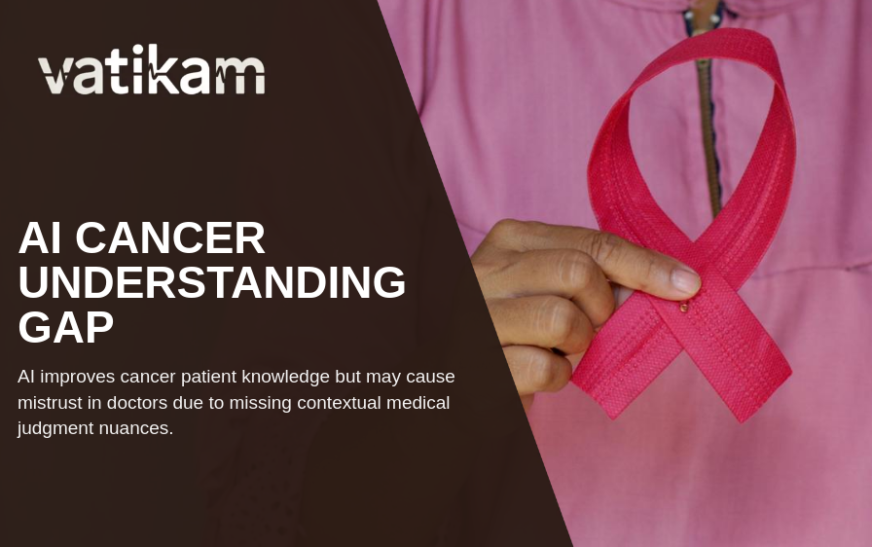
Artificial Intelligence (AI), particularly through large language models (LLMs), is transforming how patients comprehend complex medical conditions such as cancer. While these tools democratize knowledge and enhance patient education, they also present challenges that affect the necessary trust between doctors and patients and the subtleties involved in individual judgment.
How AI is Changing Cancer Communication
Traditionally, oncologists have struggled to effectively communicate cancer-related concepts to patients due to the complexity of medical terminology. Patients often left appointments confused, resorting to online searches that could lead to misinformation or alarming worst-case scenarios.
Today, patients come to consultations better prepared, having used AI tools like ChatGPT to understand pathology reports, treatment options, and clinical trials. This shift allows clinicians and patients to engage in more intelligent, meaningful conversations about diagnosis and therapy.
Enhancing Access to Clinical Trials
One of the most promising aspects of AI-assisted understanding is patient access to clinical trial information. Patients now grasp the purpose of specific trials, the expected benefits, potential side effects, and trial protocols, enabling truly informed consent. This not only empowers patients but helps integrate them better into their care decisions.
In regions with limited specialist access such as tier-2 cities in India, AI tools offer life-changing possibilities by breaking down access barriers to essential cancer knowledge and enabling early preparation before specialist visits.
The Limitations of AI: Information Versus Judgment
While AI provides valuable medical information, it lacks the capacity to apply nuanced clinical judgment tailored to each individual’s unique case. For example, AI might explain that a certain cancer stage generally has intermediate risk, but it cannot weigh specific tumor biology, patient values, or tolerance for treatment-related side effects.
Research shows AI diagnostic accuracy decreases in complex cases requiring contextual reasoning, where experienced physicians excel. This gap between raw information and clinical decision-making is a critical limitation of current AI tools.
The Growing Trust Gap Between Patients and Doctors
AI-generated advice, though accurate on a general level, often omits the subtleties of medical judgment, leading to patient skepticism towards doctors. Patients might find AI explanations that highlight side effects or alternative treatments more straightforward and assume these negate their doctor’s recommendations.
This misalignment can cause delays in necessary treatment, as some patients postpone evaluations or treatments relying solely on AI information. Such delays in oncology care can be catastrophic, impacting survival and outcomes.
Real-World Risks
- Patients ignoring follow-up on lung nodules due to AI reassurance, leading to late-stage cancer diagnosis.
- Breast cancer patients stopping hormone therapy prematurely after querying AI models that downplay the necessity of medication.
- Mental health patients reporting worsened outcomes after using AI chatbots that validate harmful behaviors without professional guidance.
These examples highlight significant risks associated with uncontrolled reliance on AI-generated health information.
The Fundamental Value of Medical Judgment
Doctors’ judgment is rooted in years of clinical experience, understanding outcomes, patient values, and managing uncertainty—a depth AI has yet to replicate. This human element is essential, especially in lifelong diseases like cancer.
Although AI can enhance patient education and access to information, it cannot replace personalized decision-making that considers a person’s biology, preferences, and long-term prognosis.
Moving Forward: Balancing AI Benefits and Risks
AI tools have tremendous potential to democratize cancer knowledge and improve patient literacy globally. However, it is imperative to acknowledge they are not neutral sources—they are designed to be agreeable and engaging, not challenging or accountable.
Healthcare systems need to develop strategies to integrate AI safely into patient care by:
- Educating patients about the limitations of AI-based health advice.
- Encouraging open communication between doctors and patients to rebuild trust.
- Implementing outcome tracking to understand how AI influences treatment decisions and health results.
- Ensuring AI supports, rather than replaces, expert clinical judgment.
Only by addressing these challenges can we fully harness AI’s power in cancer care while safeguarding patient well-being and doctor-patient relationships.
Conclusion
AI plays an exciting role in making cancer comprehensible for patients, improving education and access to clinical trials, especially where specialist care is limited. Yet, it falls short in delivering personalized medical judgment, risking misinformation and eroding trust between patients and doctors.
To benefit fully from AI’s capabilities, the medical community must focus on educating patients, reinforcing clinical judgment, and tracking outcomes to ensure treatments remain effective and personalized. The future of oncology depends on a careful balance of technology and human expertise.
Narayana Subramaniam, Lead Consultant in Oncology and Adjunct Faculty, Indian Institute of Science, Bengaluru, shares insights drawn from clinical experience and research into AI’s role in cancer care.