
AI-Designed Universal Vaccine: A Breakthrough to Prevent Future Pandemics
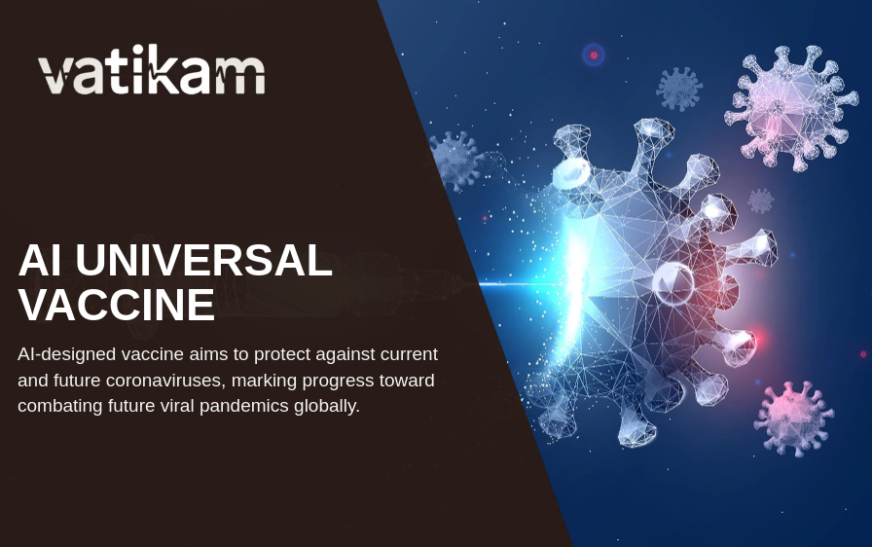
A revolutionary AI-designed vaccine has successfully passed its first human safety trial, paving the way for broader protection against current and future coronavirus threats. Developed through a collaboration between the University of Cambridge and DIOSynVax Ltd, this vaccine marks an important milestone in the fight against pandemics.
What Makes This Vaccine Different?
Traditional vaccines typically target specific virus strains, such as SARS-CoV-2, the virus behind COVID-19. However, viruses mutate rapidly, often requiring frequent updates to existing vaccines. This new vaccine, designed using artificial intelligence (AI) and computer modeling, takes a distinct approach by targeting an entire family of coronaviruses known as Sarbecoviruses. This family includes not only SARS-CoV-2 but also SARS and several bat coronaviruses that could potentially jump to humans in the future.
AI-Designed Super-Antigen: The Future of Vaccination
The vaccine utilizes a novel AI-designed “super-antigen,” a synthetic ingredient created through detailed computer simulations. This super-antigen is engineered to trigger immunity against multiple related viruses simultaneously, including those that have not yet emerged. By analyzing genetic features shared across the Sarbecovirus family, AI enabled researchers to design a vaccine component that is broad and future-proof.
This vaccine is the first of its kind to have an active component designed solely through AI and tested in humans, representing a significant leap in vaccine innovation.
Advantages of AI-Based Vaccine Design
- Broad protection: Targets multiple virus strains within a family, not just one.
- Future-proof: Effective against emerging and yet-to-be-identified viruses.
- Needle-free delivery: Administered as a DNA vaccine using a microfluidic jet, offering a painless alternative to traditional injections.
- Streamlined development: AI accelerates vaccine design by identifying common viral features quickly and accurately.
Successful Human Trial Results
The vaccine underwent a Phase 1 clinical trial involving 39 healthy volunteers aged 18 to 50 at the National Institute for Health and Care Research (NIHR) Clinical Research Facilities in Southampton and Cambridge. Sponsored by the University Hospital Southampton NHS Foundation Trust, the trial demonstrated that the vaccine was safe and produced no significant side effects.
Importantly, it elicited broad immune responses against SARS-CoV-2, SARS, and other related bat coronaviruses, highlighting its potential to provide wide-ranging protection against current and future pandemic threats.
Meeting the Challenge of Viral Evolution
One of the major challenges with current vaccines, such as seasonal flu shots or COVID-19 vaccines, is their limited scope and reduced effectiveness as viruses mutate. These vaccines need frequent updates to keep up with rapidly evolving virus strains.
By contrast, this AI-designed vaccine was developed by analyzing extensive genetic data from coronaviruses worldwide. Machine learning identified common genetic markers across virus strains, enabling the creation of a synthetic antigen to stimulate immunity that transcends individual variants.
Looking Ahead: Preparing for Future Pandemics
Before advancing to human trials, animal studies confirmed strong immune responses to multiple coronaviruses. The promising results have set the stage for a larger Phase 2 clinical trial aimed at evaluating effectiveness in a more diverse population and confirming long-term protection.
Researchers envision this innovative technology could also be adapted to create vaccines for other virus families, including influenza and Ebola, revolutionizing the global response to infectious disease outbreaks.
Expert Insights
Professor Jonathan Heeney, scientific lead from the University of Cambridge, says, “We’ve converted vaccine development from being reactive to being future-proof. Our vaccines will continue to provide protection against viruses even as they mutate into new strains. This could break the endless cycle of chasing after virus variants.”
Professor Saul Faust, chief investigator of the trial, adds, “This new class of universal vaccines could save millions of lives, avoid lockdowns, and preserve the economy by protecting against emerging viruses before outbreaks begin.”
Professor Marian Knight, Scientific Director for NIHR Infrastructure, calls it “a pivotal leap forward in our ability to deliver broad, lasting viral protection,” highlighting the collaborations that made the trial possible.
Continuing Need for Enhanced Vaccines
Despite COVID-19 no longer causing global disruption at previous levels, coronaviruses remain a significant public health concern. Many are present in animal reservoirs and could potentially cross into humans. Developing universal vaccines like this one remains critical to prevent future pandemics.
Conclusion
The AI-designed universal coronavirus vaccine represents a groundbreaking advancement in vaccine technology by offering broad, durable protection against a whole family of coronaviruses, including potential future threats. With its successful Phase 1 trial, this innovation could transform pandemic preparedness by shifting from reactive to preventive vaccine development. Continued clinical trials and research are essential to bring this promising vaccine to widespread use, potentially saving millions of lives worldwide.
Reference: “A phase I, needle free, dose escalation clinical trial of pEVAC-PS, a candidate pan-Sarbecovirus Vaccine,” Journal of Infection, May 2026.