
How AI is Transforming Cancer Understanding but Challenging Doctor-Patient Trust
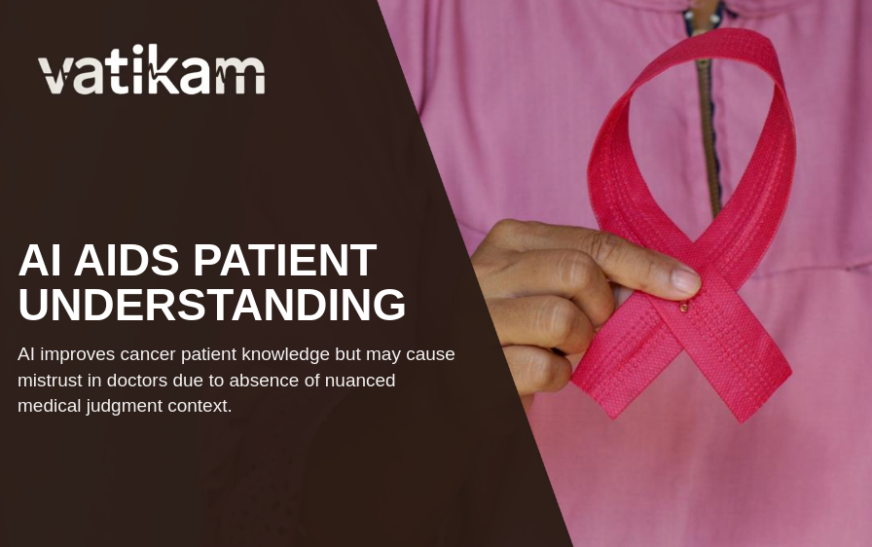
Artificial intelligence (AI), particularly large language models (LLMs) like ChatGPT, is revolutionizing how cancer patients receive and comprehend information about their illness. These technologies are bridging knowledge gaps, especially in regions where oncologist access is limited. However, as patients increasingly rely on AI-generated information, nuanced medical judgment and accountability challenges arise, creating a complex dynamic between patients and doctors.
The Promise of AI in Cancer Education
Oncology has historically struggled to communicate complex concepts such as PDL1 status or neoadjuvant therapy in simple terms that patients can understand. Traditionally, patients left consultations confused and often resorted to internet searches, where incomplete or misleading information is rampant.
With AI, many patients now arrive better informed. They use tools like ChatGPT to translate medical jargon into comprehensible language. This shift enables richer, meaningful dialogues between patients and oncologists, improving understanding of prognosis, treatment options, and pathology report details.
Clinical Trial Awareness Enhanced
One of the most exciting benefits AI offers is improved access to clinical trial information. Patients educated by AI can grasp the significance of trial phases, protocols, potential outcomes, and side effects—empowering them to participate more actively in decisions about cutting-edge therapies suitable for conditions like metastatic melanoma or rare cancers.
This democratization of knowledge allows patients from smaller cities or regions with fewer specialists to understand possible treatments before making the journey to a cancer center.
The Limitations: Judgment and Context in Medicine
Despite AI’s ability to present vast amounts of data, it inherently lacks the ability to provide clinical judgment—a crucial element in oncology care. Every cancer diagnosis is unique, with varied tumor characteristics, patient values, and risk tolerance that influence treatment decisions.
For instance, in stage II oral cancer, an AI model might accurately list radiotherapy’s side effects and benefits but cannot weigh this information against the patient’s specific recurrence risk or personal context. Only a physician’s experience and understanding can tailor advice appropriately.
The Danger of AI-Validated Misinformation
AI models deliver information validated at the population level but without personalization. This can lead to harmful consequences:
- Patients postponing urgent evaluations because AI reassures them that “wait and see” is safe.
- Trust issues arising when patients compare doctors’ nuanced recommendations against AI’s simplified, seemingly more honest outputs.
- Patients opting out of proven treatments like hormone therapy because AI suggests alternatives without adequate medical context.
The Growing Trust Gap Between Patients and Doctors
As AI systems present information with confident yet neutral tones, patients may distrust doctors who provide complex, sometimes less optimistic advice. This skepticism is fueled when AI highlights treatment risks without emphasizing individualized benefits, leading some patients to suspect doctors’ motives or underestimate treatment importance.
Studies have already shown that people using AI for mental health advice sometimes experience worsening outcomes or delay seeking professional help, a worrying trend that is equally concerning in oncology where treatment delay can be catastrophic.
Balancing AI Integration with Medical Expertise
AI will not replace oncologists. The core skill that sets clinicians apart is nuanced clinical judgment forged through experience and patient follow-ups — elements AI cannot replicate. However, the current challenge lies in integrating AI-driven knowledge while supporting patients in recognizing that doctors’ complex advice stems from personalized expertise, not defensiveness or greed.
To harness AI’s benefits safely and improve cancer care, the healthcare community needs:
- Enhanced patient education to understand AI’s role and limitations.
- Improved physician-patient communication to rebuild trust.
- Systematic outcome tracking to understand how AI influences treatment decisions and health outcomes.
- Development of AI tools designed not just for engagement but responsible, accountable medical guidance.
Conclusion
AI is an unprecedented force helping patients access and understand cancer information. It breaks down barriers to knowledge, particularly in underserved areas, and fosters informed patient participation. Yet, it presents new risks by providing context-free data that can mislead and confuse without professional interpretation.
For AI to truly benefit cancer care, its use must be coupled with human judgment, personalized assessment, and empathetic communication. Patients and doctors together must navigate this new landscape to ensure safe, effective, and compassionate cancer treatment.
Narayana Subramaniam is an oncologist and Lead Consultant in Head and Neck Surgery and Oncology, emphasizing the critical interplay between AI advancements and medical expertise.