
Top 10 Pharmacovigilance Software in 2026: Features, Benefits & Comparison
Pharmacovigilance software plays a critical role in monitoring, detecting, and reporting adverse drug reactions and medication safety events. As pharmaceutical companies, biotechnology firms, healthcare organizations, and regulatory teams face rising compliance demands and operational complexities, these platforms streamline drug safety workflows, automate case processing, and enhance regulatory compliance globally.
With advancements in AI, cloud technologies, and data analytics, modern pharmacovigilance solutions enable real-time signal detection, automated case intake, and integrated collaboration across clinical and regulatory ecosystems.
Why Pharmacovigilance Software Matters in 2026
Today’s healthcare landscape demands sophisticated pharmacovigilance capabilities to manage increasing adverse event reports, decentralized clinical trials, and evolving global regulations. Pharmacovigilance software improves compliance readiness, patient safety outcomes, and operational efficiency by reducing manual workloads through automation and advanced analytics.
Key Trends in Pharmacovigilance Software
- AI-assisted signal detection enhancing adverse event analysis
- Automated case intake and triage reducing manual tasks
- Cloud-native platforms becoming industry standard
- Real-time global safety monitoring expansion
- Improved interoperability with clinical and regulatory systems
- Natural Language Processing (NLP) accelerating adverse event extraction
- Advanced regulatory compliance automation
- Growth of mobile and decentralized reporting workflows
- Predictive risk monitoring with advanced analytics
- Strengthened cybersecurity and governance worldwide
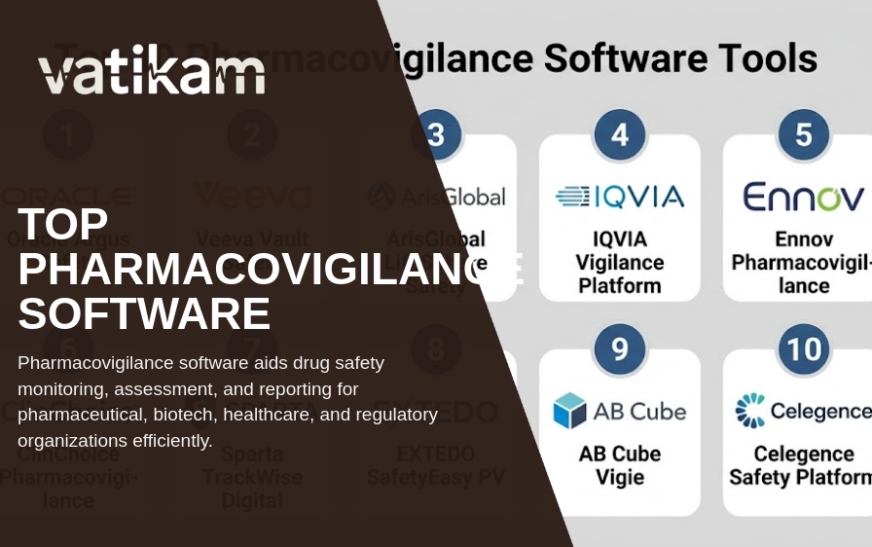
Top 10 Pharmacovigilance Software Tools of 2026
1. Oracle Argus Safety
A leading enterprise platform known for global adverse event reporting and drug safety management with AI-assisted analytics and comprehensive regulatory compliance support.
- Pros: Scalability, mature compliance, broad adoption
- Cons: Complex setup, premium pricing
2. Veeva Vault Safety
A cloud-native solution offering integrated safety management, AI-assisted workflows, and strong life sciences ecosystem connectivity.
- Pros: Modern usability, life sciences integrations
- Cons: Enterprise pricing, feature complexity for smaller firms
3. ArisGlobal LifeSphere Safety
Known for AI-driven automation, this platform supports global pharmacovigilance with compliance dashboards and cloud collaboration.
- Pros: Advanced AI, scalability, user experience
- Cons: Deployment complexity, premium pricing
4. IQVIA Vigilance Platform
Supports global drug safety operations with analytics, reporting, and workflow automation tailored for enterprise scalability.
- Pros: Global reach, mature analytics
- Cons: Complex onboarding, premium cost
5. Ennov Pharmacovigilance
Focuses on integrated compliance workflows, governance controls, and audit readiness in regulated healthcare environments.
- Pros: Strong compliance support, reliable workflows
- Cons: Complexity for smaller organizations
6. ClinChoice Pharmacovigilance
Provides flexible case management, regulatory reporting, and workflow automation optimized for contract research organizations (CROs).
- Pros: Operational flexibility, CRO alignment
- Cons: Smaller ecosystem, evolving AI features
7. Sparta TrackWise Digital
Offers quality and pharmacovigilance operations management with strong governance, compliance automation, and reporting tools.
- Pros: Enterprise scalability, governance controls
- Cons: Complex deployment, premium pricing
8. EXTEDO SafetyEasy PV
Supports pharmacovigilance workflow management and regulatory reporting with flexible deployment options for healthcare organizations.
- Pros: Regulatory workflow support, audit readiness
- Cons: Limited AI features, smaller market presence
9. AB Cube Vigie
Specializes in pharmacovigilance case processing and signal detection with flexible cloud deployment capabilities.
- Pros: Pharmacovigilance specialization, operational flexibility
- Cons: Smaller enterprise ecosystem, developing integrations
10. Celegence Safety Platform
A modern cloud-native platform supporting adverse event workflows, compliance tracking, and reporting automation with good usability.
- Pros: Cloud-native usability, flexible support
- Cons: Smaller market footprint, evolving analytics
Choosing the Right Pharmacovigilance Software
The ideal pharmacovigilance platform depends on your organization’s size, complexity, compliance requirements, and operational maturity.
- Solo/Freelancer: Prefer lightweight, cloud-native tools with simple workflows.
- Small to Medium Business (SMB): Look for usability, flexibility, and faster onboarding.
- Mid-Market: Need balanced governance, integrations, and analytics features.
- Enterprise: Require AI automation, extensive compliance, and global scalability.
- Budget vs. Premium: Smaller firms benefit from simpler solutions; enterprises prioritize feature depth.
Frequently Asked Questions (FAQs)
What is pharmacovigilance software?
Pharmacovigilance software monitors, manages, and reports adverse drug reactions and safety events, streamlining drug safety workflows and regulatory compliance.
Who typically uses these platforms?
Pharmaceutical companies, biotech firms, CROs, healthcare organizations, and regulatory affairs teams rely on these tools for drug safety operations.
Why is pharmacovigilance software essential?
Increasing regulatory requirements and complexity in drug safety make automation and analytics vital for compliance and patient safety.
Can these platforms handle global regulatory reporting?
Yes, many support submissions across multiple regions and healthcare authorities with automated workflows.
How do integrations impact pharmacovigilance?
Interoperability with clinical trial management systems, regulatory platforms, and analytics tools is crucial for operational efficiency.
Conclusion
In 2026, pharmacovigilance software remains indispensable for regulated healthcare organizations. The integration of AI, cloud-native collaboration, and automated compliance workflows enhances patient safety and operational efficiency worldwide. Organizations should carefully evaluate features, compliance capabilities, integrations, and scalability to select the best platform aligned with their needs.
For enterprises, solutions like Oracle Argus Safety, Veeva Vault Safety, or ArisGlobal LifeSphere Safety offer comprehensive governance and global reach. Mid-sized companies may find platforms like ClinChoice, Celegence, or AB Cube Vigie more suitable for flexibility and cost-effectiveness. Thorough vendor evaluation and pilot testing are recommended before final adoption.