
How Tamil Nadu Leads India with an Accessible and Integrated Healthcare System
Tamil Nadu has emerged as a shining example in India for delivering a healthcare system that is accessible, efficient, and technologically advanced. Its journey reflects decades of strategic investments, innovative reforms, and a commitment to building a robust healthcare ecosystem that integrates public health infrastructure with modern diagnostics, decentralised delivery, and workforce capacity building.
The Evolution of Tamil Nadu’s Healthcare Model
For many years, healthcare progress in India was often seen in terms of hospital expansions, public health infrastructure, and medical colleges. However, Tamil Nadu’s success story emphasizes a more comprehensive approach. The State has long invested in primary healthcare, maternal and child health, disease prevention, and decentralised healthcare services, creating a mature and well-rounded system that reaches across urban and rural communities.
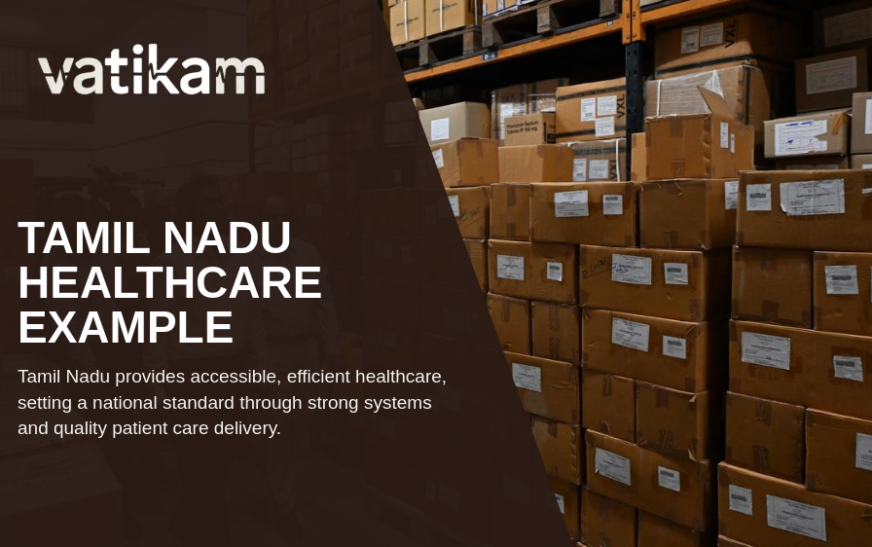
One of the pioneering reforms was the establishment of the Tamil Nadu Medical Services Corporation (TNMSC) in 1994. This initiative transformed government drug procurement by streamlining the purchase, storage, and distribution of essential medicines, ensuring availability and reducing inefficiencies. TNMSC is now a national benchmark for public-sector drug procurement and a shining model of healthcare accessibility and accountability.
Decentralised Healthcare and Primary Care Diagnostics
Tamil Nadu’s healthcare success lies significantly in its decentralised healthcare delivery. With approximately 8,700 sub-health centres distributed throughout the State, the focus is on bringing care closer to the community rather than concentrating resources only in urban hospitals.
Another hallmark is the emphasis on diagnostics at the primary care level. Robust diagnostics allow early detection of diseases through public health programs and community screenings that reach lakhs of citizens in both urban and rural areas. Early diagnosis not only improves patient outcomes but also eases the burden on tertiary hospitals and decreases long-term healthcare costs.
Furthermore, investments nearing ₹360 crore in district hospitals and microbiology laboratory networks help reduce regional disparities and improve healthcare access uniformly across the State.
The Role of Technology in Modern Healthcare
Technology is a defining factor in Tamil Nadu’s next phase of healthcare evolution. Integration of AI, digital health records, telemedicine, and remote diagnostics enhances efficiency and extends services to underserved regions. The State’s dedication to digital public health systems and data-driven governance supports evidence-based decision-making and proactive care management.
Workforce Capacity and Skill Development
Beyond infrastructure, Tamil Nadu places strong emphasis on healthcare workforce development. With prestigious government institutes and medical colleges attracting patients nationwide, the State recognizes the critical importance of continuous upskilling. Training in diagnostics, digital health technologies, AI, and multidisciplinary care models ensures sustainable healthcare delivery with operational strength.
Potential for Medical Manufacturing and Public-Private Partnerships
Tamil Nadu is strategically positioned to become a preferred hub for manufacturing medical devices and equipment, building upon its strengths in automotive components, electronics, and precision engineering. By reducing dependency on imports, the State can further enhance its healthcare provisioning.
Additionally, close collaboration between public and private sectors is central to overcoming healthcare challenges. While the public system offers scale and reach, private healthcare, MedTech innovations, and digital health ecosystems contribute specialized expertise and cutting-edge solutions.
Challenges and the Way Forward
Despite notable achievements, Tamil Nadu, like many advanced systems, faces challenges including patient load management, workforce distribution, and operational bottlenecks. The key takeaway is not to replicate Tamil Nadu’s system exactly but to adopt its core principles: sustained investment, decentralisation, workforce upskilling, and technology integration.
This blueprint offers a strategic path forward for other Indian States to build resilient, accessible, and equitable healthcare systems, aligning with the nation’s broader healthcare reform goals.
Conclusion
Tamil Nadu’s healthcare model stands out as a beacon of effective public health delivery in India. By focusing on accessibility, decentralised infrastructure, advanced diagnostics, technology adoption, and workforce excellence, it provides a replicable roadmap for national healthcare advancement. These principles, combined with innovation and cooperation across sectors, can help transform healthcare across India to better serve its diverse population.
Dr. G.S.K. Velu is Chairman of the FICCI Tamil Nadu State Council and CMD of Trivitron Healthcare / Neuberg Diagnostics / Maxivision Eye Hospitals.