
Job Market Challenges Driving IT Freshers in India Towards Upskilling
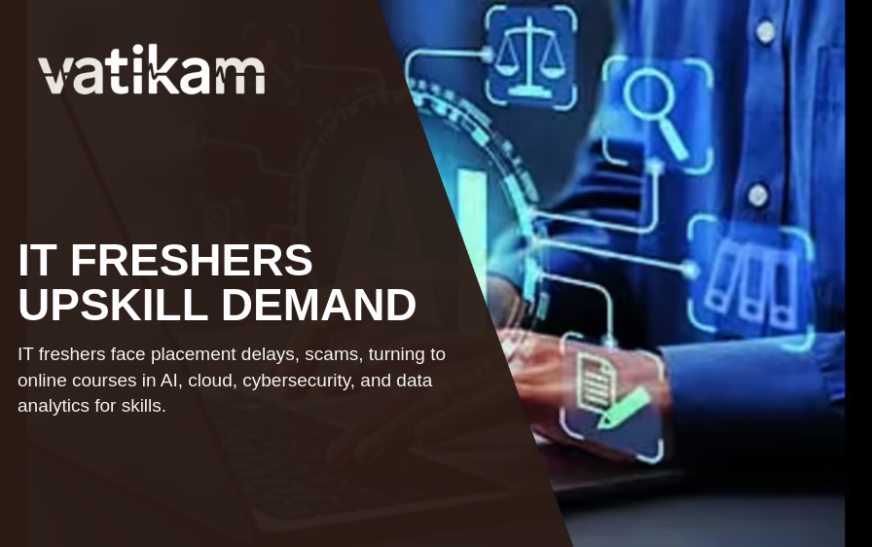
In recent years, fresh graduates in the fields of Information Technology (IT) and engineering in India are increasingly turning to upskilling courses to enhance their employability. The traditional pathway of securing jobs through campus placements has become more competitive and uncertain, exacerbated by onboarding delays and a rising number of job scams targeting freshers. This situation has pushed many graduates to seek additional certifications and skills to remain relevant in a fast-evolving technology landscape.
Why Are IT Freshers Turning to Upskilling?
College education alone is no longer sufficient for many students in securing jobs in prestigious companies. As technology advances rapidly, extra coaching and certifications in cutting-edge technologies are seen as essential. A 24-year-old engineering fresher from Shirpur highlighted this challenge, stating that the knowledge gained during college was inadequate for job readiness, prompting him to pursue further learning opportunities.
Many freshers have also faced financial and emotional setbacks due to fraudulent placement agencies promising job support but failing to deliver. For instance, Sneha Kulkarni, a 26-year-old engineering graduate from Sawantwadi, spent around Rs 2 lakh on an IT consultant for coaching and placement, only to find it a complete waste. She now plans to enroll in reputable online courses, including those offered by IITs, to boost her chances of employment.
Popular Upskilling Courses Among IT Graduates
Demand is surging for online courses in areas such as:
- Artificial Intelligence (AI)
- Cloud Computing
- Cybersecurity
- Data Analytics
- Full-Stack Development
Harpreet Singh Saluja, president of NITES—which advocates for the welfare of IT/ITES sector employees—emphasizes that upskilling is crucial for improving employability. Although different companies have varying certification requirements, broadly gaining expertise in AI and machine learning significantly enhances job prospects for freshers.
Financial Strain and the Rise of Learning Scams
Unfortunately, the pursuit of further education comes with financial challenges. Many fresh graduates take on loans to afford these courses, increasing their financial burden. A fresher from Chandrapur disclosed losing Rs 1.4 lakh in a scam and having to take a loan to enroll in a data analytics course with hopes of securing employment.
Meanwhile, those unable to invest in paid programs are leveraging free online resources and certifications. However, the lack of salary inflow makes even this difficult, as noted by another fresher who had not received payment since September.
The Role of Self-Driven Learning and Industry Insights
A Nasscom report on India’s AI talent landscape underscores the widening gap between demand and supply for AI skills. It reveals that 73% of employees rely on self-driven learning methods such as online courses, hands-on training, and peer learning. Formal certifications account for only 17%, while a significant portion of the workforce has not yet engaged in structured learning.
This insight aligns with the trend of freshers embracing upskilling not only as a job gateway but as a means for long-term career security. A 24-year-old engineering graduate from Solapur remarked that despite having a degree, unemployment persists; hence, enrolling in an AI/ML course is seen as a viable path. If unsuccessful, exploring opportunities outside their field may be necessary.
Conclusion
The Indian IT and engineering fresh graduate community is at a crucial juncture, facing challenges from slowing traditional employment pathways and fraudulent schemes. Upskilling in emerging technologies such as AI, cloud computing, cybersecurity, and data analytics is becoming essential to stay competitive. While this trend is encouraging in terms of skill development, it also highlights the need for better guidance, regulation of coaching and placement agencies, and accessible quality education options for freshers to secure sustainable employment.