
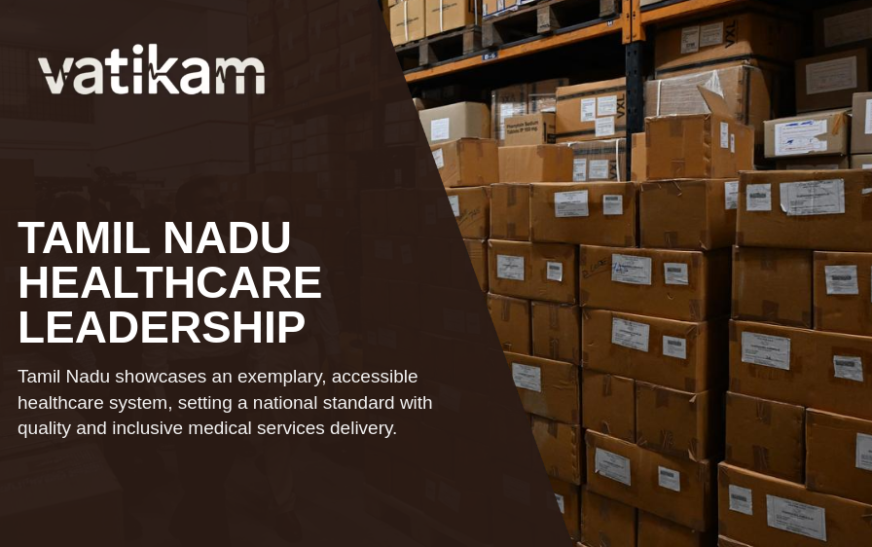
How Tamil Nadu’s Healthcare System Sets a National Example
Tamil Nadu has long been recognized for its notable achievements in healthcare across India. Moving beyond traditional markers such as hospital expansions and medical colleges, the state has pioneered a comprehensive approach that integrates healthcare infrastructure with accessibility, workforce development, diagnostics, technology, and long-term health outcomes.
Building on Decades of Healthcare Focus
The roots of Tamil Nadu’s success lie in sustained institutional focus over decades on key fundamentals such as primary healthcare, maternal and child health, public health outreach, disease prevention, and decentralised healthcare services. This multi-faceted foundation has created an ecosystem where healthcare reaches every layer of society efficiently.
Innovative Systems for Medicine Access
An exemplary initiative is the Tamil Nadu Medical Services Corporation (TNMSC), established in 1994. TNMSC revolutionized the state’s healthcare delivery by streamlining the procurement, storage, and distribution of essential medicines throughout government institutions. By reducing inefficiencies and ensuring medicine availability, TNMSC became a national benchmark for public-sector drug procurement reforms.
Decentralized Healthcare Delivery and Infrastructure
Tamil Nadu’s healthcare system is distinguished by its comprehensive decentralization. With over 8,700 sub-health centers spread across various districts, the state ensures equity in investment and service delivery, preventing an urban-centric concentration of resources. Investments amounting to nearly ₹360 crore in district hospitals and local microbiology laboratories further bridge regional disparities, enabling rural and underserved populations to access quality healthcare services.
Emphasis on Primary Healthcare and Diagnostics
Diagnostic services at the primary healthcare level are key to Tamil Nadu’s strategy. Extensive community screening programs reach lakhs of urban and rural citizens, allowing early diagnosis and reducing reliance on tertiary hospitals. This preventive approach effectively manages healthcare costs long term and eases the patient load in larger hospitals.
Integrating Technology in Healthcare Services
Technological advancements play an essential role in Tamil Nadu’s healthcare evolution. The state focuses on digital public health systems that incorporate AI, telemedicine, digital health records, and remote diagnostics. These tools enhance healthcare efficiency and expand access to remote and underserved areas, enabling better patient outcomes.
Workforce Development for Sustainable Healthcare
Recognizing the importance of a skilled healthcare workforce, Tamil Nadu invests heavily in upskilling medical professionals. The Federation of Indian Chambers of Commerce and Industry (FICCI) highlights workforce capacity-building as a cornerstone for future-ready care. Continuous education in diagnostics, digital technologies, AI-assisted healthcare, and multidisciplinary models ensures operational excellence and sustainability in healthcare delivery.
Fostering Medical Manufacturing and Public-Private Partnerships
Tamil Nadu is strategically positioned to become a leading destination for medical device and equipment manufacturing, leveraging its existing strengths in auto components, electronics, and precision engineering. Reducing reliance on imports will boost self-sufficiency and healthcare provisioning.
Furthermore, collaboration between public health systems and private sector entities enhances innovation and brings specialized capabilities to the table. Public systems provide broad coverage, while private players contribute advanced technology and diagnostics, creating a balanced and effective healthcare ecosystem.
Challenges and the Way Forward
Despite its achievements, Tamil Nadu’s healthcare system faces challenges including patient load pressures, uneven workforce distribution, and operational bottlenecks. However, the core lessons from the state’s model are not about replicating infrastructure alone but adopting the foundational principles of sustainable investment, decentralized delivery, technology integration, and workforce development.
Conclusion
Tamil Nadu exemplifies how a healthcare system can evolve beyond mere infrastructure expansion to achieve accessibility, efficiency, and improved health outcomes. By combining primary healthcare focus, innovative procurement systems, technological integration, and workforce empowerment, the state offers a replicable blueprint for the rest of India.
Dr. G.S.K. Velu, Chairman of FICCI Tamil Nadu State Council, CMD Trivitron Healthcare, Neuberg Diagnostics, and Maxivision Eye Hospitals, affirms that Tamil Nadu’s integrated healthcare model is a path forward for national healthcare reform.