
How Advanced Analytics and AI Partnerships Elevate the Biopharma Value Chain
The integration of artificial intelligence (AI) and advanced analytics is transforming the biopharmaceutical industry—from drug discovery to manufacturing and workforce strategy. Leading experts from Sanofi, GxP Frame, and Open Biopharma describe how strategic partnerships leveraging AI technologies enhance scientific decision-making and operational efficiency, and underscore the importance of human oversight and data governance in regulated environments.
Transforming Drug Discovery with AI
AI’s primary value in biopharma lies in its ability to connect and interpret diverse, previously siloed data sources. By integrating molecular structure, biological assay results, patient demographics, and clinical site performance, AI systems provide enhanced insights and improve the quality of scientific decisions rather than delivering autonomous answers.
At Sanofi, disease-specific AI engines aggregate genetics, proteomics, transcriptomics, and single-cell analysis data to identify promising drug targets. This holistic approach helps researchers assess target druggability, tissue expression patterns, and the optimal therapeutic modalities, accelerating the journey from research to development.
The Crucial Role of Human Oversight in AI Workflows
All experts strongly emphasize that human oversight must be embedded structurally within AI workflows—not added as an afterthought—to ensure AI outputs are trustworthy and compliant with regulatory standards.
Richard Jaenisch of Open Biopharma highlights that explainability and traceability are non-negotiable when using AI in regulated environments. AI-generated results must be defensible during audits, with clear documentation of data provenance and decision-making processes.
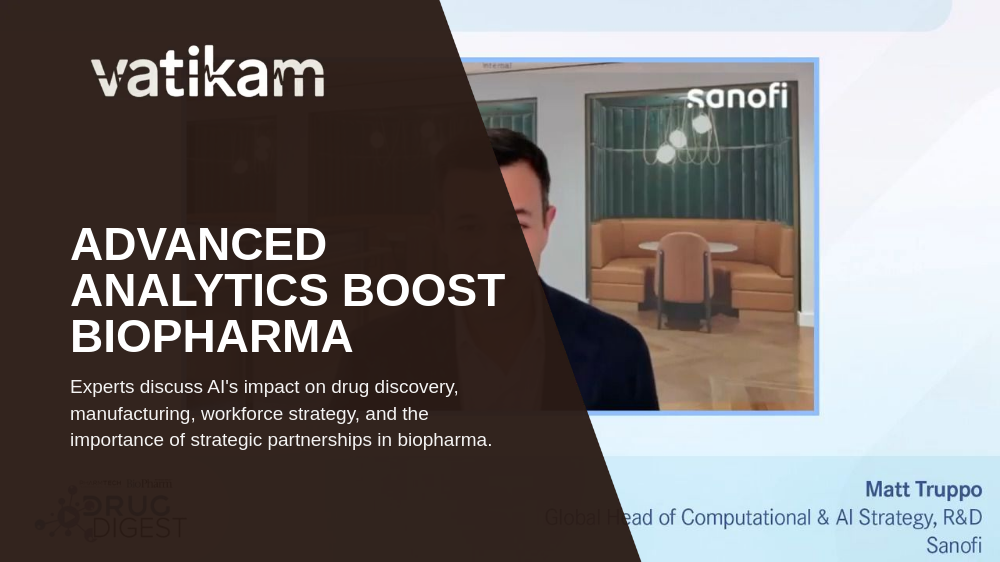
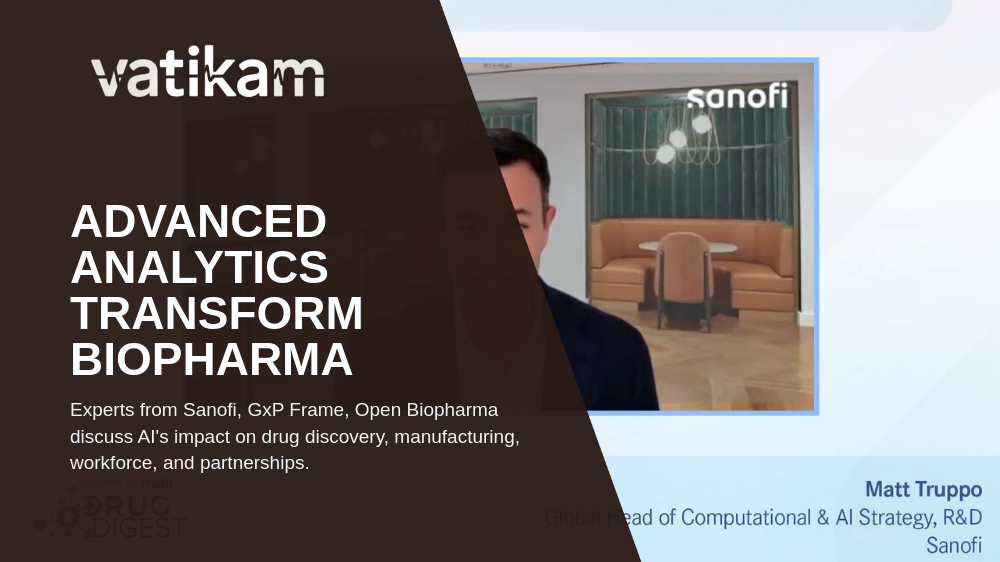
Matt Truppo from Sanofi adds that data governance, source traceability, and clearly defined model uncertainty are foundational for trustworthy AI integration across research, development, and manufacturing operations.
Operational Enhancements in Manufacturing and Supply Chain
Brian Drapeau of GxP Frame underscores that AI’s most valuable applications in manufacturing and supply chain are operational rather than headline-grabbing. Practical AI-driven solutions include deviation management, batch record review, predictive maintenance, and supply-demand forecasting.
In the niche of cell and gene therapy (CGT), AI’s value is highlighted by its ability to maintain the patient-specific supply chain integrity, emphasizing chain of identity and chain of custody. Given that no single manufacturer owns the entire CGT supply chain, cross-company partnerships enabled by AI are essential.
Drapeau warns that effective partnerships require collaborators with competency across domains and strong data governance, not just those capable of executing AI-assisted tasks without critical evaluation.
Building Strategic Partnerships for AI Success
Successful AI implementation in biopharma relies on forming strategic partnerships that combine technological expertise with a deep understanding of regulatory and operational complexities. These collaborations enable the integration of AI solutions that improve efficiency while complying with rigorous industry standards.
About the Experts
- Matt Truppo, Global Head of Computational & AI Strategy, R&D, Sanofi: Leads AI platform capabilities to accelerate drug discovery across therapeutic areas, with a career contributing to 13 medicines brought to market.
- Richard Jaenisch, Senior Director of Education, Outreach, and Digital Experience, Open Biopharma: Focuses on generative AI integration and biomanufacturing training with strong patient advocacy experience.
- Brian Drapeau, Founder and Principal Consultant, GxP Frame: Specialist in workforce development, biotechnology manufacturing operations, and regulatory compliance.
Conclusion
The future of the biopharma value chain is increasingly defined by advanced analytics and AI-driven partnerships. By combining technological innovation with human expertise and robust data governance, the industry can achieve safer, faster, and more efficient drug development and manufacturing processes. Strategic collaborations will remain essential to realize the full potential of AI while ensuring compliance and maintaining trust with regulatory bodies.