
Maharashtra Identifies 11,091 High-Risk Villages for Tuberculosis Using AI, Detects 6,111 New TB Cases in 35 Days
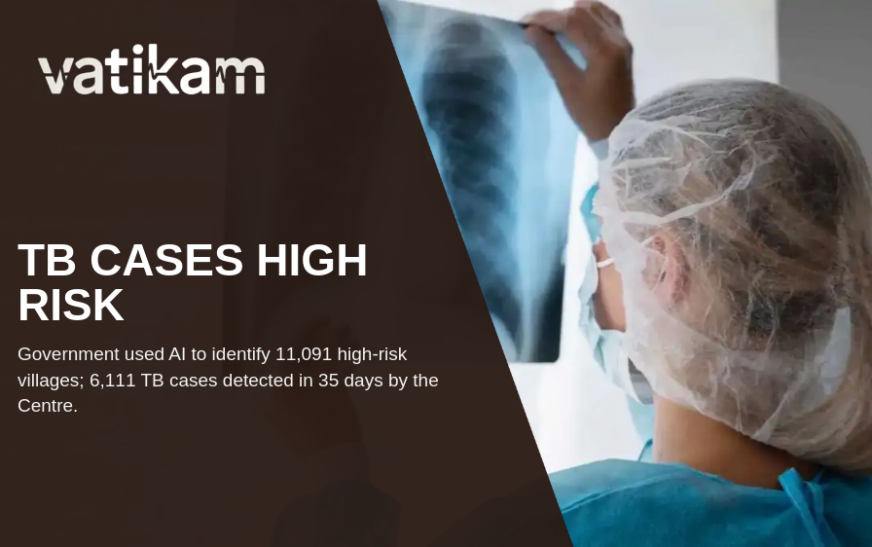
Maharashtra has made significant strides in its fight against tuberculosis (TB), detecting 6,111 new cases within just the first 35 days of the Centre’s ambitious 100-day TB Mukt Bharat Abhiyan. At the same time, an AI-based assessment has identified 11,091 villages across the state as high-risk areas for TB transmission, signaling a strategic approach to disease control based on predictive analytics.
AI-Powered Identification of High-Risk Villages
Public Health Minister Prakash Abitkar informed the Maharashtra Legislative Assembly that the Centre employed an artificial intelligence (AI) model developed by Wadhwani AI to flag 11,091 villages and wards as vulnerable to TB transmission. This marked a pivotal move in Maharashtra’s public health campaign, enabling targeted screening and intensified surveillance efforts.
Unlike traditional methods that focus purely on confirmed outbreaks, the AI system predicts vulnerability by analyzing a complex set of 32 indicators. This predictive model does not identify villages with confirmed TB outbreaks but rather anticipates where transmission risk is highest, allowing preemptive action.
What the AI Model Analyzes
- Historical TB Data: Previous TB cases and contact history of patients.
- Health Determinants: Prevalence of undernutrition, vaccination status, diabetes, hypertension, and other comorbidities.
- Social Factors: Literacy rates, sanitation conditions, tobacco and alcohol use.
- Environmental & Geospatial Indicators: Population density, pollution levels, vegetation cover, and geolocation of diagnosed patients.
This comprehensive approach allows authorities to identify hotspots before an outbreak occurs, maximizing resource allocation and intervention effectiveness.
Details on High-Risk Villages and Districts
The AI-flagged villages are spread throughout Maharashtra, with notable numbers in several districts:
- Nagpur: 482 villages
- Yavatmal: 539 villages
- Amravati: 504 villages
- Nashik: 488 villages
- Raigad: 488 villages
These villages have been prioritized for intensified screening and surveillance as part of the TB Mukt Bharat campaign, launched on March 24, 2026.
Progress Under the 100-Day TB Mukt Bharat Abhiyan
The campaign aims to eliminate TB through concentrated efforts including mass screenings, improved diagnostics, and comprehensive healthcare strategies. Within just over a month, Maharashtra has reported 6,111 new TB cases—a critical data point that highlights the importance of ongoing and expanded efforts.
Maharashtra’s state TB officials emphasize that these high-risk villages are predicted through AI to have greater vulnerability to transmission rather than confirmed outbreaks. This distinction is crucial for proactive rather than reactive public health interventions.
Addressing Infrastructure and Manpower Challenges
Alongside these data-driven initiatives, concerns remain regarding the availability of diagnostic infrastructure and trained manpower, especially in vulnerable rural areas. Strengthening these capacities will be essential to effectively manage and reduce the TB burden in Maharashtra.
The Road Ahead: Leveraging Technology in Disease Elimination
The use of AI to predict and identify high-risk areas represents a transformative step in the fight against tuberculosis. By integrating health, social, and environmental data, Maharashtra and the Centre are pioneering innovative measures aimed at TB elimination.
This strategic blend of technology and public health policy showcases the potential of AI-driven tools to enhance disease surveillance, optimize resource allocation, and ultimately save lives.
As Maharashtra continues to implement the TB Mukt Bharat Abhiyan, focused attention on high-risk villages, paired with strengthened healthcare infrastructure, can accelerate progress towards a TB-free India.