
Maharashtra Detects 6,111 New TB Cases in 35 Days; Over 11,000 Villages Identified as High-Risk Through AI-Based Assessment
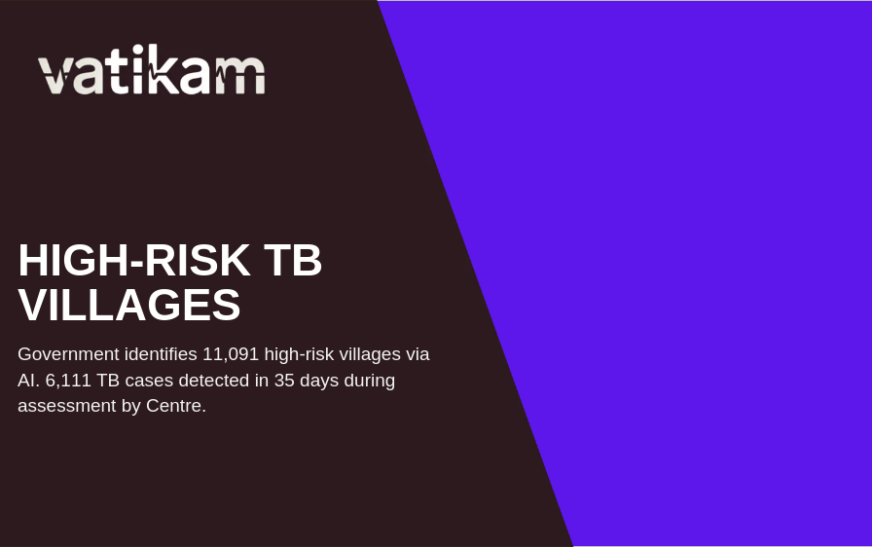
Maharashtra has reported a significant detection of 6,111 new tuberculosis (TB) cases within the initial 35 days of the Centre’s ambitious 100-day TB Mukt Bharat Abhiyan. This large-scale health campaign aims to intensify efforts toward eliminating tuberculosis in India. Notably, an artificial intelligence-based assessment, carried out by the Centre, has identified 11,091 villages across Maharashtra as high-risk zones for TB transmission, warranting focused surveillance and screening.
AI-Powered Predictive Tool for TB Risk Identification
The identification of high-risk villages was not based on confirmed TB outbreaks but emerged from a predictive model developed by Wadhwani AI, commissioned by the Government of India. This advanced AI system analyzes a comprehensive set of 32 indicators to forecast vulnerability to TB transmission.
Key indicators considered by the AI model include:
- Historical data on previous TB cases and patient contact history
- Sanitation conditions and undernutrition levels within the population
- Vaccination status and literacy levels
- Prevalence of comorbidities such as diabetes and hypertension
- Lifestyle factors including tobacco and alcohol use
- Population density and various geospatial and social determinants
By incorporating geospatial features, health and social determinants, and data from the National TB Elimination Programme (NTEP), the AI tool provides an evidence-based approach for targeted public health interventions.
High-Risk Villages Targeted for Intensified TB Screening
Public Health Minister Prakash Abitkar shared these details in the Maharashtra Legislative Assembly in response to questions about the state’s TB burden and the sufficiency of diagnostic infrastructure and manpower in vulnerable areas.
Among the high-risk villages identified by the AI system are:
- 482 villages in Nagpur district
- 539 villages in Yavatmal district
- 504 villages in Amravati district
- 488 villages each in Nashik and Raigad districts
These villages have been prioritized under the Centre’s 100-day TB Mukt Bharat Abhiyan campaign, launched on March 24, to accelerate TB detection and intervention.
Significance of the AI-Based Approach in Combating TB
Utilizing AI technology represents a transformational step in India’s fight against tuberculosis. The predictive model enhances the focus on areas that are predicted to be more vulnerable to transmission, rather than waiting for confirmed outbreaks to occur. This proactive approach allows for early intervention, better resource allocation, and more effective public health responses.
State TB officials emphasize that the identification through AI is a precautionary measure to mitigate risk and protect communities before widespread transmission occurs. The collaboration between technological innovation and public health efforts is expected to improve the overall effectiveness of TB elimination strategies.
Conclusion
Maharashtra’s detection of over six thousand new TB cases in just over a month highlights the ongoing challenges in controlling this infectious disease. However, the integration of AI-driven tools for identifying high-risk villages marks a progressive step towards comprehensive TB management. With targeted screening, intensified surveillance, and community-focused interventions under the TB Mukt Bharat Abhiyan, Maharashtra is aligning with national goals to reduce the TB burden and move closer to a TB-free India.