
Indian-Origin Urologist Performs Remote Robotic Surgery from China on Hyderabad Patient
In a landmark achievement bridging healthcare and technology across borders, an Indian-origin urologist performed a complex robotic surgery remotely on a patient located in Hyderabad, India — while physically situated 3,000 kilometers away in Wuhan, China. This pioneering medical event highlights the enormous potential of emerging technologies like 5G, artificial intelligence, and robotics in transforming surgical care delivery.
Overview of the Remote Surgery Milestone
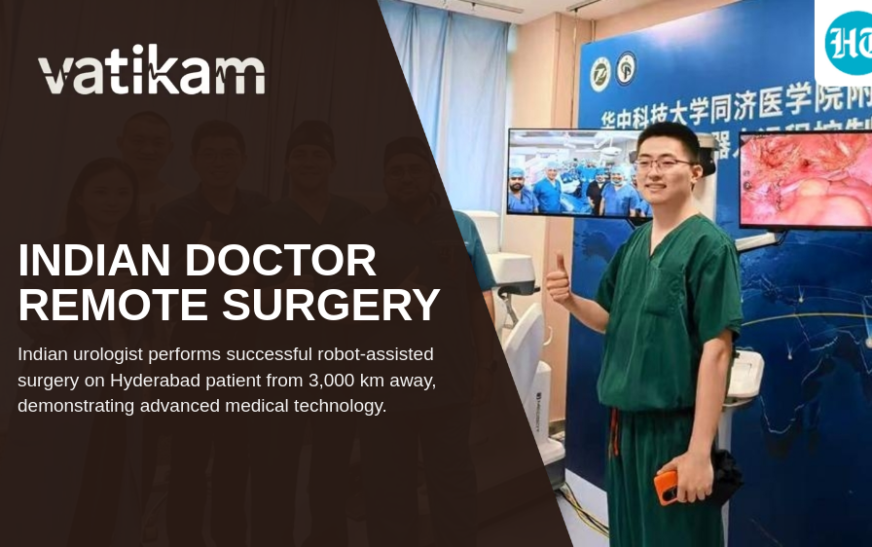
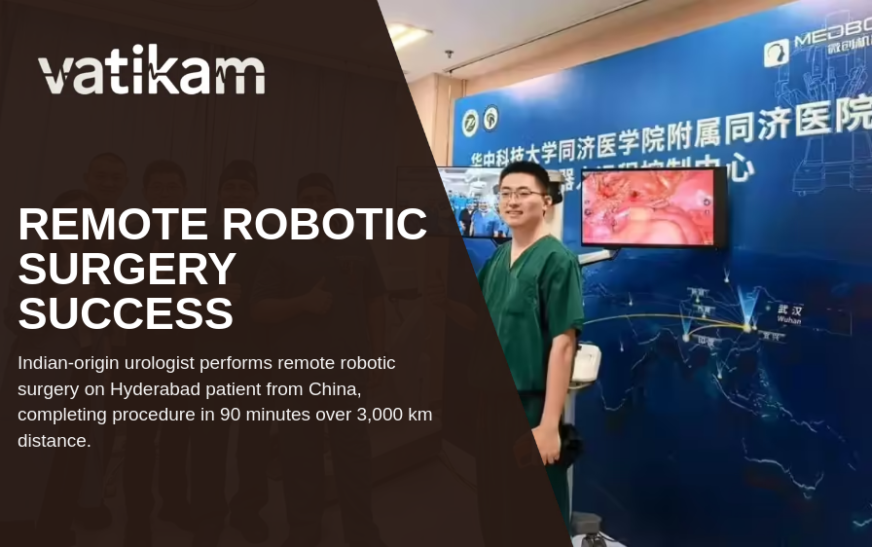
On May 24, 2026, Dr. Syed Mohammed Ghouse, a renowned urologist stationed at Tongji Hospital in Wuhan’s Hubei province, successfully conducted a bladder reconnection surgery on a patient in Hyderabad. The entire procedure was completed within an impressive 90 minutes, showcasing the precision and coordination achievable through advanced robotic surgical systems.
The surgery relied on a collaborative effort involving the surgical team onsite in Hyderabad, robotic arms equipped with fine surgical instruments, and real-time network connectivity powered by China-developed 5G technology. This integration enabled Dr. Ghouse to operate remotely by controlling robotic instruments from Wuhan, guided by high-definition 3D camera feeds transmitted instantaneously.
How the Remote Robotic Surgery Was Executed
The process began with Dr. Ghouse and the local medical team analyzing the patient’s medical examination data online to devise a detailed surgical plan. This included programming the precise movements required for the robotic arms that would perform the operation.
- Preparation: In Hyderabad, the surgical staff administered anesthesia and inserted robotic arms into the patient’s body. These arms were outfitted with advanced surgical tools and 3D cameras for enhanced visualization.
- Remote Operation: From his console in Tongji Hospital, Dr. Ghouse viewed magnified, real-time 3D images of the surgical site through a binocular-style viewer. Using controls that resemble an arcade game, he skillfully maneuvered the robotic arms, performing delicate surgical movements that replicated his hand motions with utmost precision.
- Network Technology: Thanks to ultra-fast 5G connectivity, all instructions from Dr. Ghouse to the robotic instruments were transmitted within 200 milliseconds, ensuring seamless and responsive operation despite the long distance.
- Safety Measures: A local team of doctors and nurses remained present in the operating room to monitor the patient closely and intervene physically in case of emergency.
Significance of the Surgical Breakthrough
This remote surgery was one of 26 innovative procedures showcased during the 10th Congress of the Chinese Chapter of the International Hepato-Pancreato-Biliary Association. Among these, five surgeries featured live remote connectivity with international surgical teams from Brazil, Georgia, Greece, Uzbekistan, and India, spanning specialties such as hepatobiliary, pancreatic, gastrointestinal, and urologic surgery.
Dr. Chen Xiaoping, director of the surgery department at Tongji Hospital and a pioneer of this initiative, remarked that this technological revolution—fueled by AI, 5G/6G telecommunications, and robotics—is deeply integrating with healthcare, offering new horizons in patient care delivery.
Future Implications for Telemedicine and Surgery
The successful execution of remote robotic surgery across international borders demonstrates the transformative potential for making specialized surgical expertise accessible globally, particularly for patients in remote or underserved regions. This approach could revolutionize healthcare, reducing the need for patient travel, cutting healthcare costs, and enabling timely interventions.
As AI and 5G/6G technologies continue to evolve, integration with robotic surgical systems is expected to become more sophisticated, potentially allowing even more complex procedures to be conducted remotely with enhanced safety and efficiency.
Conclusion
The pioneering remote surgery conducted by Indian-origin Dr. Syed Mohammed Ghouse symbolizes a major leap forward in global medical collaboration and technology adoption. By leveraging advanced robotics and next-generation networks, he successfully transcended geographical barriers to deliver life-saving care, setting a precedent for future telemedicine innovations worldwide.