
How AI Trained on Indian Patients’ Data is Revolutionizing Breast and Ovarian Cancer Diagnosis and Treatment
Accurate and timely cancer diagnosis remains a critical challenge in India, especially for breast and ovarian cancers, which are among the leading causes of cancer-related deaths in Indian women. Variations in pathology, radiology, and clinical history assessments can often delay treatment decisions. However, a cutting-edge artificial intelligence (AI) platform named iOncology.ai is set to transform this landscape by integrating diverse patient data and accelerating clinical decision-making.
The Challenge of Cancer Diagnosis in India
In India’s busy tertiary hospitals, different specialists like pathologists, radiologists, and oncologists typically have access to fragmented information scattered across various reports and systems. This lack of a unified view hampers the speed and certainty of diagnosis, particularly in cancers where early detection dramatically influences outcomes.
Recognizing these gaps, researchers at the Centre for Development of Advanced Computing (C-DAC), Pune, and the All India Institute of Medical Sciences (AIIMS), New Delhi, developed the iOncology.ai platform. Funded by the Ministry of Electronics and Information Technology (MeitY), the platform harnesses Indian supercomputing infrastructure and is trained using extensive Indian patient datasets.
How iOncology.ai Integrates Multidimensional Patient Data
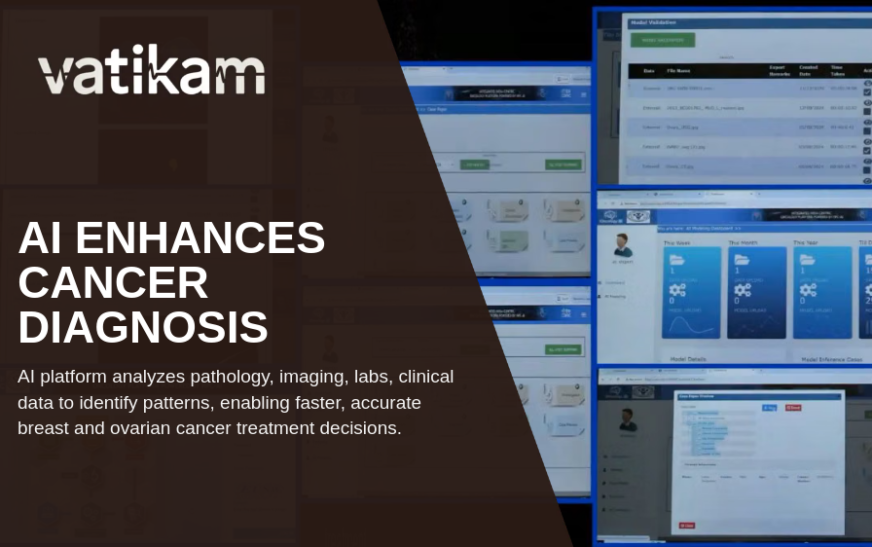
iOncology.ai serves as a unified clinical dashboard where:
- Pathologists upload tumor tissue images.
- Radiologists feed in CT scans, MRIs, and mammograms.
- Clinicians add laboratory results and detailed clinical histories.
This comprehensive dataset is analyzed collectively by the AI system to detect complex patterns and provide recommendations on tumor grade, staging, and treatment pathways. Role-based access ensures that each specialist views information relevant to their expertise while keeping the treating oncologist as the final decision-maker.
The Importance of Indian-Specific Data
Unlike many AI models trained on Western datasets, iOncology.ai was initially less accurate when applied to Indian patients. Retraining the AI on approximately 3,800 cases from Indian patients at AIIMS led to a marked improvement in diagnostic accuracy, rising from 49% to 79%. This highlights the critical role of localized data, accounting for differences in tumor morphology, genetic profiles, and demographics unique to the Indian population.
The Ongoing Data Challenge in Indian Healthcare
One significant hurdle in scaling AI solutions like iOncology.ai is the scarcity of organized, annotated, and ethically sourced clinical imaging data in India. Many medical records remain handwritten or siloed, and while digitization efforts such as the Ayushman Bharat Digital Mission (ABDM) have advanced structured records, high-quality annotated data for AI training is still limited.
Startups and research institutions face similar challenges in acquiring validated local datasets, which are essential to achieving reliable AI performance in clinical settings.
The Future: Towards Digital Twins and Precision Medicine
The current phase of iOncology.ai integrates pathology, radiology, and clinical data, but the vision extends further. The next step involves incorporating multi-omics data—genomic, epigenomic, and proteomic information—to develop a comprehensive biological and genetic profile of individual tumors.
This multi-omics integration will enable the creation of digital twins, computational models simulating a patient’s unique cancer profile. Clinicians can then predict how the patient might respond to specific treatments by running simulations based on data from thousands of similar cases.
Such precision medicine promises to shift cancer therapy from standardized protocols to personalized, biology-driven care, optimizing survival rates and minimizing side effects.
Conclusion
iOncology.ai illustrates how AI, when trained on representative Indian patient data and powered by advanced supercomputing infrastructure, can significantly enhance cancer diagnosis and treatment in India. By unifying diverse clinical data into actionable insights, it supports clinicians in making faster and more confident decisions, ultimately improving patient outcomes in some of the most challenging cancers.
As data infrastructure and AI capabilities grow, tools like iOncology.ai will be crucial in propelling Indian healthcare towards a future of precision oncology.