
AI Revolutionizes Brain Tumor Diagnosis: Who Will Get Access?
Cancer is a word that triggers immediate fear and uncertainty, especially for patients awaiting a diagnosis. The waiting period, often days or weeks, is filled with anxiety and anticipation, but thanks to recent advances in artificial intelligence (AI), this wait time can now be drastically reduced.
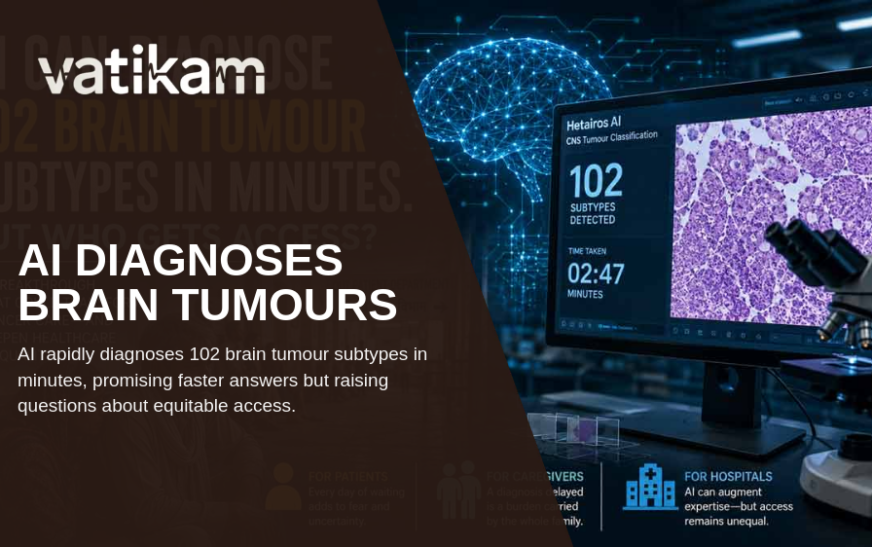
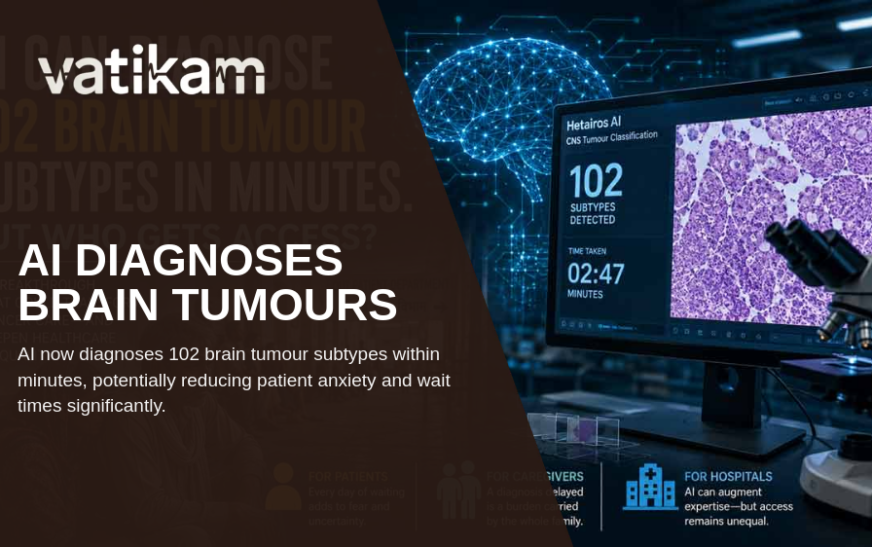
Researchers from the German Cancer Research Centre (DKFZ), Heidelberg University’s Medical Faculty, and Heidelberg University Hospital have developed an AI tool called Hetairos that can analyze standard pathology slides to identify 102 types of brain and central nervous system (CNS) tumors in just minutes. This breakthrough has the potential to transform how cancer diagnosis and treatment decisions are made, but it also raises significant questions about who will benefit from the technology.
Why is this AI Breakthrough Important?
Brain tumor diagnosis traditionally depends on complex molecular testing and specialized neuropathologists, limiting diagnosis speed and accessibility. Hetairos, by analyzing routine histopathological images, can rapidly classify tumors, accelerating the diagnostic timeline crucial for initiating timely cancer treatments.
Faster and accurate diagnosis leads to earlier treatment decisions, potentially improving patient outcomes and reducing anxiety associated with prolonged uncertainty.
The Human Impact: Patients and Caregivers
Reducing Patient Uncertainty
A cancer diagnosis affects far beyond physical health, disrupting daily life, emotional well-being, and future plans. The interval between tests and diagnosis is often grueling, filled with fear and unanswered questions. AI-driven rapid diagnosis may not eliminate emotional challenges but can alleviate some of the heartbreak by minimizing waiting times.
Lightening the Load for Caregivers
In many cultures, especially in countries like India where family caregiving is common, prolonged diagnostic wait times amplify emotional and logistical burdens. Caregivers manage appointments, finances, and emotional support. A faster diagnosis allows them to organize necessary resources and support earlier, benefitting entire families.
Healthcare Systems Under Strain
Hospitals worldwide face increasing patient loads, shortage of specialists, and resource constraints. Neuropathologists, who are essential for brain tumor diagnosis, are in particularly short supply. AI like Hetairos provides a means to augment these specialists, streamlining workflows and improving efficiency without compromising care quality.
Several AI pathology platforms, such as PathAI, Paige, and Tempus, demonstrate how AI integration supports diagnostic accuracy and clinical decision-making.
Challenges of Equitable Access
Although the technology offers promising advancements, equitable access remains a challenge. India’s healthcare system, characterized by uneven resources, infrastructure gaps, and administrative hurdles such as insurance pre-authorizations, could see AI adoption concentrated in wealthier, better-equipped hospitals.
This concentration risks widening healthcare disparities, as patients at resource-limited or rural facilities might not benefit equally.
Can AI Narrow the Healthcare Divide?
The potential for AI to democratize expert-level diagnosis hinges on deployment strategies. If integrated thoughtfully into public healthcare infrastructure with adequate investment, tools like Hetairos could extend specialist-level diagnostics to underserved areas, reducing the need for patients to travel long distances for care.
Conversely, if limited to premium private hospitals, AI may exacerbate existing inequalities, favoring populations who already have better healthcare access.
A New Dimension to Healthcare Inequality
Historically, healthcare inequality has been framed by geography, economic status, and institutional differences. The integration of AI introduces a new form of disparity based on technological availability. Hospitals equipped with advanced AI could offer faster and more precise diagnoses, while others lag behind, setting up a divide defined by algorithm access as much as by traditional resource factors.
The Road Ahead: Balancing Promise with Responsibility
The arrival of AI in healthcare is a milestone that demands cautious optimism. Improved diagnostic speeds and accuracy can transform patient care, but technological capability alone cannot guarantee fairness or affordability.
Healthcare leaders and policymakers must ensure:
- AI systems are validated across diverse patient populations.
- Public health systems are supported to adopt AI tools.
- Appropriate regulatory and ethical safeguards govern AI use.
The future of healthcare AI depends on policy choices, investment in infrastructure, and a commitment to equity. The true promise lies not in making elite hospitals more efficient, but in bringing high-quality diagnostic support to millions currently underserved.
Ultimately, whether AI narrows or widens healthcare gaps will rely on how these technologies are deployed, not just on their sophistication.
As AI becomes a routine part of clinical environments, access to cutting-edge algorithms could become a defining factor in patient care standards and outcomes.