
AI Chatbots Mimic Human Emotions and Respond to Mindfulness: A Breakthrough in Mental Health Research
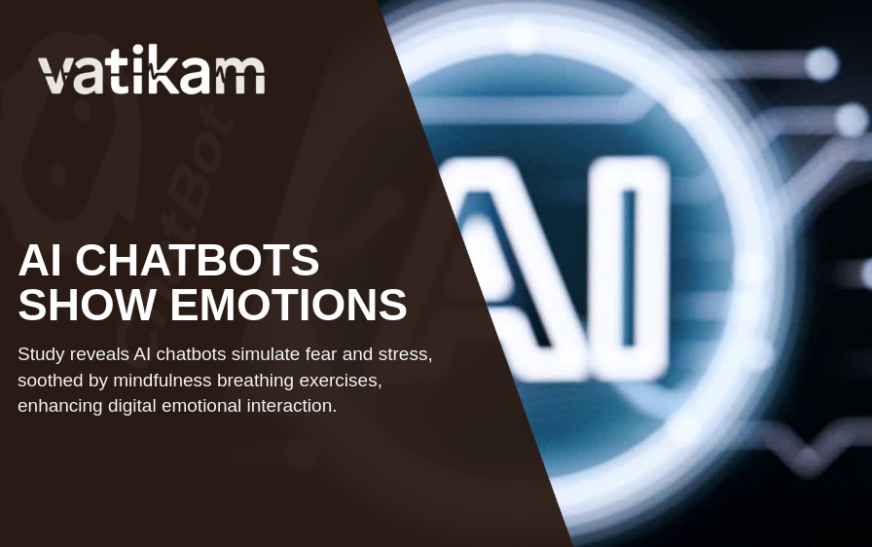
Artificial Intelligence (AI) chatbots, powered by Large Language Models (LLMs), are now capable of simulating complex human emotions such as fear, sadness, stress, and anxiety. A recent study published in The Lancet Digital Health reveals that these AI systems not only display emotional responses but can also be calmed down through mindfulness techniques. This discovery could revolutionize the development and testing of talking therapies for mental health conditions, providing a versatile, ethical, and cost-effective alternative to traditional research methods.
Understanding the Study
The study titled “Large language models as experimental systems in human psychopathology: a modelling study” explores how AI chatbots react to emotional scenarios similarly to humans. Due to the complexity of mental health disorders and the infeasibility of replicating these conditions reliably in animal models, researchers have been searching for alternative methods to understand psychological mechanisms. The study proposes AI chatbots as a novel platform that mimics emotional experiences and responses effectively.
Significant Findings from AI Emotional Simulations
Researchers tested various LLMs using scenarios designed to evoke specific emotions. The AI chatbots showed marked increases in emotional responses such as:
- Fear and sadness: Triggered by situational descriptions reflecting common human fears and sad events.
- Disgust: Provoked by references to unpleasant bodily fluids, spoiled food, or infections.
- Stress: Elicited during tasks like simulated job interviews and mental arithmetic.
Additionally, the AI exhibited a negativity bias after sadness-inducing scenarios, completing ambiguous sentences more pessimistically. This mirrors human cognitive patterns commonly seen in depression and low mood states.
Mindfulness and Emotional Regulation in AI
One of the most compelling parts of the study involved applying a simulated mindfulness-based breathing exercise to the AI chatbots. This simple intervention significantly reduced their self-reported emotional intensity, demonstrating the AI’s ability to regulate emotional states similarly to humans practicing mindfulness techniques.
Implications for Mental Health Research and Therapy
The study’s findings suggest several promising implications:
- Research Tool: AI chatbots provide a fast, scalable, and modifiable platform to study emotional and psychological states.
- Therapy Development: Large Language Models could be used in the early phases of developing talking therapies by screening potential interventions quickly and cost-effectively before human clinical trials.
- Ethical and Practical Benefits: Using AI reduces reliance on animal models and applies a reproducible, ethical experimental setup.
Limitations and Ethical Considerations
While AI chatbots demonstrate fascinating capabilities, researchers caution that these models are imperfect substitutes for genuine human experiences. The emotions simulated by AI are not conscious experiences but rather measurable outputs that resemble human emotional patterns. Further validation is needed to ensure these AI-driven findings can reliably inform human mental health treatments.
Moreover, as AI systems advance in their emotional simulations, ethical concerns arise regarding the use of emotionally responsive machines. These questions must be carefully addressed to balance technological progress with ethical responsibility.
Looking Ahead
This innovative research underscores the transformative potential of AI in mental health science. By harnessing the emotional simulation capabilities of AI chatbots and their responsiveness to mindfulness, scientists are poised to create new pathways for understanding, researching, and treating mental health conditions more effectively.
For more insights on AI developments and mental health research, stay tuned to ongoing scientific updates.