
Indian Doctor Performs Remote Robot-Assisted Surgery on Patient 3,000 km Away Using 5G Technology
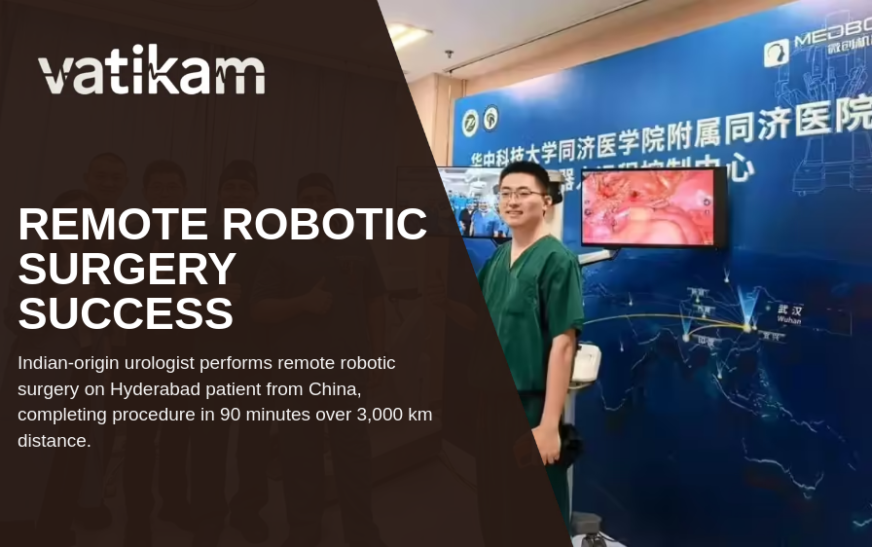
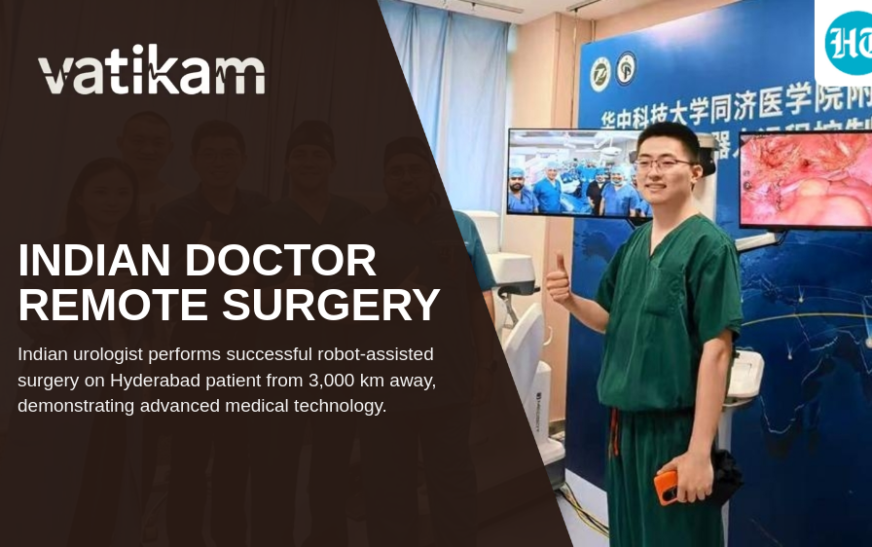
In a groundbreaking advancement for telemedicine and surgical technology, Indian urologist Dr. Syed Mohammed Ghouse achieved a remarkable milestone by performing a robot-assisted surgery remotely from Wuhan, China, on a patient located in Hyderabad, India. This feat highlights the transformative potential of robotic surgery combined with ultra-fast 5G connectivity to overcome geographical barriers in healthcare.
The Surgery and Technology Behind the Success
Dr. Ghouse, stationed at Tongji Hospital in Wuhan, carried out a complex bladder reconnection surgery on a patient approximately 3,000 kilometers away in Hyderabad. Utilizing robotic technology developed in China alongside high-speed 5G internet, the surgery was completed within 90 minutes, showcasing not only precision but also the feasibility of remote surgical interventions.
This innovative approach involved the integration of advanced surgical robots equipped with delicate instruments and high-definition 3D cameras. Dr. Ghouse operated from a console that provided real-time, three-dimensional views of the surgical site, allowing him to control the robotic arms remotely. The 5G network ensured the transmission of control signals with a latency as low as 200 milliseconds, enabling the robotic arms to mimic the surgeon’s hand movements instantaneously.
Preoperative Coordination and Surgical Execution
Successful remote surgeries require meticulous planning and coordination between teams in both locations. Doctors in Wuhan collaborated closely with their counterparts in Hyderabad through online communication platforms. Together, they reviewed detailed medical reports and mapped out precise movement paths for the robotic surgical arms before the operation commenced.
Medical staff in Hyderabad played an essential role in preparing the patient by administering anaesthesia and correctly positioning the robotic instruments. Throughout the surgery, local doctors stayed on standby to provide immediate intervention if necessary, ensuring patient safety.
International Collaboration and Demonstration
The remote surgery was part of a larger demonstration held at the 10th Congress of the Chinese Chapter of the International Hepato-Pancreato-Biliary Association. This event featured 26 surgeries, including five with live international remote connections, highlighting the role of telemedicine in advancing global medical collaboration.
Specialists from countries such as India, Brazil, Georgia, Greece, and Uzbekistan participated in live demonstrations across various surgical disciplines including urology, gastrointestinal, hepatobiliary, and pancreatic surgery.
The Future of Healthcare: The Rise of Robotic and AI-driven Surgery
Chen Xiaoping, director of surgery at Tongji Hospital and one of the program’s initiators, emphasized that healthcare systems worldwide are rapidly evolving with the integration of emerging technologies such as artificial intelligence (AI), 5G and upcoming 6G communications, and robotic assistance.
This fusion of cutting-edge technology with medical expertise heralds a new era of precision medicine and accessibility, particularly benefiting patients in remote or underserved regions. Robotic surgeries facilitated by high-speed connectivity promise enhanced accuracy, minimized invasiveness, and the ability to deliver expert surgical care regardless of location.
Benefits of Remote Robot-Assisted Surgery
- Accessibility: Expert surgeons can operate on remote patients without the need for travel.
- Precision: Robotic technology offers high accuracy and steadiness beyond human capabilities.
- Reduced Risk: Minimally invasive procedures reduce complications and recovery times.
- Global Collaboration: Medical professionals worldwide can share expertise and conduct joint surgeries.
- Future Growth: Integration with AI and advanced networks will further enhance surgical outcomes.
Conclusion
The successful execution of a robot-assisted surgery by Dr. Syed Mohammed Ghouse from Wuhan on a patient in Hyderabad marks a significant breakthrough in the field of telemedicine and surgical robotics. Leveraging advanced 5G technology and collaborative international efforts, this surgery opens new avenues for delivering top-tier healthcare across continents, potentially revolutionizing medical treatment accessibility worldwide.
As robotic surgery continues to evolve, incorporating AI and faster network technologies, the healthcare landscape promises to become more connected, efficient, and patient-centric, breaking traditional barriers of distance and expertise.
By Sanya Jain
}} ísticas: