
How Advanced Analytics Partnerships Are Transforming the Biopharma Value Chain
In today’s rapidly evolving biopharmaceutical industry, artificial intelligence (AI) and advanced analytics are at the forefront of innovation, reshaping drug discovery, manufacturing, and supply chain management. Strategic partnerships between biopharma companies and AI technology providers are proving essential to unlock the full potential of these technologies and deliver novel therapies more efficiently.
AI Integration Across Biopharma Operations
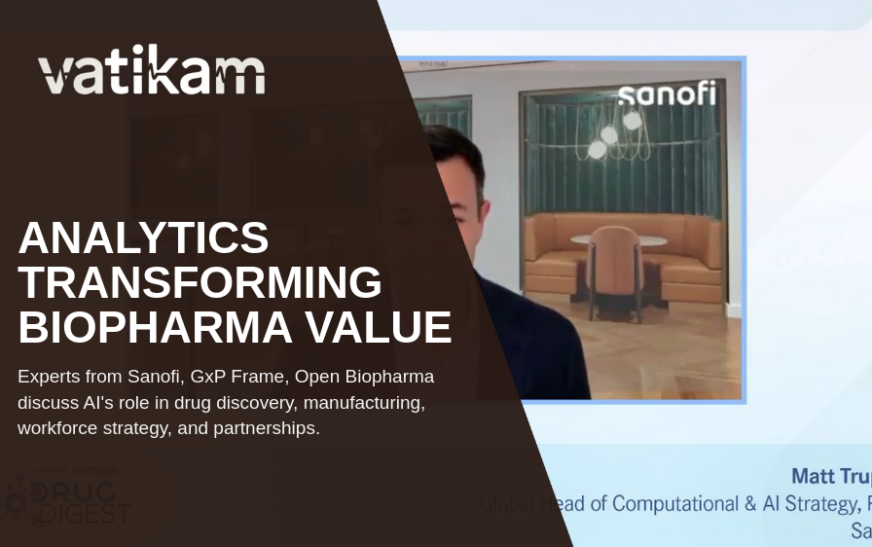
Experts from leading organizations such as Sanofi, GxP Frame, and Open Biopharma emphasize how AI is transforming various facets of the biopharma value chain. AI technologies are no longer isolated tools but interconnected platforms that integrate diverse data types—ranging from molecular structures and biological assays to patient demographics and clinical site performance data. This integration delivers improved scientific decision-making capabilities rather than solely automating tasks.
For example, Sanofi employs disease-specific target identification engines that unify genetics, proteomics, transcriptomics, and single-cell data to assess drug target viability, tissue expression patterns, and select optimal therapeutic modalities. Such AI-powered insights accelerate research timelines and enable the development of first-in-class therapies.
Operational AI Applications in Manufacturing and Supply Chain
While AI’s impact on discovery is highly visible, its operational applications in manufacturing and supply chain are equally significant, though less headline-grabbing. AI supports functions such as deviation management, batch record review, predictive maintenance, and demand forecasting, which enhance efficiency and reduce costly errors.
In emerging therapies like cell and gene therapy (CGT), the supply chain is patient-specific, emphasizing the importance of chain of identity and custody. Due to the complex, multi-party nature of the CGT supply chain, AI-facilitated cross-company collaborations are critical.
Ensuring Data Integrity and Regulatory Compliance
Data governance and regulatory compliance are top priorities when integrating AI into biopharma workflows. Trusted partnerships require collaborators capable of maintaining strict data integrity while performing comprehensive cross-domain integration.
It is vital that human oversight is structurally embedded within AI processes—not as an afterthought but as a fundamental element. Experts insist on the need for explainable AI systems that provide traceable and defensible outputs suitable for regulatory audits. Such transparency ensures that AI outputs can withstand scrutiny from inspectors, safeguarding product quality and patient safety.
Additionally, clearly documented source traceability, data governance frameworks, and declared model uncertainty are prerequisites for trustworthy AI deployment across R&D and manufacturing operations.
Expert Insights
- Matt Truppo, Global Head of Computational & AI Strategy, R&D at Sanofi: Truppo focuses on embedding AI and predictive analytics across therapeutic areas to streamline drug discovery and accelerate the development of innovative medicines. His work highlights the value of AI for connecting complex biological data sources to facilitate better-informed decisions.
- Brian Drapeau, Founder and Principal Consultant, GxP Frame: Drapeau emphasizes the practical operational uses of AI in manufacturing and supply chain, especially in patient-specific therapies like CGT. He advocates for strategic partnerships and warns against relying on AI operators lacking critical evaluation skills.
- Richard Jaenisch, Senior Director of Education, Outreach, and Digital Experience, Open Biopharma Research and Training Institute: Jaenisch champions explainability and traceability in AI implementations, underscoring the importance of transparent outputs for regulatory compliance and workforce training.
Conclusion
The integration of advanced analytics and AI through strategic partnerships is revolutionizing the biopharma industry from drug discovery to supply chain management. Embedding human expertise within these AI workflows ensures that innovation aligns with rigorous data integrity and regulatory standards. As the sector continues to evolve, these collaborations will be central to delivering safer, more effective therapies efficiently and reliably.
By harnessing the synergy of AI and human insight, biopharma companies can unlock unprecedented value in their R&D and manufacturing processes, ultimately improving patient outcomes worldwide.