
AI Accuracy in Diabetic Retinopathy Screening Varies with Fundus Camera Type: New Study Insights
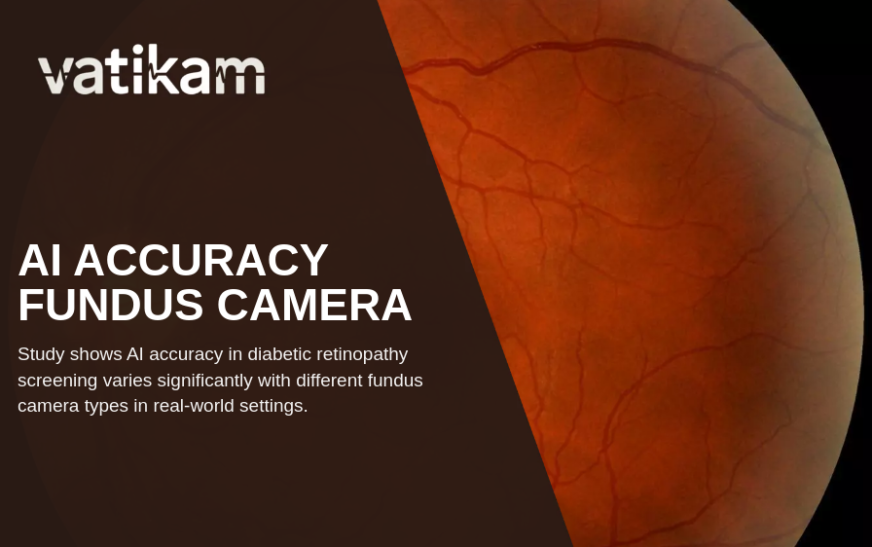
A recent prospective study published in the Indian Journal of Ophthalmology in June 2026 highlights a crucial finding: the diagnostic accuracy of artificial intelligence (AI) in diabetic retinopathy (DR) screening significantly depends on the type of fundus camera used. While AI algorithms demonstrate high sensitivity in detecting DR, their real-world performance varies across different devices, underlining the importance of device-specific validation to ensure clinical safety and effectiveness.
Background: AI in Diabetic Retinopathy Screening
Diabetic retinopathy, a leading cause of vision impairment among diabetic patients, requires regular screening for early detection and treatment. AI technologies have emerged as promising tools to assist in screening by providing automated analysis of retinal images. Controlled trial data have often shown AI’s accuracy in DR detection exceeding 85%, but real-world clinical outcomes sometimes diverge due to variability in imaging devices and patient populations.
The Study: Real-World Evaluation of AI Algorithms
To address these inconsistencies, researchers led by Dr. Anshul Chauhan at the Postgraduate Institute of Medical Education and Research (PGIMER) conducted a prospective primary care study assessing three distinct AI algorithms. They compared AI performance using two different fundus camera systems — Forus and Intuvision — analyzing 272 images from 136 diabetic adults.
Study Design and Methods
- Images were captured from two different camera types: Forus and Intuvision.
- A total of 272 fundus images from diabetic patients were evaluated.
- Sensitivity, specificity, and predictive values of each AI algorithm were measured against masked human graders as the reference standard.
- Patients with recent ocular trauma or surgeries were excluded.
Key Findings of the Study
- High Sensitivity with Low Specificity: The first AI algorithm achieved a remarkable sensitivity of 97.5% with the Forus camera. However, this came at the cost of lower specificity values (62.7% on Forus and 53.8% on Intuvision), which may lead to over-referrals and false positives clinically.
- Balanced Diagnostic Performance: The second algorithm demonstrated the most balanced performance, achieving high specificity (95.7% on Forus and 92.0% on Intuvision) while maintaining reasonable sensitivity levels (80.0% on Forus and 77.0% on Intuvision).
- Moderate Accuracy in Third Algorithm: The third AI model showed moderate diagnostic capability, with sensitivity ranging from 73.3% to 79.7% and specificity between 82.0% and 86.0% across both camera platforms.
- Impact of Media Opacities: Patient factors such as cataracts influenced image quality, with the highly sensitive first algorithm rejecting more images as ungradable compared to other algorithms.
Clinical Implications
The study underscores that AI performance in diabetic retinopathy screening is not universally effective across all fundus cameras. Variations in device specifications, calibration thresholds, and patient ocular characteristics can significantly affect AI diagnostic accuracy. For instance, one algorithm demonstrated 100% image gradability but missed nearly 40% of actual DR cases, illustrating the risk of under-detection with certain device-algorithm combinations.
Healthcare providers must perform rigorous, device-specific validation and calibration of AI screening tools before implementing them in clinical workflows. This is especially critical in primary care where such tools could significantly impact referral patterns and patient outcomes.
Limitations and Future Directions
Despite valuable insights, this study’s limitations include a modest sample size, analysis on an eye-wise basis without clustering adjustment, and being conducted at a single site. These factors may limit the generalizability of findings. Further large-scale multicenter studies are necessary to externally validate AI algorithms with different fundus cameras and evaluate performance in diverse patient subgroups, particularly those with media opacities such as cataracts.
Conclusion
AI shows great promise for diabetic retinopathy screening, but its accuracy heavily depends on the type of fundus camera employed. Clinicians and healthcare facilities must not only consider the choice of AI platform but also its compatibility and validation with their specific imaging devices to optimize screening accuracy and patient care.
Reference
Chauhan A, Rana G, Verma P, Yadav M, Kumar L, Kaur G, et al. Diagnostic performance of multiple artificial intelligence (AI) algorithms for diabetic retinopathy screening in primary care: Evidence from real-world settings in India. Indian J Ophthalmol 2026.