
AI Revolutionizes Brain Tumour Diagnosis: Who Will Benefit?
Cancer is a daunting diagnosis that brings fear and uncertainty to patients and their families. For those awaiting confirmation, the waiting period is often the hardest part, filled with anxiety and worry. However, recent advancements in artificial intelligence (AI) promise to transform this critical phase by drastically reducing diagnosis times from weeks or days to mere minutes.
The Breakthrough AI Tool: Hetairos
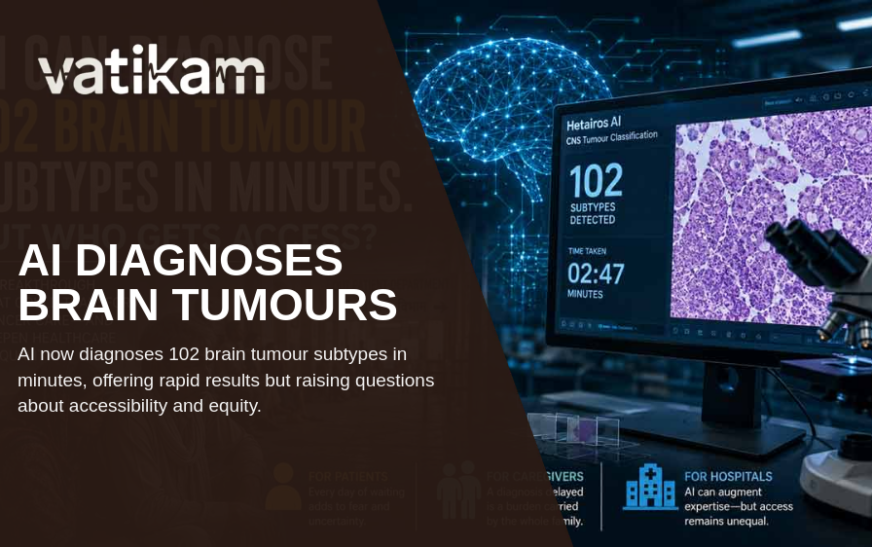
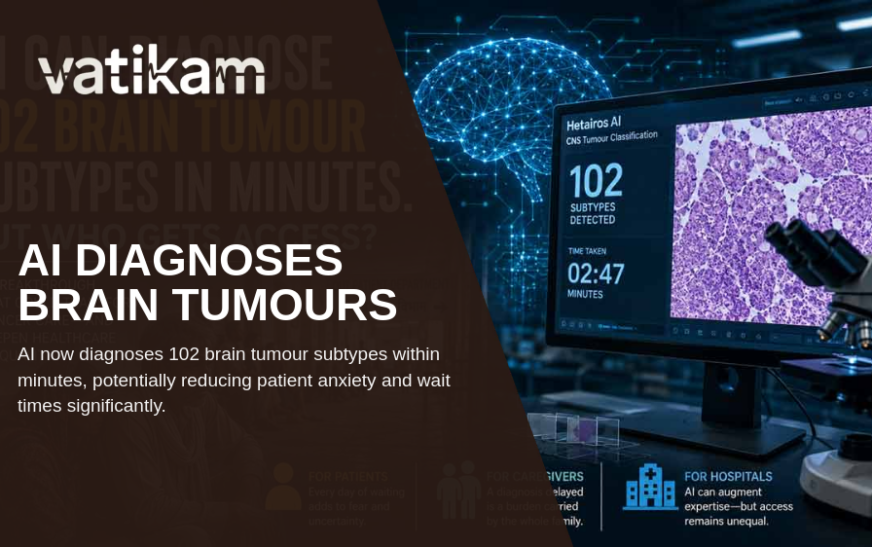
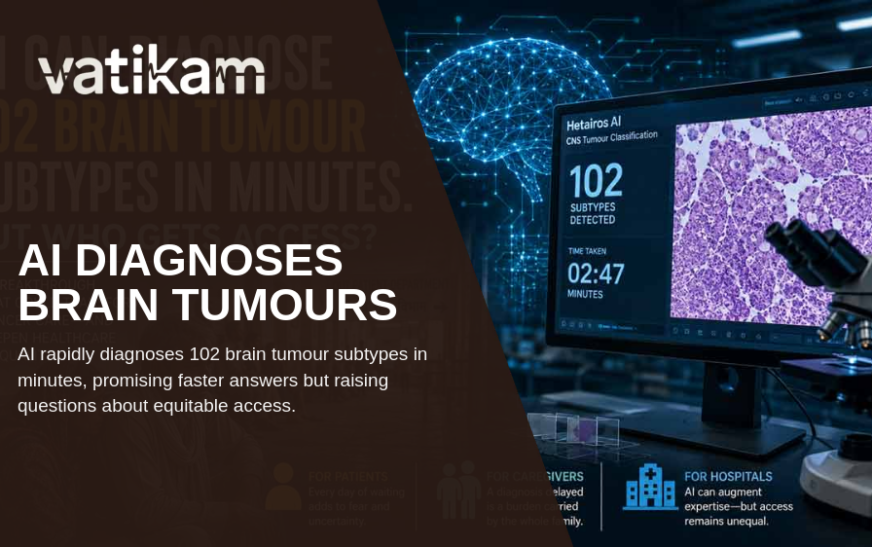
Researchers from the German Cancer Research Centre (DKFZ), Heidelberg University’s Medical Faculty, and Heidelberg University Hospital have developed an innovative AI tool named Hetairos. This tool can analyze standard pathology slides and identify 102 distinct brain and central nervous system (CNS) tumour subtypes rapidly and accurately.
Traditionally, identifying these tumour types requires highly specialized molecular testing, advanced lab infrastructure, and expert neuropathologists. Hetairos uses deep learning to detect subtle patterns on routine pathology slides, enabling faster and more efficient diagnoses which are crucial for timely treatment decisions.
Why Faster Diagnosis Matters
For patients, a cancer diagnosis affects much more than their physical health. It disrupts daily life, relationships, careers, and future plans. The time between tests and diagnosis is often filled with turmoil as uncertainty grows. Faster AI-driven diagnoses can reduce this distress by offering earlier clarity, enabling patients to start treatment discussions sooner, consider second opinions, and regain control in a challenging time.
Supporting Caregivers
Caregivers also endure considerable emotional and logistical stress during prolonged diagnostic periods. In countries like India, where families often act as primary caregivers, the burden of managing appointments, finances, and emotional support is substantial. Swift diagnosis results can alleviate some of this pressure by allowing better planning and earlier initiation of treatment support systems.
AI’s Role in Relieving Healthcare System Strain
Healthcare institutions worldwide face increasing patient loads, workforce shortages, and a scarcity of specialists, especially in niche fields like neuropathology. AI tools like Hetairos aim to augment the capabilities of healthcare professionals rather than replace them.
Several AI-powered pathology platforms, including those from companies like PathAI, Paige, and Tempus, are already making strides by integrating AI into diagnostic workflows to improve efficiency and accuracy.
Access and Equity: The Core Challenge
The most significant question arising from this exciting technological advancement is: who will benefit?
In an ideal scenario, AI-driven diagnostics would be accessible across all healthcare settings, from district hospitals to elite cancer centers, enabling equal access to expert-level care regardless of geography or economic status.
However, the reality is often more complex. Resource constraints, infrastructure gaps, and workforce challenges especially affect public hospitals and rural health centers. AI technology may initially be available predominantly in well-funded hospitals with advanced digital infrastructure, potentially deepening existing healthcare disparities rather than bridging them.
Insurance complexities and administrative hurdles further complicate access to fast and advanced diagnostic tools for many patients.
Bridging the Divide with Inclusive Deployment
Whether AI narrows or widens healthcare inequality largely depends on how it is deployed.
- Integration into public healthcare: Investing in AI solutions for public hospitals can extend specialist diagnostic assistance to underserved populations.
- Supporting district hospitals: Empowering local pathologists with AI insights may reduce the need for patients to travel long distances for specialty care.
- Policy and investments: Strong governance, validation across diverse populations, and targeted funding are essential to democratize AI healthcare benefits.
The Emerging AI Healthcare Divide
Healthcare inequity has traditionally been viewed through lenses such as urban versus rural, private versus public, or rich versus poor. With AI, a new dimension emerges—access to advanced algorithms versus conventional care.
Hospitals equipped with AI tools may offer faster and more accurate diagnoses, while others might struggle with slower, resource-limited methods. This evolving divide suggests that future healthcare disparities might hinge on technological adoption as much as on traditional factors.
Looking Ahead: Promise and Responsibility
AI in healthcare offers substantial promise: efficiency gains, faster diagnoses, and improved clinical decision-making. Yet realizing this potential with fairness requires careful planning, supportive policies, and inclusive implementation.
For patients, caregivers, and healthcare providers alike, AI represents both hope and a challenge. The true impact of AI in brain tumour diagnoses—and healthcare broadly—will be defined by how equitably the technology is shared, not merely by how advanced the algorithms become.
In conclusion, the future of healthcare equity may very well depend on ensuring that AI tools like Hetairos become accessible to millions who desperately need specialist care, not just the privileged few.
Focus keyword: AI brain tumour diagnosis