
AI-Assisted Diabetic Retinopathy Screening Launched at GGH Guntur: A Pilot Initiative in Andhra Pradesh
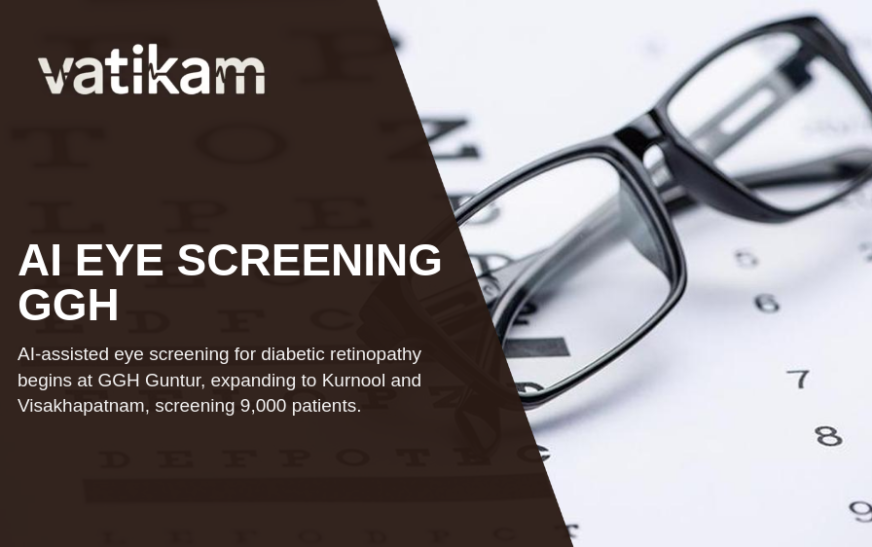
The Department of Health, Medical Education and Family Welfare, Andhra Pradesh, has embarked on a pioneering pilot project deploying Artificial Intelligence (AI) to assist in the screening of diabetic retinopathy. This innovative initiative was launched at the Government General Hospital (GGH) in Guntur and aims to enhance early detection and treatment of this serious eye condition among diabetic patients.
Introduction to AI in Diabetic Retinopathy Screening
Diabetic retinopathy is a diabetes-related complication that affects the eyes and can lead to vision loss if undiagnosed or untreated. Traditional screening relies heavily on retinal specialists and availability of fundus cameras for capturing retinal images, limiting access especially in areas with scarce specialist resources.
To overcome these challenges, the Andhra Pradesh health department has integrated AI technology to analyse retinal images captured through fundus cameras. This AI system helps in determining the severity of the condition, prioritizing urgent cases, and identifying patients who need specialist consultations.
Details of the Pilot Project
- Initial Launch: Government General Hospital, Guntur
- Expansion: To extend to Regional Hospital, Kurnool on June 13, and Government Regional Eye Hospital, Visakhapatnam on June 16
- Screening Volume: Approximately 9,000 people over three months
- Technology Platform: Madhunetra app, developed by Wadhwani AI Foundation
The pilot project is designed to test the effectiveness and scalability of AI-assisted screening. Retinal images collected via fundus cameras are uploaded onto the Madhunetra app, which applies AI algorithms to assess the retinal health and the presence and severity of diabetic retinopathy.
Advantages of AI-Based Screening
AI-powered screening represents a transformative approach to diabetic eye care:
- Increased Access: Screening can be done by optometrists in primary care settings without immediate specialist supervision.
- Resource Optimization: Retinal specialists can focus on treating patients with confirmed or severe conditions rather than initial screening.
- Improved Early Detection: AI aids in faster diagnosis by automatically analyzing retinal images with high accuracy.
- Scalability: Enables eye screening in hospitals and primary care units lacking retinal specialists but equipped with fundus cameras.
- Patient Prioritization: The system indicates urgency and severity, ensuring timely specialist intervention.
Challenges Addressed by AI Screening
Currently, diabetic retinopathy diagnosis and treatment depend on retinal specialists available only in centers equipped with fundus cameras. This limitation restricts timely diagnosis, especially in rural and remote regions. AI-based screening overcomes the dependency on specialists by enabling trained optometrists to perform screenings and refer cases requiring specialist care.
Future Outlook and Expansion
Following the pilot’s success in Guntur, the expansion to hospitals in Kurnool and Visakhapatnam will broaden the reach of this technology. Screening 9,000 individuals over three months will provide valuable data to refine AI algorithms and streamline deployment across the state.
This AI-assisted initiative is a significant step towards integrating advanced technology in public health services in Andhra Pradesh, aiming to reduce the burden of diabetic retinopathy-related blindness.
Conclusion
The introduction of AI-assisted diabetic retinopathy screening at GGH Guntur marks a milestone in healthcare delivery, combining technology with accessible medical care. By leveraging AI, the government aims to improve early diagnosis, expand screening coverage, and ensure timely medical intervention for diabetic eye complications, ultimately saving thousands from preventable blindness.