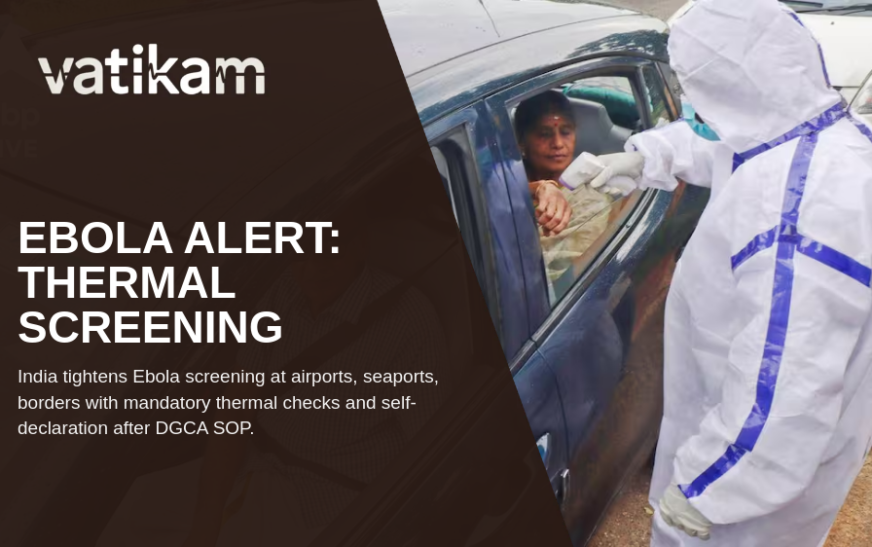

Ebola Alert in India: Mandatory Thermal Screening and Self-Declaration at Airports After DGCA SOP
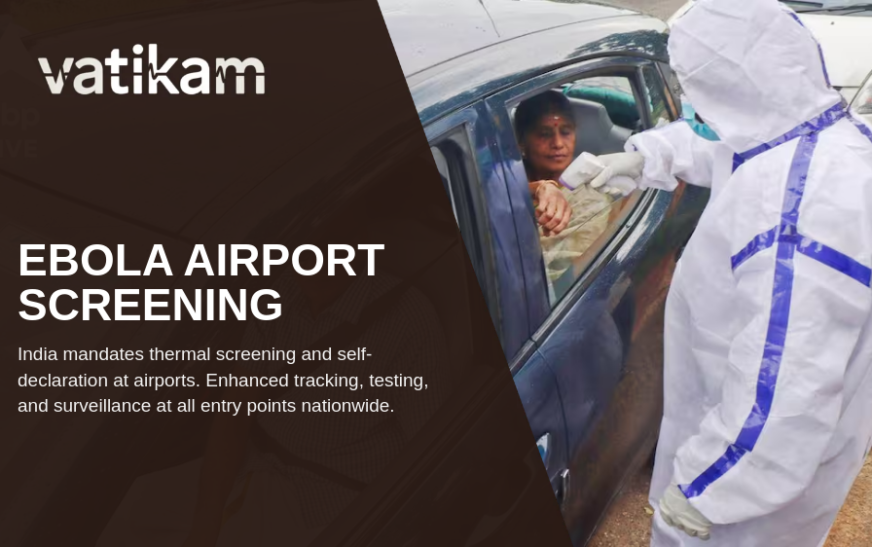
India has enhanced its vigilance against the ongoing Ebola outbreak by implementing mandatory thermal screening and self-declaration protocols at all international airports. This move aligns with the Directorate General of Civil Aviation’s (DGCA) recently approved Standard Operating Procedures (SOPs) to prevent the spread of the virus across the country’s entry points.
Heightened Screening and Surveillance Across Entry Points
The Government of India, following alerts from global health authorities, has directed authorities to strengthen Ebola screening at airports, seaports, and land border checkpoints nationwide. The Indian Council of Medical Research (ICMR) and the National Centre for Disease Control (NCDC) have been tasked with maintaining high-alert tracking, testing, and surveillance systems.
The World Health Organization (WHO) has declared the Ebola outbreak a Public Health Emergency of International Concern (PHEIC), while the Africa Centres for Disease Control and Prevention (Africa CDC) considers it a continental-level emergency.
Union Health Minister Reviews Preparedness
On May 25, 2026, Union Health Minister Jagat Prakash Nadda conducted a comprehensive review of India’s preparedness in light of the recent Ebola developments in Africa. The Health Ministry confirmed no cases of Bundibugyo Ebola disease have been reported in India, but proactive measures have been intensified to safeguard public health.
Enhanced screening protocols and monitoring at all international entry points have been activated. The ministry has disseminated advisories and SOPs detailing screening, quarantine procedures, clinical management, laboratory testing, and infection prevention to all states and union territories.
Minister Nadda also directed ICMR and NCDC officials to ensure that all systems remain fully operational and ready to respond at all times.
Travel Advisory Issued for Affected African Nations
In response to the escalating outbreak, India issued a travel advisory on May 24, 2026, urging citizens to avoid non-essential travel to the Democratic Republic of Congo, Uganda, and South Sudan. Additionally, the Health Ministry has provided comprehensive hospital preparedness guidelines that include infection control measures, isolation protocols, and safe handling of Ebola-related fatalities.
Understanding Ebola and India’s Precautionary Measures
Ebola virus disease is a severe and often fatal illness transmitted through direct contact with infected bodily fluids. Given the high risk associated with cross-border transmission, India’s precautionary approach includes:
- Mandatory thermal screening of all international travelers at airports to identify potential cases early.
- Self-declaration forms requiring travelers to disclose recent travel history and symptoms.
- Strict quarantine and isolation protocols for suspected or confirmed cases.
- Robust clinical management and laboratory testing procedures.
- Awareness campaigns and training for frontline health workers.
Global Context and Regional Impact
The WHO’s declaration of Ebola as a Public Health Emergency has intensified international efforts to contain the virus. In Africa, where the outbreak originated, public unrest has been reported, including protests related to health centers. The heightened alert in India reflects a commitment to preventing similar scenarios.
Conclusion
India’s proactive measures in enforcing thermal screening and mandatory self-declaration at airports underscore the country’s commitment to safeguarding public health amid the ongoing Ebola threat. Travelers are advised to adhere strictly to guidelines and monitor official communications for updates.
Stay informed and prioritize health safety by following India’s travel advisories and the DGCA’s operational procedures at entry points.