
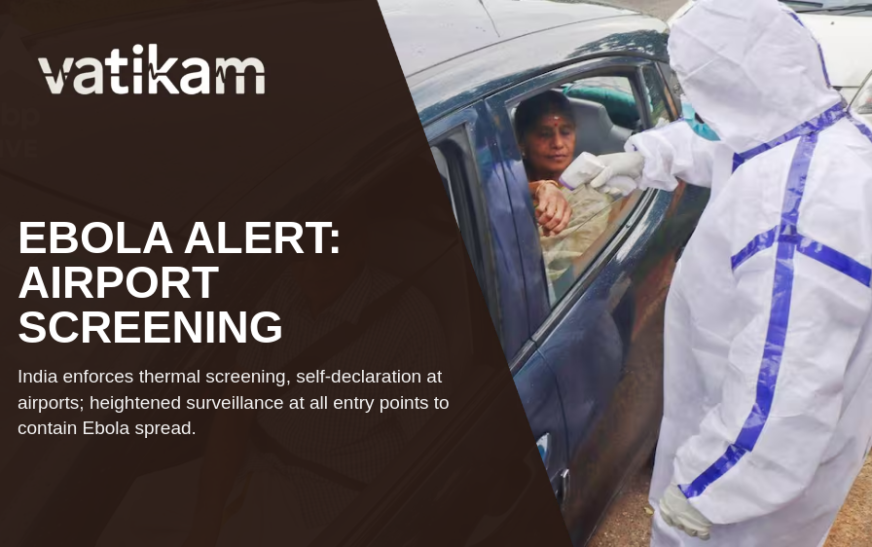
Ebola Alert in India: Mandatory Thermal Screening and Self-Declaration at Airports Following DGCA SOP
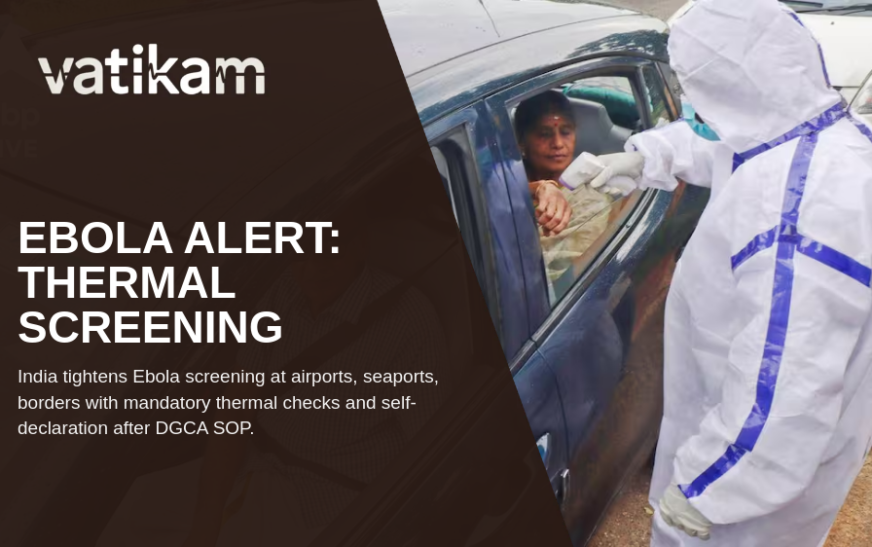
In response to the evolving Ebola outbreak declared a Public Health Emergency of International Concern by the World Health Organization (WHO), India has intensified its preventive measures to safeguard public health. On May 25, 2026, the Union Health Ministry implemented mandatory thermal screening and self-declaration protocols at all international airports, seaports, and land border checkpoints across the country, in accordance with guidelines set by the Directorate General of Civil Aviation (DGCA) Standard Operating Procedures (SOPs).
Strengthening Ebola Screening and Surveillance Measures
The Central Government has issued directions to bolster Ebola virus screening arrangements at every point of entry to India. This comprehensive approach spans airports, seaports, and land borders to ensure early detection of possible cases and prevent the virus’s entry and spread within the country.
Authorities including the Indian Council of Medical Research (ICMR) and the National Centre for Disease Control (NCDC) are on high alert, continuously monitoring, tracking, and testing potential cases. Enhanced surveillance systems have been established to promptly identify and respond to Ebola-related health threats.
International Health Emergency Context
The WHO has categorized the ongoing Ebola outbreak as a Public Health Emergency of International Concern (PHEIC). Concurrently, the Africa Centres for Disease Control and Prevention (Africa CDC) has declared the situation a continental-level health emergency due to the outbreak’s scale and severity in affected African regions.
India’s Preparedness Reviewed by Health Ministry
Union Health Minister Jagat Prakash Nadda chaired a review meeting to assess India’s preparedness against Ebola. He affirmed that India has not reported any cases of the Bundibugyo Ebola virus strain so far. However, proactive steps have been taken in light of the international emergency declarations.
During the meeting, the Health Ministry highlighted that strict screening and monitoring protocols have been activated at all international entry points. States and Union Territories have been issued advisories and SOPs covering screening procedures, quarantine protocols, clinical management, laboratory testing, and infection prevention controls specific to Ebola virus disease.
Minister Nadda instructed officials from the Health Ministry, ICMR, and NCDC to ensure that all tracking, testing, and surveillance mechanisms remain fully operational and prepared to respond immediately to any suspicious cases.
Travel Advisories and Public Precautions
India has issued a travel advisory recommending that citizens avoid non-essential visits to Ebola-affected countries including the Democratic Republic of Congo, Uganda, and South Sudan. This advisory was accompanied by detailed SOPs for hospitals across the country, including guidelines for infection control, isolation procedures, and safe handling of Ebola-related fatalities.
Key Measures at Airports and Borders
- Thermal screening: All incoming passengers at airports and borders are screened for fever, a primary symptom of Ebola.
- Mandatory self-declaration: Travelers must fill out self-declaration forms reporting recent travel history and any symptoms to aid in early identification of potential cases.
- Quarantine readiness: Facilities for isolation and quarantine are prepared for any suspected cases detected during screening.
- Awareness and training: Health and frontline workers have been trained extensively on Ebola symptoms, preventive measures, and emergency protocols.
Importance of Vigilance and Community Cooperation
While no Ebola cases have been detected in India, the government underscores the importance of vigilance among healthcare providers, airport authorities, and the general public. Early detection and immediate response play a crucial role in containing the virus and preventing local transmission.
The public is also encouraged to stay informed through official channels and strictly adhere to guidelines regarding travel and health monitoring, especially when returning from countries with active Ebola outbreaks.
Conclusion
India’s proactive and comprehensive approach to the Ebola outbreak emphasizes its commitment to public health safety. Through mandatory thermal screening, self-declaration at border points, and coordinated efforts of health agencies like ICMR and NCDC, India aims to prevent the introduction and spread of Ebola within its borders.
Continued public cooperation and adherence to travel advisories are essential in this ongoing health emergency. Monitoring updates from the Ministry of Health and respecting safety protocols will help strengthen India’s defense against this global health threat.
Source: Doonited News and Media Services, May 25, 2026