
Why Operational Efficiency is Critical for India’s Healthcare Growth
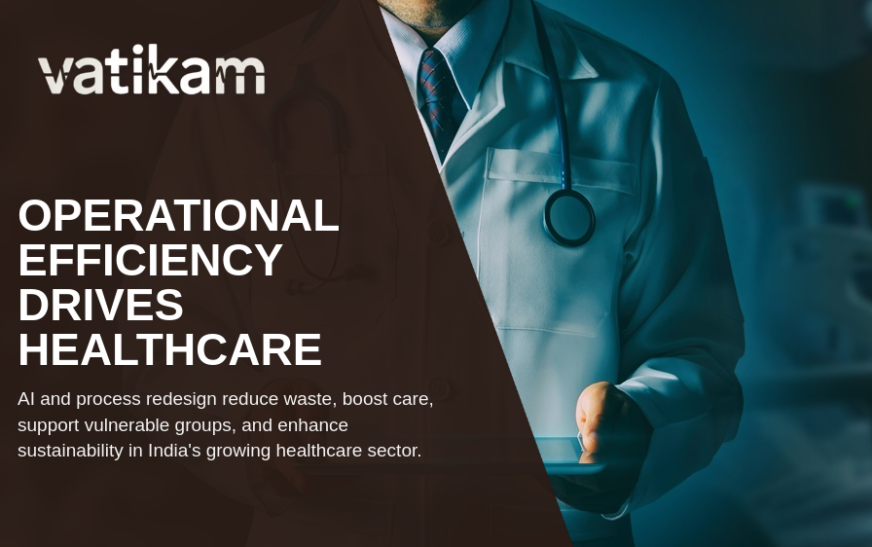
India’s healthcare sector is expanding rapidly, valued at an estimated $638 billion in 2025 and continuing to attract record investments. Despite this growth, a critical challenge remains: operational inefficiency within the healthcare system threatens to divert resources away from patient care, undermining the sector’s potential to serve the nation effectively. Addressing these inefficiencies through technology and process innovation is not just a strategic imperative but a necessity for improving healthcare equity and accessibility.
The Challenge of Administrative Inefficiency in Indian Healthcare
India’s healthcare system is a complex mix of public hospitals, private chains, small nursing homes, and an expanding insurance ecosystem under schemes like Ayushman Bharat PM-JAY. However, operational waste—such as delays in claims processing, reliance on manual paperwork, and fragmented data systems—drains valuable resources.
Public health expenditure remains below 2% of GDP, and out-of-pocket expenses account for nearly 47% of total healthcare spending. Moreover, the doctor-to-population ratio in many states is as low as 1:2,000. In this context, every hour spent on administrative tasks is an hour lost for patient care and access.
Global Lessons: The US Healthcare Administrative Burden
Globally, administrative costs consume substantial portions of healthcare budgets. For example, in the United States, administrative expenses account for about 25% of total healthcare spending, translating to over $1.3 trillion annually. Studies suggest that wasteful administrative spending in the US alone runs into hundreds of billions of dollars.
Although India’s healthcare structure differs significantly, it grapples with its own administrative complexities—such as manual insurance claims processes, diverse insurer portals, and paper-based workflows—that delay reimbursements and increase costs, thereby pushing quality healthcare further out of reach for many.
Leveraging AI and Technology for Operational Efficiency
The path to improved operational efficiency is not merely through adopting technology but through fundamentally redesigning workflows. Tuhina Kapoor, Associate Partner at McKinsey & Company, highlights that AI, automation, and care model innovation in the US could unlock improvements worth up to 15% of national health expenditure by automating high-burden administrative workflows.
Indian healthcare can leapfrog traditional digitization by utilizing the national digital infrastructure under the Ayushman Bharat Digital Mission (ABDM). This infrastructure enables standardized data exchange and workflow redesign across the healthcare ecosystem, from large urban hospitals to rural primary health centers, offering an unparalleled opportunity to reduce administrative waste.
National Digital Backbone: Ayushman Bharat Digital Mission
ABDM aims to build an open, interoperable digital health ecosystem using unified national standards. As of early 2026, over 84 crore Ayushman Bharat Health Account (ABHA) IDs have been created, linking more than 82 crore health records nationwide. This initiative has registered over 3.6 lakh health facilities and 5.6 lakh healthcare professionals, facilitating seamless health data flow and telemedicine access.
A critical component is the National Health Claims Exchange (NHCX), which streamlines claims processing by replacing multiple insurer-specific portals with a single, standardized digital gateway. Early data shows that NHCX could reduce claim processing costs dramatically—from around ₹500 to under ₹15 per transaction—freeing substantial administrative resources.
Ensuring Equitable Benefits Across India
While digital infrastructure promises efficiency, adoption varies widely across regions and facilities. Approximately 1.6 lakh healthcare facilities currently use ABDM-enabled software, a small fraction of the total providers, with disparities across states and rural versus urban areas.
Healthcare fragmentation and varied digital literacy levels create challenges. For instance, the doctor-to-population ratio is around 1:811 nationally but declines to 1:2,000 or worse in some rural states. Seventy percent of healthcare facilities are urban-centric, leaving rural populations dependent on underfunded public hospitals and expensive private care.
Operational efficiency must therefore be a lever for equity. Digitally streamlining processes in rural primary health centers, enabling faster referrals, and automating claims in empaneled hospitals can enhance access and financial viability for facilities serving vulnerable populations.
Regulatory Support and AI Integration
India’s Strategy for Artificial Intelligence in Healthcare (SAHI) framework supports AI applications in administrative and operational areas by providing regulatory clarity, allowing faster adoption of validated AI tools tailored to Indian contexts. Alongside platforms like ABDM and NHCX, this framework encourages intelligent automation, reducing administrative workloads and enabling healthcare professionals to focus more on patient care.
Redirecting Savings to Improve Care Delivery
The most compelling benefit of operational efficiency is not just cost savings but the ability to redeploy these savings towards expanding healthcare access. Studies indicate that even modest reductions in administrative burden can free up significant provider time for patient consultations, follow-ups, and community outreach.
For example, if AI reduces staff documentation time by 15–20%, this could translate into a substantial increase in the number of patients seen and services provided. Digital transformation can thus improve both the financial sustainability of healthcare providers and the quality and reach of care delivered.
Building a Healthcare System for All
India’s policymakers and healthcare leaders have an opportunity to design AI and digital solutions that serve the entire healthcare spectrum—from premier urban hospitals to rural sub-centers. Equitable AI deployment involves ensuring tools support multiple Indian languages, are validated on local data, and are accessible beyond large metropolitan centers.
Tuhina Kapoor emphasizes that administrative efficiency and health equity are intertwined. Every rupee saved from reducing administrative inefficiency can fund frontline healthcare workers and sustain facilities serving poorer populations. Unlike the US, India benefits from a national interoperability layer being built in real-time, offering the potential to ensure such digital advancements reach every health facility, not just those with advanced infrastructure.
Conclusion
Operational efficiency is critical to the sustainable growth of India’s healthcare sector. Through AI, digital infrastructure like ABDM, and comprehensive process redesign, India can reduce administrative waste, lower costs, and enhance healthcare access, especially for the underserved. The challenge lies in bridging the gap between infrastructure and widespread adoption while prioritizing equity to ensure all Indians benefit from these innovations.
By focusing on both efficiency and inclusivity, India has the potential to transform its healthcare landscape into a model of accessible, affordable, and sustainable care for generations to come.
Author: Anshu Khanna, widely acclaimed writer, columnist, and editor.