
SEHAT Scheme Uncertainty Raises Fears of Treatment Disruptions for Dialysis and Cancer Patients in J&K
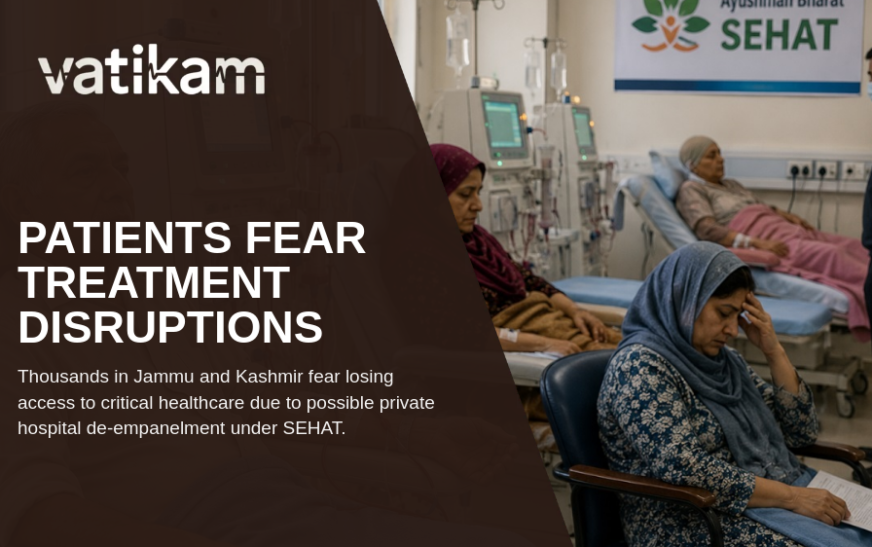
Thousands of patients suffering from chronic kidney disease and cancer across Jammu and Kashmir are facing growing uncertainty over their healthcare access as private hospitals threaten to withdraw from the Ayushman Bharat-SEHAT scheme starting July 1. This alarming development could severely impact treatment continuity for dialysis and chemotherapy patients who depend heavily on the scheme’s cashless services.
Background: The SEHAT Scheme and Its Importance
Launched to provide free healthcare access to vulnerable populations, the Ayushman Bharat-SEHAT scheme has enabled thousands of patients in Jammu and Kashmir to receive essential medical treatments at empanelled private hospitals without financial burden. For many, it has been a lifeline, especially for costly and critical therapies like dialysis and cancer chemotherapy.
Current Crisis: Private Hospitals May Exit the Scheme
The Jammu and Kashmir Private Hospitals and Dialysis Centres Association recently announced the possibility of member hospitals withdrawing from the SEHAT scheme due to prolonged non-payment of dues by the State Health Agency (SHA). This action could commence from July 1, 2026, and patients fear this could disrupt their ongoing treatments.
Non-payment issues have strained relations between private healthcare providers and the government, raising concerns about the scheme’s sustainability and future.
Impact on Patients and Families
Patients undergoing routine dialysis require multiple weekly sessions to sustain their health, while cancer patients follow strict chemotherapy schedules. Even short treatment interruptions can result in serious health consequences, including worsened prognosis and increased mortality risk.
Many patients and their attendants have expressed fears that government hospitals lack the capacity to absorb the sudden increase in demand for dialysis and oncology services, as public facilities already operate under significant pressure with limited infrastructure and specialist availability.
- Treatment Interruptions: Discontinuation of dispensable private hospital support may lead to unavoidable treatment delays or cancellations for some patients.
- Financial Hardship: Without cashless services, many families will face overwhelming expenses or may need to forgo treatment altogether.
- Increased Burden on Public Hospitals: The withdrawal of private providers could overwhelm government healthcare institutions, further diminishing the quality and timeliness of care.
Expert Opinions and Patient Appeals
Medical experts emphasize the critical need for uninterrupted treatment cycles, noting that dialysis and chemotherapy adherence is essential for patient survival. Even brief interruptions can have life-threatening consequences.
Patients and families have appealed to the government to prioritize resolving pending payment issues with private hospitals to prevent a looming healthcare crisis. They urge the authorities to ensure continuity of SEHAT scheme services under a patient-centric approach to avoid leaving vulnerable individuals without care.
Calls for Government Intervention
The call for immediate government action is clear:
- Resolve payment delays promptly to retain private hospital participation.
- Implement a patient-focused transition plan if any changes in the scheme occur.
- Strengthen public hospital infrastructure to better manage potential patient overflow.
Conclusion
The uncertainty surrounding the Ayushman Bharat-SEHAT scheme’s future in Jammu and Kashmir has triggered deep concern among thousands of dialysis and cancer patients who rely on continuous and cost-effective treatment. With the July 1 deadline approaching, stakeholders hope that swift and amicable solutions will enable uninterrupted healthcare access, safeguarding patient lives and wellbeing.
Ensuring that cashless treatment under the SEHAT scheme continues without disruption is critical to protect the most vulnerable from falling through cracks in the healthcare system.