
Revolutionizing Pharmacovigilance: How Autonomous Systems Are Transforming Signal Management and Reporting Timelines
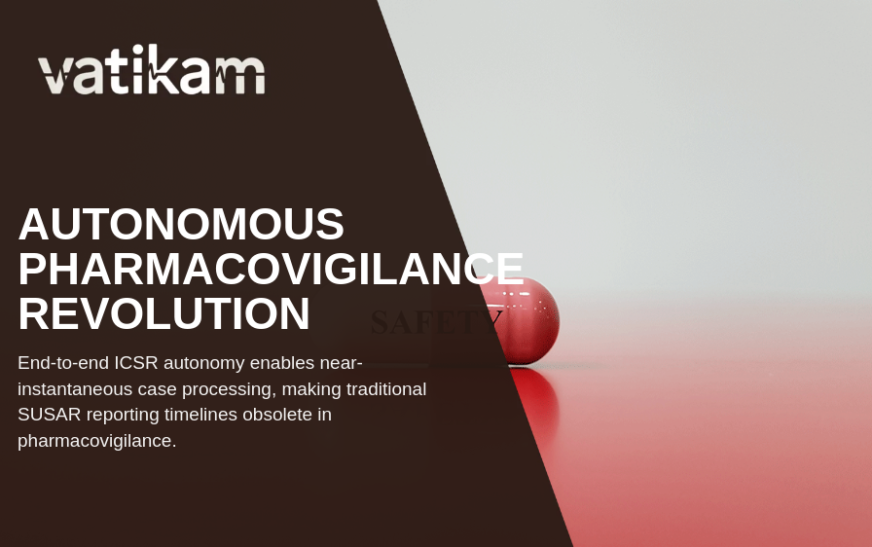
Pharmacovigilance (PV) is poised for a revolutionary shift, driven by autonomous technologies that promise to transform safety signal management and reporting timelines fundamentally. Moving beyond incremental improvements in case processing, these advancements anticipate a future where safety data are available in near real-time, enabling continuous and proactive monitoring rather than periodic reviews.
The Evolution of Signal Management in Drug Safety
Traditionally, pharmacovigilance has relied heavily on manual workflows and retrospective analysis of safety data, often resulting in delays that limit timely detection and mitigation of adverse drug reactions. Current regulatory frameworks, such as the seven-day Suspected Unexpected Serious Adverse Reaction (SUSAR) reporting timeline, reflect the constraints of manual case processing.
However, innovations in artificial intelligence (AI) and automation are redefining these constraints. Autonomous pharmacovigilance systems promise near-instantaneous case processing, rendering traditional timelines obsolete and shifting the PV paradigm from reactive to proactive safety management.
Regulatory Drivers for Autonomous Pharmacovigilance
Regulatory bodies worldwide are signaling the need for real-time pharmacovigilance capabilities. The European Medicines Agency (EMA) aims for PV systems that support continuous safety monitoring by 2030, as outlined in their guidelines and the revised Good Pharmacovigilance Practices (GVP) Module IX. Similarly, the U.S. Food and Drug Administration’s (FDA) Sentinel Initiative is building infrastructure for active, real-world surveillance.
Meeting these regulatory expectations requires integrating robust AI-driven automation and comprehensive governance frameworks capable of withstanding inspection-level scrutiny. The shift promises more timely regulatory visibility, earlier patient protection, and enhanced benefit-risk assessments.
The Challenge of Data Volume and Quality
With the explosion of data sources—including clinical trials, real-world evidence, electronic health records, and spontaneous reporting systems—the challenge has shifted from data scarcity to managing volume, noise, and duplication. For example, research shows that individual case safety reports are often duplicated across multiple submissions, complicating signal detection.
AI systems are uniquely equipped to navigate this complexity by distinguishing genuine safety signals from artefacts and prioritizing cases for expert review. This enables safety scientists to focus their expertise on interpreting high-priority, contextually enriched signals rather than sifting through overwhelming data volumes.
Enhancing Quality and Consistency through AI
Human-dependent workflows in pharmacovigilance are known for variability and limited quality control coverage. AI-powered automation can provide continuous, 100% quality oversight, detect operational drift, and enable systematic model retraining, which far exceeds the traditional 5-10% manual quality checks.
This automated approach also enhances auditability as every decision and action is logged and traceable. The transition is akin to past industry shifts, such as outsourcing case processing to contract research organizations, where initial concerns about oversight were resolved with governance and experience.
Importantly, the goal is augmented pharmacovigilance rather than fully autonomous systems—automation handles high-volume, routine tasks while human experts focus on interpretation, regulatory dialogue, and benefit-risk evaluation.
A Realistic Timeline and Impact
The foundational technologies for autonomous pharmacovigilance—including automated case intake, AI-assisted coding, and continuous quality monitoring—are already available or in active development. Organizations ready to invest in these capabilities and governance structures could adopt near-instantaneous case processing within five years.
Such capabilities would fundamentally alter signal detection workflows to be continuous and real-time rather than periodic, making the current seven-day SUSAR timeline conservative by comparison. This advancement is critical for drugs with limited initial safety data, where early detection accelerates mitigation and protects patients sooner.
Benefits of Embracing Autonomous Pharmacovigilance
- Accelerated Signal Detection: Continuous monitoring allows faster identification of safety issues.
- Improved Patient Safety: Earlier regulatory reporting facilitates swifter interventions.
- Optimized Expert Resources: Safety scientists focus on high-value interpretive tasks rather than data processing.
- Regulatory Compliance: Robust governance supports regulatory trust and inspection readiness.
- Operational Efficiency: Automation reduces manual workload and associated errors.
Conclusion: Preparing for the Future of Pharmacovigilance
The transformation of pharmacovigilance signal management through autonomous technologies is not a distant vision but an achievable near-term reality. Regulatory trends and technological advances converge to make real-time, AI-enhanced safety monitoring the new standard by 2030.
Pharmaceutical organizations that proactively invest in integrated automation and governance frameworks will gain a competitive advantage—enhancing drug safety, protecting patients more effectively, and building stronger regulatory relationships.
By embracing this change now, the industry can transition to a future where reporting timelines are no longer constraints but milestones surpassed.