
Pharmacy Shops to Remain Open Amid AIOCD Nationwide Strike Call Against E-Pharmacies
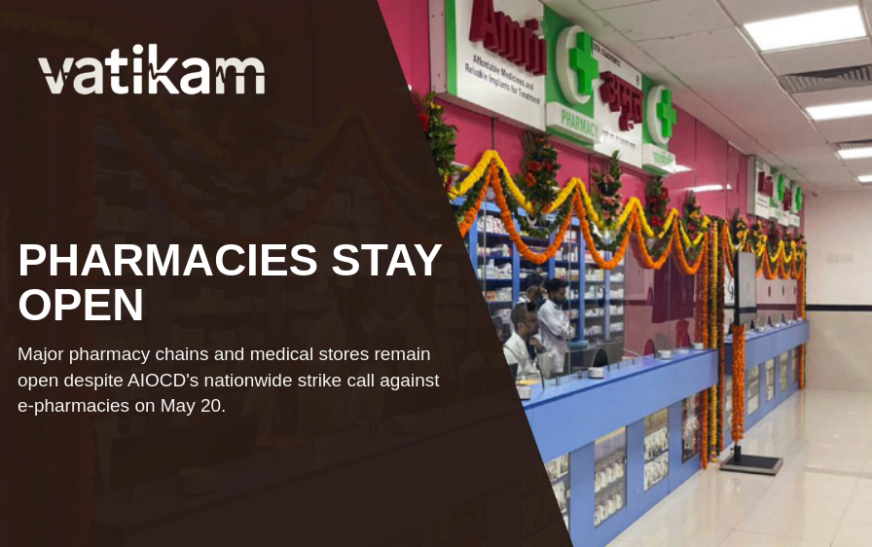
On May 20, 2026, despite the All India Organisation of Chemists and Druggists (AIOCD) calling for a nationwide strike against e-pharmacies, all major pharmacy chains, hospital-attached medical stores, Jan Aushadhi Kendras, and AMRIT Pharmacy outlets across India will remain open. This decision comes from various sources confirming that access to essential medicines will not be disrupted.
The Issue: AIOCD’s Protest Against E-Pharmacies
The AIOCD, representing over 12.4 lakh chemists and drug distributors, announced a one-day shutdown to protest against what they describe as the unregulated functioning of online pharmacies. The organisation alleges that e-pharmacies are exploiting regulatory relaxations introduced during the COVID-19 pandemic to operate without proper prescription verification. This has reportedly led to the reuse of old prescriptions and an increase in fake AI-generated prescriptions, accelerating the public health concern of antimicrobial resistance (AMR).
Concerns Raised by AIOCD
- E-pharmacies allegedly sell medicines without stringent prescription checks.
- Rise in use of fake and AI-generated prescriptions facilitating misuse of antibiotics and habit-forming drugs.
- Predatory pricing and deep discounting by corporate e-pharmacy platforms disrupting market fairness.
- Threat to survival of small and independent chemists, particularly in rural and semi-urban areas.
- Continuation of emergency pandemic notification G.S.R. 220(E) seen as weakening drug regulation frameworks.
Stakeholders’ Response and Government Review
Representatives from the AIOCD met with the Central Drugs Standard Control Organization (CDSCO), the national drug regulator, to express their grievances. The regulator assured that the concerns are under active review and the regulatory framework governing the pharmacy sector is being thoroughly examined to address legitimate retail pharmacy stakeholders’ issues.
Recognising the significant risks to public health, many retail pharmacy associations have chosen not to support the proposed strike. Associations from 12 states and Union Territories, including West Bengal, Kerala, Punjab, Maharashtra, Karnataka, Haryana, Uttar Pradesh, Ladakh, Gujarat, Chhattisgarh, Sikkim, and Uttarakhand, have provided written assurances that they will remain operational during the strike.
Importance of Continuous Medicine Supply
Sources highlight that any disruption in chemist shop operations could seriously inconvenience patients, especially vulnerable groups who rely on continuous access to life-saving and essential medicines. The emphasis remains on safeguarding patient welfare during the ongoing review process of regulatory frameworks.
The Regulatory Landscape and Market Dynamics
The AIOCD has demanded the immediate withdrawal of the emergency COVID-19 notification G.S.R. 220(E) and the e-pharmacy framework notification G.S.R. 817(E), arguing that these undermine established drug safety checks as per Drug Rule 65. The organisation calls for a comprehensive “level playing field” policy that would halt predatory corporate discounting and ensure fair competition.
According to AIOCD, the government currently sets profit margins for essential medicines through the National Pharmaceutical Pricing Authority (NPPA) and Drug Price Control Order (DPCO) norms. However, deep discounting by large e-pharmacy chains challenges market stability and threatens small pharmacy businesses that play a critical role in India’s healthcare system.
Conclusion
The planned nationwide strike by AIOCD against e-pharmacies has not gained unanimous support from retail pharmacy stakeholders across India. The decision by major pharmacy outlets to remain open highlights the commitment to uninterrupted medicine availability for patients nationwide. Meanwhile, the ongoing review by regulatory authorities signals possible future reforms to balance innovation in pharmacy services with the protection of public health and small-scale pharmacists.
As the situation evolves, patients and healthcare providers alike await detailed government guidelines and regulatory updates that could shape the future landscape of pharmacy services in India.