
High Rate of Asymptomatic Tuberculosis Cases Revealed in Northeast India Screening
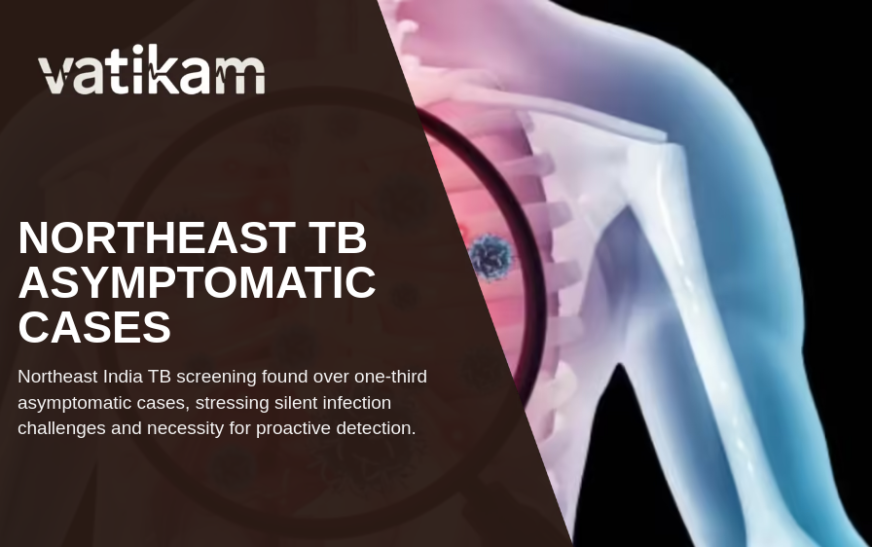
A recent comprehensive tuberculosis (TB) screening program in Northeast India has shed light on a critical public health concern: over one-third of TB cases detected were asymptomatic. This finding poses significant challenges as silent TB infections often remain undetected, hampering timely treatment and control efforts. In this article, we explore the results of the screening initiative, its implications, and the innovative approaches being employed to tackle this issue.
Tuberculosis Screening in Northeast India: Key Findings
During the period from January to October 2025, the Health Ministry’s Annual Report 2025-26 highlights that out of 41,727 TB cases identified under the National Tuberculosis Elimination Programme (NTEP) among vulnerable groups in the Northeast region, 14,356 cases — approximately 34% — were found to be asymptomatic. These individuals were unlikely to have sought medical care voluntarily due to the absence of symptoms.
The screening covered 3.9 million vulnerable individuals across eight Northeastern states, involving about 596,000 people who underwent chest X-ray examinations. This approach helped in detecting infections that otherwise might have remained hidden, thereby highlighting the importance of active case-finding compared to passive diagnosis.
State-wise Distribution of Asymptomatic TB Cases
- Assam: 10,362 asymptomatic cases
- Meghalaya: 1,055 cases
- Nagaland: 857 cases
- Tripura: 510 cases
- Arunachal Pradesh: 479 cases
- Manipur: 465 cases
- Sikkim: 380 cases
- Mizoram: 248 cases
The Challenge of Asymptomatic Tuberculosis
Asymptomatic TB infections are often termed “silent” because individuals do not experience typical symptoms that prompt medical consultation. This delays diagnosis and treatment, increasing the risk of transmission within communities. Public health experts emphasize the need for shifting from a passive to an active approach in TB detection to effectively curtail the spread.
Advancements and Impact on TB Control Efforts
The aggressive screening strategy has led to an increase in the presumptive TB examination rate by 28%, rising from 2,062 per lakh population in 2024 to 2,645 per lakh in 2025. The region is supported by 1,560 microscopy centers and 562 molecular testing facilities, which play a critical role in TB diagnosis and management.
In 2025, the Northeast region notified 62,123 TB cases with 91% of those patients initiating treatment. The treatment success rate in the region stood at an encouraging 89%. Moreover, integrated care approaches were adopted with 90% of patients having a known HIV status, 84% being screened for diabetes, and over 84% undergoing rifampicin drug-susceptibility testing to detect drug resistance early.
Use of Artificial Intelligence in Early Detection
Several Northeastern states have embraced technology-driven solutions to enhance early detection of TB. Meghalaya has introduced the “Cough Against TB” application and portable AI-enabled X-ray units. Nagaland and Arunachal Pradesh are utilizing AI-assisted screening methodologies in community-based settings, improving the accuracy and timeliness of TB diagnosis.
Conclusion
The high proportion of asymptomatic TB cases discovered through extensive screening in Northeast India underscores the evolving landscape of TB diagnosis and public health interventions. Active case-finding, combined with advanced technologies such as AI-based screening, is crucial to identifying hidden infections and ensuring early treatment initiation. These efforts contribute significantly to India’s ambitious goal of eliminating tuberculosis and protecting vulnerable populations.
Author: Anuja Jaiswal, Senior Assistant Editor with 18 years of health journalism experience.