
How Advanced Analytics and AI Partnerships Are Revolutionizing the Biopharma Value Chain
Artificial intelligence (AI) and advanced analytics are reshaping the pharmaceutical and biopharmaceutical industries, driving innovation from drug discovery to manufacturing and supply chain management. Strategic partnerships between biopharma companies and AI technology providers are unlocking new efficiencies and insights, ultimately improving patient outcomes. This article explores how these collaborations are transforming the biopharma value chain and the key considerations for ensuring data integrity and regulatory compliance.
The Power of AI in Drug Discovery and Research
AI’s primary value in drug discovery lies in its ability to connect disparate data signals that were previously siloed. These data types include molecular structures, biological assay results, patient demographics, and clinical site performance metrics. By integrating these diverse datasets, AI helps researchers make higher-quality scientific decisions rather than simply generating autonomous answers.
For example, at Sanofi, AI-driven disease-specific target identification engines integrate genetics, proteomics, transcriptomics, and single-cell data. This integration helps researchers assess target druggability, tissue expression patterns, and determine the optimal therapeutic approach. Such use of AI accelerates the identification of promising drug targets and streamlines early drug development phases.
Embedding Human Oversight in AI Workflows
While AI offers tremendous potential, experts unanimously stress that human oversight must be structurally embedded within AI workflows—not added as an afterthought. This approach ensures that AI outputs are interpretable, traceable, and defensible, which is crucial in regulated biopharma environments.
Richard Jaenisch, Senior Director at Open Biopharma, highlights the non-negotiable need for explainability in AI systems used in manufacturing and regulatory environments. Outputs must be auditable and clearly linked to their data sources for compliance with inspection standards.
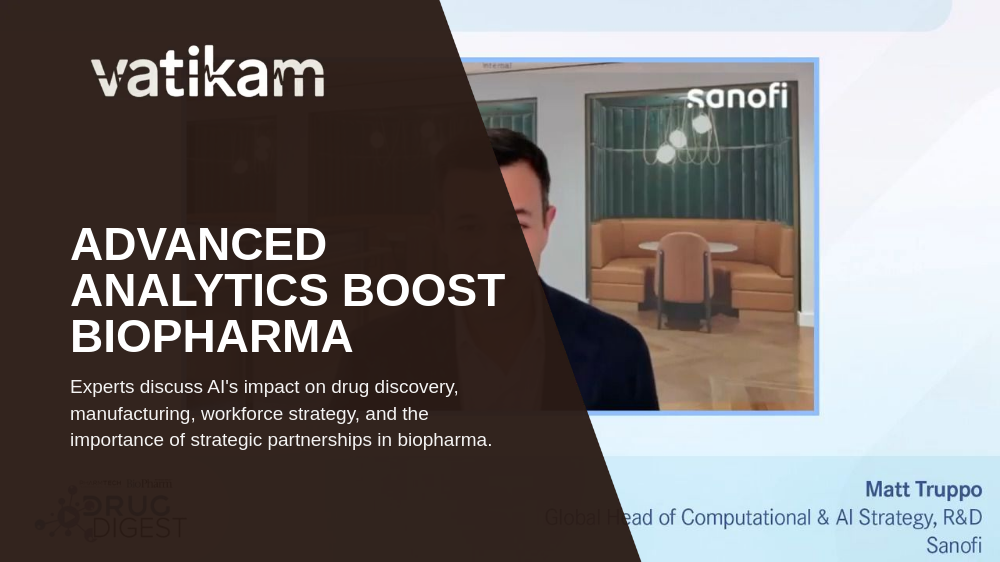
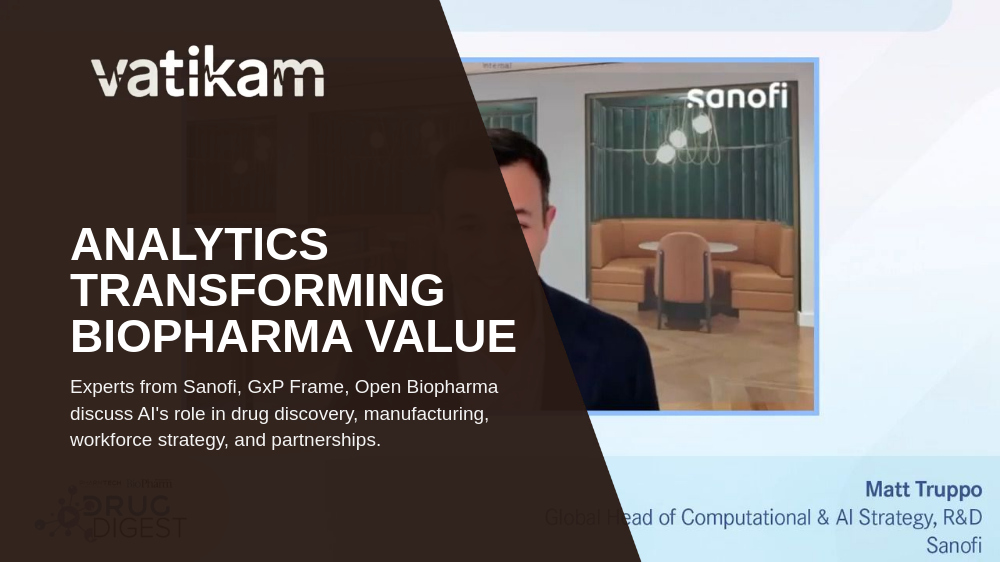
Matt Truppo, Global Head of Computational & AI Strategy at Sanofi, underscores the importance of data governance, source traceability, and stating model uncertainty as prerequisites for trustworthy AI integration in research and manufacturing operations.
Operational Benefits of AI in Manufacturing and Supply Chain
Beyond discovery, AI’s most valuable applications in manufacturing and supply chain are often operational rather than headline-grabbing. Brian Drapeau, founder of GxP Frame, highlights key areas where AI delivers significant impact:
- Deviation management
- Batch record review automation
- Predictive maintenance of equipment
- Supply and demand forecasting
In cell and gene therapy (CGT), supply chains are patient-specific, so AI’s role in ensuring the chain of identity and chain of custody is critical. Because no single manufacturer owns the full CGT supply chain, cross-company partnerships are essential to maintain these standards effectively.
The Importance of Strategic Partnerships in AI Integration
Effective AI integration requires partnerships capable of spanning multiple domains while maintaining strict data governance. According to Drapeau, “Completion is not competency”—meaning executing AI-assisted tasks isn’t enough without the independent judgment to critically evaluate and troubleshoot AI model outputs.
These collaborations help biopharma companies leverage cutting-edge AI tools without compromising data integrity or regulatory compliance.
Leadership Insights: Expert Perspectives on AI in Biopharma
- Matt Truppo, Sanofi: With a PhD in Chemistry and more than 20 years in the industry, Truppo leads Sanofi’s AI strategy across therapeutic areas to accelerate R&D timelines and develop first-in-class therapies.
- Richard Jaenisch, Open Biopharma: Bringing 15 years of experience in patient advocacy and STEM education, Jaenisch spearheads AI integration projects focused on biomanufacturing training and explainable AI systems.
- Brian Drapeau, GxP Frame: An expert in workforce development and pharmaceutical manufacturing, Drapeau emphasizes operational AI applications and regulatory compliance as key to successful integration.
Conclusion
Advanced analytics and AI are ushering in a new era for the biopharma industry, enabling breakthroughs in drug discovery, manufacturing efficiency, and supply chain reliability. However, the success of AI integration hinges on strategic partnerships that prioritize human oversight, explainability, and rigorous data governance. As these technologies evolve, their synergy with expert human judgment will ensure safer, faster, and more effective development of life-changing therapies.
Stay informed about the latest advancements in pharma technology and strategic AI partnerships to remain competitive in this rapidly evolving landscape.