

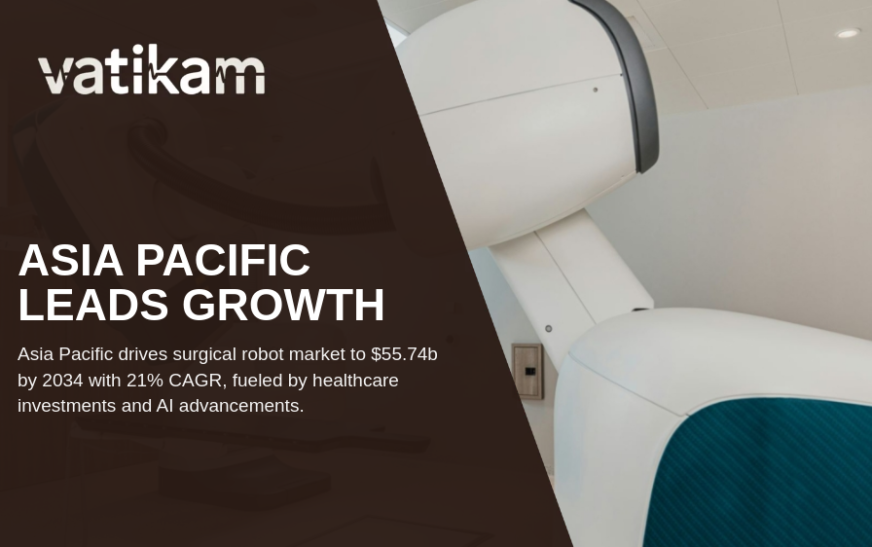
Asia Pacific to Lead Surgical Robots Market Growth through 2034: Polaris Market Research
The surgical robots industry is on a trajectory of remarkable expansion, with Asia Pacific poised to be at the forefront of this growth. According to a recent report from Polaris Market Research, the global surgical robots market is expected to surge from $15.98 billion in 2026 to an impressive $55.74 billion by 2034. This expansion is driven by rapid advancements in healthcare technology and an increasing preference for minimally invasive surgical procedures worldwide.
Asia Pacific: The Fastest Growing Surgical Robots Market
Polaris Market Research forecasts that the Asia Pacific region will experience the fastest growth in the surgical robots sector, with a compound annual growth rate (CAGR) of 21% through 2034. This growth rate significantly outpaces the global average CAGR of 16.9%, positioning the region as a leading force in transforming surgical care.
Several key factors contribute to this robust market expansion:
- Rising Healthcare Investments: Increased funding and investments in healthcare infrastructure across Asia Pacific countries are enabling hospitals and clinics to acquire advanced surgical technologies.
- Collaborations and Partnerships: Strategic alliances between global medical technology companies and regional players facilitate technology transfer and localized innovations.
- Adoption of Advanced Surgical Solutions: Growing acceptance and demand for robotic-assisted surgeries, which offer precision, shorter recovery times, and improved patient outcomes.
Country Spotlight: India’s Surge in Surgical Robotics Adoption
Among individual countries, India is projected to lead with the highest growth in surgical robot adoption, with an expected CAGR of 18.5%. This surge is largely attributed to:
- Increased foreign direct investment (FDI) in the healthcare sector.
- The entry and scaling of new medical technology providers into the Indian market.
- Government initiatives supporting healthcare modernization and technological advancements.
Global Demand Drivers for Surgical Robots
The global demand for surgical robots is primarily propelled by the rising use of minimally invasive procedures across various medical specialties, including urology, gynecology, orthopedics, and neurosurgery. The American Society of Plastic Surgeons reported approximately 23 million minimally invasive cosmetic procedures performed in 2022 alone, highlighting the widespread shift towards less invasive surgical techniques.
Role of Artificial Intelligence in Robotic Surgery
Another major accelerator in the surgical robots market is the growing integration of artificial intelligence (AI). AI enhances robotic-assisted surgery by:
- Supporting precise surgical planning.
- Improving instrument control and maneuverability.
- Providing real-time insights and feedback during procedures to optimize outcomes.
Notable advancements include the launch of Healinno Tech’s AI-enabled metaFlow Waterjet Surgical Robot in March 2026 and the regulatory clearance of Intuitive Surgical’s da Vinci 5 system in 2024, which boasts over 150 enhancements compared to its predecessor.
Market Segments and Adoption Challenges
From a product perspective, surgical instruments and accessories are expected to exhibit the fastest growth with a projected CAGR of 22.5% through 2034, reflecting ongoing innovation and demand for specialized components.
Hospitals remain the primary adopters of robotic-assisted surgery technology, accounting for approximately 80% of the market revenue in 2025. This underscores hospitals’ pivotal role as end users in driving the surgical robots market forward.
Despite the promising outlook, adoption faces challenges, particularly workforce shortages. Successful implementation of robotic surgery requires specialized training and certification for surgeons and operating staff, presenting a bottleneck to broader adoption.
Conclusion
The Asia Pacific region is on track to lead the global growth of the surgical robots market through 2034, driven by significant healthcare investments, technological collaborations, and adoption of AI in surgical procedures. Countries like India exemplify the rapid development with their surge in market activity.
As surgical robots continue to revolutionize minimally invasive surgeries, the industry is expected to reach new heights, offering improved patient outcomes and ushering in a new era of precision medicine.