
Arogya Vishwa: India Leading the Global Revolution in Accessible Healthcare
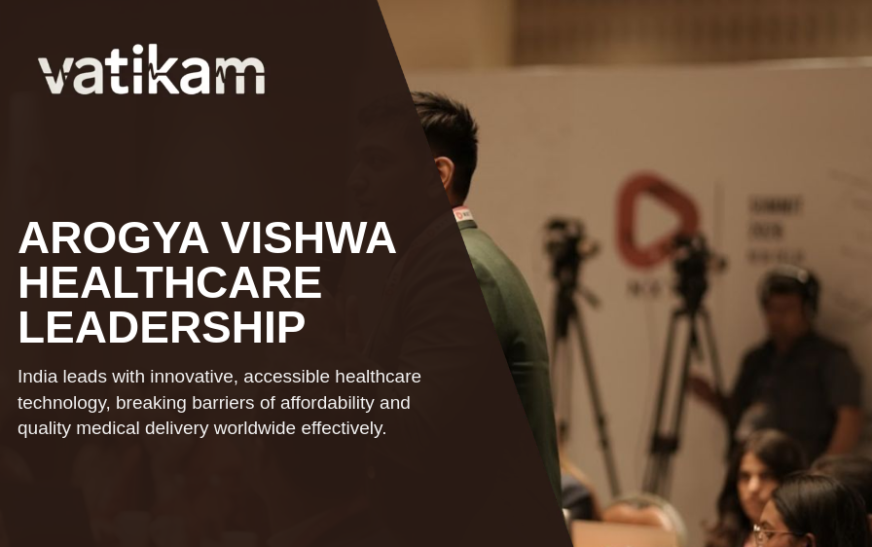
Accessibility and affordability of quality healthcare remain significant challenges in many countries. India, with its rapid technological advancements and innovative healthcare solutions, is emerging as a global leader in health technology integration and genomics. This transformation is making world-class medical care accessible to millions, both within India and beyond its borders.
Bridging Healthcare Gaps Across Diverse Populations
Consider two patients: one traveling from a small Tier-3 town in India to a metropolitan city for specialized care, and another, an international patient seeking affordable high-end surgery. India’s healthcare infrastructure is evolving to ensure both receive equally excellent, affordable treatment. This is being propelled by the strategic deployment of artificial intelligence (AI) and digitization across healthcare services.
The Role of Artificial Intelligence in Public Health
AI has revolutionized multiple facets of healthcare delivery in India, from early diagnostics to complex health informatics. Integrating AI in disease screening—covering common ailments like tuberculosis to advanced oncogene tracking in cancer—has increased early detection rates. This proactive approach shifts focus from costly secondary treatments to early-stage prevention and management.
Examples of AI in Clinical Practice
- Thermalytix by NIRAMAI: A non-invasive breast cancer screening tool using thermal imaging and AI to detect abnormalities early.
- AI-enabled Stethoscopes: Devices that analyze heart and lung sounds with machine learning, enhancing diagnostic accuracy in rural clinics.
- Machine Learning in Radiology: Improving efficiency and precision in imaging interpretation.
These innovations reduce diagnosis time, improve workflow efficiency, and extend advanced diagnostics to underserved rural areas.
The Digital Backbone: Ayushman Bharat Digital Mission
India’s Ayushman Bharat Digital Mission (ABDM) has significantly accelerated digital health adoption by issuing over 800 million unique Ayushman Bharat Health Account (ABHA) IDs. This creates a unified health record for patients, tightly integrated with government schemes like the Pradhan Mantri Jan Arogya Yojana (PM-JAY), providing financial protection for specialized treatments.
Precision Medicine: The Future of Indian Healthcare
Looking ahead to Viksit Bharat 2047, India is pioneering precision medicine by blending genomic sequencing with AI and behavioral analytics. This empowers clinicians to diagnose rare and complex diseases faster and more accurately.
- Baseline diagnosis time for rare autoimmune diseases is expected to reduce by over 40%.
- Cancer detection accuracy is projected to improve by nearly 90% through genomic and AI integration.
The goal is to democratize advanced genome sequencing technology, making it as accessible and routine as measuring blood glucose levels at home. Handheld precision medicine devices could soon become a primary care staple.
India’s Rising Role in Global Medical Tourism
Alongside domestic healthcare innovation, India is strategically growing its medical tourism sector. By offering rapid, high-quality medical procedures at competitive prices—including doorstep healthcare services—India is set to become a preferred global destination for international patients seeking excellence and affordability.
Conclusion
India’s healthcare revolution, powered by AI, digital patient participation, genomic technology, and global outreach, is creating a new era of accessible, affordable, and precise medical care. As the nation moves towards its 2047 vision, it is not only improving health outcomes locally but also establishing itself as a global pioneer in the healthcare domain, setting benchmarks for others to follow.
Author: Dr. Ackshay Ambekar, Maharashtra University of Health Sciences & NXT Fellow 2026