
Top 10 Veterinary Practice Management Software: Features, Benefits & How to Choose
Veterinary Practice Management Software (VPMS) has become essential for animal hospitals, clinics, and specialty practices managing daily operations efficiently. This software consolidates appointment scheduling, medical records, billing, inventory, client communications, and reporting into one integrated system, streamlining workflows and improving patient care.
What is Veterinary Practice Management Software?
VPMS is designed to connect front desk, clinical, and administrative tasks in veterinary settings. Modern systems not only store medical records but also support automation, telehealth, digital payments, diagnostic integrations, AI-assisted documentation, and client portals.
Key Features of Veterinary Practice Management Software
- Appointment Scheduling: Manage doctor calendars, exam rooms, procedures, grooming, boarding, and follow-ups.
- Electronic Medical Records (EMR): Store SOAP notes, vaccine histories, lab results, prescriptions, and treatment plans.
- Billing and Payments: Generate invoices, process payments, manage estimates, and track client balances.
- Inventory Management: Track medicines, vaccines, supplies, controlled substances, and reorder notifications.
- Client Communication: Automate reminders, confirmations, discharge instructions, and follow-up messages.
- Diagnostic Integrations: Connect with labs, imaging, pharmacy, and diagnostic devices for seamless data flow.
- Reporting and Analytics: Monitor revenue, appointment metrics, provider productivity, inventory levels, and client retention.
- Security and Compliance: Implement user permissions, encryption, audit logs, and backup protocols to protect sensitive data.
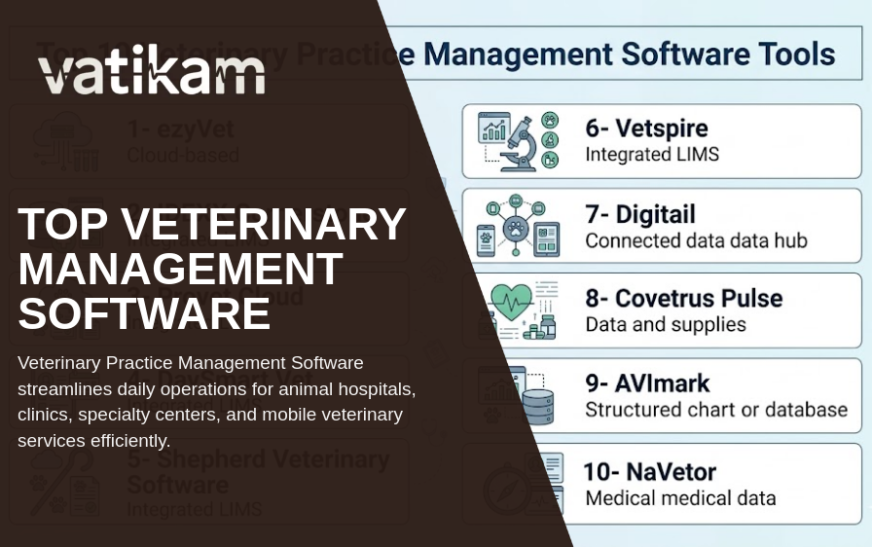
Top 10 Veterinary Practice Management Software Tools
1. ezyVet
Cloud-based, suited for busy clinics and multi-location groups. Offers extensive integrations, workflow automation, and operational dashboards. Best for growing practices needing a scalable solution.
2. IDEXX Cornerstone
Preferred for practices heavily using IDEXX diagnostic products. Supports comprehensive veterinary workflows with strong imaging and lab integration.
3. Provet Cloud
A cloud-first platform ideal for multi-location clinics. Includes scheduling, EMR, billing, client communication, and analytics, with strong international scalability.
4. DaySmart Vet
Practical cloud-based software for small to mid-sized clinics focusing on easy scheduling, billing, records, and communication.
5. Shepherd Veterinary Software
Modern cloud workflows emphasizing simplicity and usability. Suitable for clinics transitioning from older systems.
6. Vetspire
Cloud platform with a modern interface, ideal for clinics seeking operational visibility and centralized data across locations.
7. Digitail
Focused on digital workflows and client engagement, featuring AI-assisted documentation and pet parent app integrations.
8. Covetrus Pulse
Connects practice management with pharmacy and inventory services, providing an all-in-one ecosystem for aligned clinics.
9. AVImark
A mature, traditional system preferred by practices comfortable with established veterinary workflows.
10. NaVetor
Cloud-based with mobile-friendly features designed for small to mid-sized clinics needing flexible access and core functionality.
How to Choose the Right Software for Your Veterinary Practice
Choosing the best VPMS depends on practice size, specialty, budget, cloud preferences, and growth plans. Consider these factors:
- Practice Size & Complexity: Solo vets and small clinics should prioritize simplicity and affordability. Larger groups benefit from scalability, centralized reporting, and advanced integrations.
- Ease of Use: User-friendly interfaces ensure faster adoption by staff including veterinarians, technicians, and receptionists.
- Integration Needs: Check compatibility with diagnostic labs, imaging tools, payment processors, pharmacy systems, and client apps to avoid fragmented workflows.
- Security & Compliance: Vet clinics handle sensitive data; confirm encryption, backups, multi-factor authentication, and access controls are robust.
- Support and Implementation: Evaluate vendor support, onboarding assistance, training availability, and data migration services before committing.
Key Industry Trends in Veterinary Practice Management Software
- Cloud-based solutions dominate for their remote access, automatic updates, and lower IT maintenance.
- AI-assisted documentation reduces veterinary teams’ paperwork burden.
- Client communication is integrated directly within management systems via reminders and online booking.
- Inventory tracking automation ensures compliance and operational efficiency.
- Multi-location and corporate groups require centralized dashboards and standardized workflows.
Frequently Asked Questions
What does veterinary practice management software do?
It manages appointments, medical records, billing, inventory, client communication, diagnostics, and reporting all from one system.
Is cloud-based software better than on-premise?
Cloud systems offer easier access, automatic updates, and scalability, whereas on-premise solutions provide local control but require more IT management.
How much does VPMS cost?
Costs vary widely based on vendor, number of users, modules, support, and implementation. Consider full expenses including training and integrations.
Can VPMS reduce missed appointments?
Yes, automated reminders, confirmations, and online booking help reduce no-shows and improve client communication.
What should I test during a software demo?
Test real workflows like appointment creation, SOAP note entry, invoicing, inventory checks, lab result viewing, and client communication features.
Conclusion
Veterinary Practice Management Software plays a crucial role in modern animal care operations by connecting clinical, administrative, and operational workflows. Careful evaluation considering size, specialty, technology preferences, integrations, and support will help clinics find the optimal solution that enhances efficiency and patient outcomes. Popular tools like ezyVet, Provet Cloud, and IDEXX Cornerstone lead cloud and integration-rich markets, while others like Shepherd, Digitail, and DaySmart Vet are excellent for usability and client engagement. Always shortlist, conduct workflow-based demos, verify integration and migration needs, and involve your veterinary team before making a final decision.