
AI Osteoporosis Screening Market Set to More Than Double by 2036
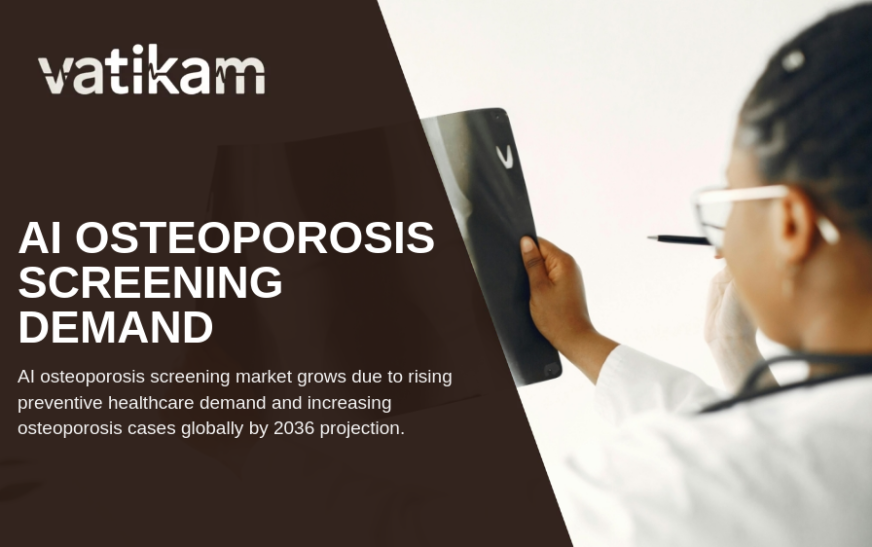
The global market for artificial intelligence (AI) in osteoporosis screening is projected to expand significantly, growing from $460 million in 2026 to $1.14 billion by 2036. This impressive annual growth rate of 9.5% reflects a critical shift in healthcare fueled by rising awareness of preventive care, an aging population, and the increasing adoption of AI technologies in diagnostic imaging.
Rising Demand for Preventive Healthcare and Osteoporosis Screening
Osteoporosis, a condition characterized by weakened bones and increased fracture risk, is becoming more prevalent as global populations age. Early and accurate detection is vital for preventive healthcare strategies to reduce fractures and associated treatment costs.
Healthcare providers are leveraging AI to analyze imaging data from DXA scans, CT images, and X-rays, assessing bone mineral density and fracture risk more effectively than traditional methods. This technology supports earlier interventions, improving patient outcomes and reducing long-term healthcare expenses.
Market Growth Drivers
- Expansion of AI-enabled DXA Analysis: DXA (dual-energy X-ray absorptiometry) remains the primary clinical tool for bone density assessment. AI enhances the efficiency and accuracy of DXA image analysis, automating fracture risk scoring and reporting.
- Integration with Hospital Systems: AI screening tools are increasingly integrated into hospital imaging and health record infrastructures such as PACS (Picture Archiving and Communication System), RIS (Radiology Information System), and electronic health records, facilitating streamlined workflows.
- Opportunistic Screening: Adoption of AI in opportunistic CT and X-ray screening methods is growing, enabling bone health assessments during imaging done for other purposes.
- Interoperability and Cloud-Based Platforms: The demand for interoperable imaging systems and the rise of cloud-based AI platforms connected to tele-radiology services support more flexible and accessible screening solutions.
- Preventive Healthcare Models: The global shift towards preventive healthcare encourages the deployment of AI technologies to identify risks earlier and personalize patient care.
Regional Growth and Key Stakeholders
The Asia-Pacific region is anticipated to experience the highest growth, driven by accelerating healthcare digitalization and increasing imaging volumes. Hospitals and diagnostic centers are the principal end-users, accounting for about 48% of market demand, as they deploy AI tools alongside high-volume imaging systems to enhance diagnostic accuracy and workflow efficiency.
Leading companies in the AI osteoporosis screening market are focusing on developing deep learning algorithms, achieving regulatory approvals, and ensuring clinical validation. Many invest in seamless integration with existing hospital imaging systems and pursue partnerships with healthcare networks and imaging providers to expand market penetration.
Challenges and Market Constraints
Despite promising growth, the market faces several challenges including:
- Regulatory Approval Processes: Securing clearance from healthcare regulatory bodies is complex and time-consuming.
- Reimbursement Policies: Variability in reimbursement frameworks can hinder adoption by healthcare providers.
- Interoperability Limitations: Technical barriers to integrating AI tools with diverse hospital systems must be overcome.
- Need for AI Transparency: Clinicians demand AI systems that offer transparent decision-making processes and integrate smoothly into existing workflows.
Future Outlook
As AI technologies continue to evolve, their role in osteoporosis screening is expected to grow substantially, improving early detection and patient outcomes. The convergence of digitization, cloud computing, and AI-powered diagnostics will reshape the screening landscape and enable more personalized preventive healthcare strategies globally.
In summary, the AI osteoporosis screening market is poised for robust growth by 2036, backed by technological advancements, healthcare digitization, and an increasing focus on proactive bone health management.