
Smart Automation in Healthcare: Enabling Proactive, Always-On Care
Healthcare today largely operates in a reactive manner, where interventions occur after an issue arises. This approach often leads to clinical and operational obstacles such as missed appointments, delayed treatments, and denied claims, which ultimately affect both care quality and healthcare organizations’ efficiency.
Challenges in Current Healthcare Systems
Missed patient appointments not only delay necessary care but also disrupt physician schedules, underutilize resources, and reduce revenue. While reminder systems using automated calls or messages exist, they offer minimal flexibility for patients to respond or reschedule, leaving room for inefficiency.
Healthcare organizations generate vast amounts of clinical and operational data due to digital transformations, yet they often cannot act upon this data in a timely and coordinated way. This gap slows care delivery and increases administrative workloads, underscoring the need for more proactive healthcare models.
The Shift to Proactive, Always-On Care
Proactive healthcare leverages digital capabilities to anticipate and address patient and operational needs before they escalate. It uses data insights to identify risks—such as potential missed appointments or claim delays—and triggers timely interventions. Instead of passive monitoring or generating excessive alerts, this approach focuses on closed-loop actions that ensure issues are resolved promptly, transforming healthcare delivery from reactive to actively managed care.
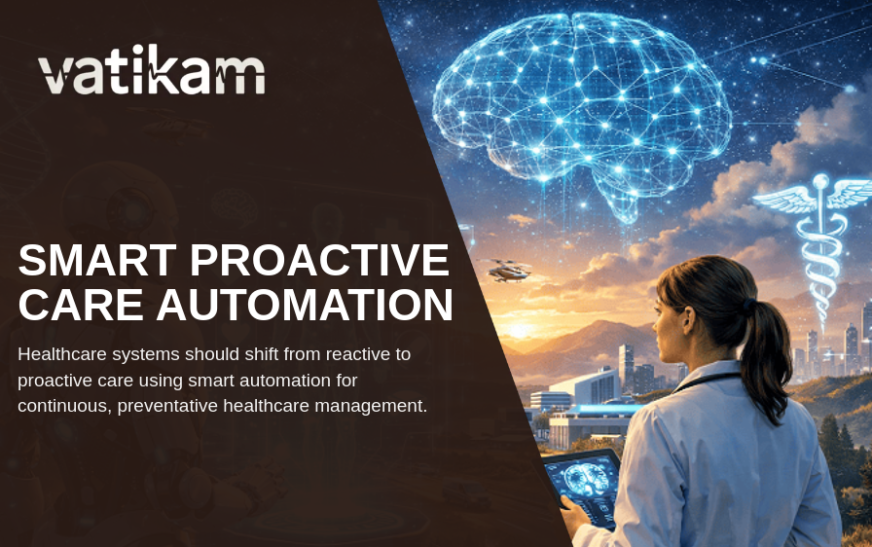
Proactive Healthcare Powered by Smart Automation
Smart automation, combining Artificial Intelligence (AI) and Robotic Process Automation (RPA), is key to enabling proactive care. AI analyzes data patterns and risks, while RPA executes predefined actions like personalized patient communications or task assignments.
Optimizing Appointment Management
For example, AI models predict patients at high risk of missing appointments by analyzing historical behavior and contextual factors. With these insights, RPA can send personalized reminders with rescheduling options, simplifying communication. If a patient cancels, the system can automatically reassign the appointment slot in real-time, improving resource utilization and ensuring timely care.
Closing Care Gaps
Proactive care also identifies overdue tests and follow-ups crucial for chronic disease management. Manually tracking such gaps is time-consuming, especially when data is spread across multiple systems. AI-powered analysis of clinical records enables automated outreach via calls or messages, followed by real-time record updates, creating continuous care feedback loops and enhancing care consistency.
Streamlining Prior Authorization and Claims Management
Administrative complexities such as prior authorization and claim denials are often caused by missing or incorrect documentation, leading to delays and rework. Smart automation retrieves necessary data from clinical and billing systems, prepares structured case files, and uses AI to preemptively flag potential issues. This shift from correction to prevention improves turnaround times and strengthens revenue cycles.
Enhancing Remote Monitoring with Action-Triggered Workflows
Remote patient monitoring generates substantial data and alerts, which can overwhelm clinicians. Smart automation prioritizes actionable insights by assessing risk levels using AI and triggering escalations only when necessary. Automated workflows route these cases to the appropriate care team member with relevant context, accelerating interventions while reducing cognitive load for healthcare providers.
The Future of Healthcare: Human-Centered and Technology-Enabled
Despite technology advances, healthcare will remain human-led. Smart automation acts as an enabler by coordinating data across platforms and handling routine workflows. This allows clinicians to focus on high-value activities requiring judgment, empathy, and expertise.
The goal is not to automate healthcare but to support caregivers. By automating repetitive operational tasks, healthcare providers can dedicate more attention to patient interactions and complex decision-making, improving overall care delivery and organizational efficiency.
In summary, smart automation ushers in a new era of proactive, always-on healthcare that anticipates challenges and facilitates timely, appropriate interventions, benefiting both patients and providers.