
From Fitness to Future: How AI-Powered Smartwatches Are Shaping Modern Lifestyles
Smartwatches have transformed from simple fitness trackers to versatile lifestyle companions that integrate health monitoring, productivity, and connectivity in one sleek device. No longer just tools for counting steps or checking the time, today’s AI-powered smartwatches offer a seamless blend of technology and personal wellness that enhance everyday life.
The Evolution of Smartwatches in 2026
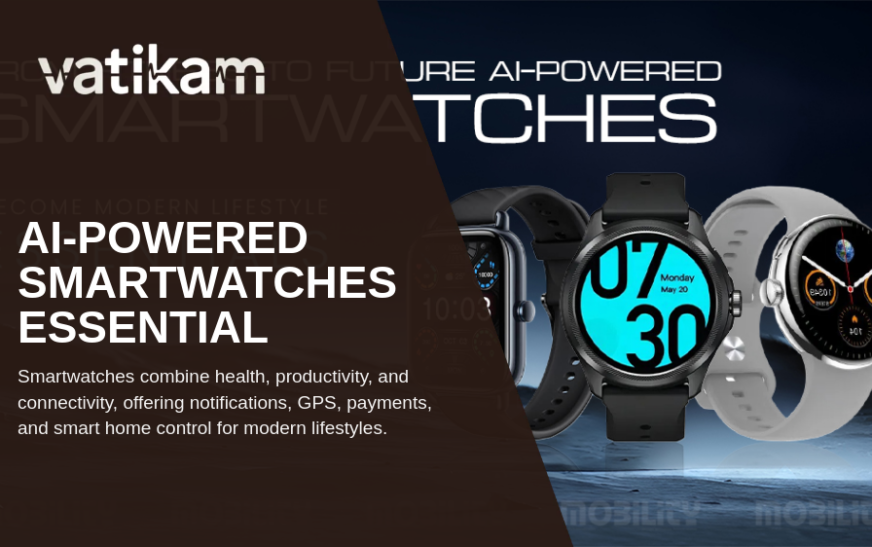
Smartwatches now provide instant access to notifications, calls, messages, contactless payments, and GPS services directly from the wrist, limiting the need to constantly reach for smartphones. More recently, smartwatches have integrated with smart home systems, enabling users to control connected devices conveniently and more efficiently.
This multifunctional role underscores their significance as practical yet lifestyle-enhancing gadgets, making them essential for modern users seeking a blend of utility and style.
Global and Indian Market Overview
According to the TechRT Report:
- The global smartwatch market was valued at $37.24 billion in 2024 and grew to an estimated $40.67 billion in 2025.
- Growth projections suggest the market could reach between $44.28 billion and $57.2 billion by 2026, with long-term forecasts estimating an expansion to $82.23 billion by 2033.
- High-end smartwatches accounted for 45.6% of the total market share in 2025, reflecting a premium segment dominance.
In India, despite a 17.6% year-on-year decline in smartwatch shipments in FY25, over 30 million units were shipped, signaling robust demand and market potential.
Key Industry Insights and Market Dynamics
India’s Emerging Role
Experts from leading companies emphasize India’s growing importance not only as a consumption hub but increasingly as a center for design and innovation in the smartwatch sector:
- Mr. Madhav Sheth (NxtQuantum Shift Technologies): Highlights India’s youthful demographic, growing digital adoption, and health awareness driving rapid market growth. India is moving from affordability-driven adoption to demand for premium, design-focused devices.
- Mr. Varun Gupta (GOBOULT): Notes premiumisation is reshaping the Indian market, with collaborations between tech, fashion, and automotive sectors to deliver aspirational products, like the Ford Mustang smartwatch collaboration.
- Mr. Akhilesh (Bluei): Identifies India as a strategic market with USD 11B+ potential by 2033, fueled by affordability, expanding distribution in Tier 2 and Tier 3 cities, and a shift to feature-rich devices.
- Mr. Lalit Arora (UBON) & Mr. Varin Agarwal (SnapUp): Stress the importance of value, reliability, and everyday usability, particularly for first-time smartwatch users in emerging Indian markets.
Regional Trends in Asia-Pacific
Asia-Pacific remains the most influential wearable market globally. Key factors include:
- Rapid adoption driven by strong smartphone penetration and a fitness-oriented lifestyle.
- Government initiatives promoting digital health and localized pricing strategies.
- Shift from affordability to experience-driven consumer preferences, with emphasis on design, ecosystem integration, and brand identity.
- Expansion in both metro and non-metro regions fueled by e-commerce and offline retail growth.
Health Monitoring and Lifestyle Integration
Smartwatches now incorporate clinical-grade sensors enabling comprehensive health tracking such as heart rate, SpO2, sleep analysis, and activity monitoring. These features have become primary adoption drivers:
- Consumers expect devices that deliver meaningful health insights alongside lifestyle conveniences like calls, notifications, and music control.
- The emphasis is on creating wearable tech that balances health functionality with sleek design and user-friendly interfaces.
Brands are now collaborating with fashion and automotive sectors to create aspirational products that merge technology with personal style.
Technological Advancements and Smartwatch Functionality
Modern smartwatches leverage system-on-chip (SoC) architectures, integrating CPUs, GPUs, memory, and multiple connectivity modules—Bluetooth, Wi-Fi, NFC, LTE—to deliver performance and independence from smartphones. Upcoming technology trends include:
- Sensor miniaturization enabling advanced health diagnostics.
- Standalone LTE and 5G capabilities reducing smartphone dependency.
- Deeper integration with AI to provide predictive health analytics and real-time responsiveness.
This evolution will transform smartwatches from companions into standalone personal assistants trusted for health, safety, and communication.
Addressing Consumer Needs: Battery Life, Pricing, and Design
Despite burgeoning features, consumer priorities remain focused on battery longevity, pricing, and product reliability. Industry responses include:
- Optimization of software and chipsets for extended battery life and fast charging capabilities.
- Shift toward premium design and build quality rather than competing solely on price.
- Offering feature-rich products at accessible price points, especially for emerging markets.
- Brand collaborations to deliver aspirational lifestyle tech products.
Brand Positioning in a Competitive Market
Leading brands differentiate through digital transformation, design innovation, and consumer-centric strategies:
- NxtQuantum Shift Technologies: Focus on intuitive, trusted products integrating wearables and earbuds for convenience.
- OUD – Loud & Clear: Youth-centric, value-driven with feature-rich, affordable smartwatches.
- SnapUp: Products tailored for the Indian market emphasizing dependability and honest pricing.
- GOBOULT: Design-first approach balancing style and functionality for trend-aware consumers.
- UBON: Bridging innovation with accessibility offering stylish, reliable wearables.
- Bluei & Tessco Mobiles: Emphasis on health-first, fitness tracking, and affordable quality.
The Future of AI-Driven Personalization in Smartwatches
Artificial intelligence is set to redefine the smartwatch landscape by turning data tracking into intelligent, personalized assistance. Future features will include:
- Predictive health analytics to identify early health risks and provide actionable alerts.
- Customized fitness plans, wellness coaching, and smart notifications based on user behavior.
- Medical-grade vital tracking with advanced sensors and AR features.
- Deep integration within connected ecosystems such as smart homes, vehicles, and AI assistants.
AI will change smartwatches from passive devices into proactive wellness companions that enhance everyday life while emphasizing privacy and accuracy.
Conclusion
Smartwatches today are indispensable lifestyle tools that merge health management, connectivity, and convenience. Advances in AI and technology position them as proactive personal assistants that do more than track—they anticipate and enhance user well-being. With rapid growth in markets like India and continued innovation worldwide, the future of smartwatches looks poised to transform how we live, work, and stay healthy.
As technology evolves, smartwatches will continue bridging the gap between fashion, function, and wellness, making them essential for the modern digital lifestyle.