
Kashmir’s Growing Cancer Challenge: The Critical Need for Enhanced Food Safety Monitoring
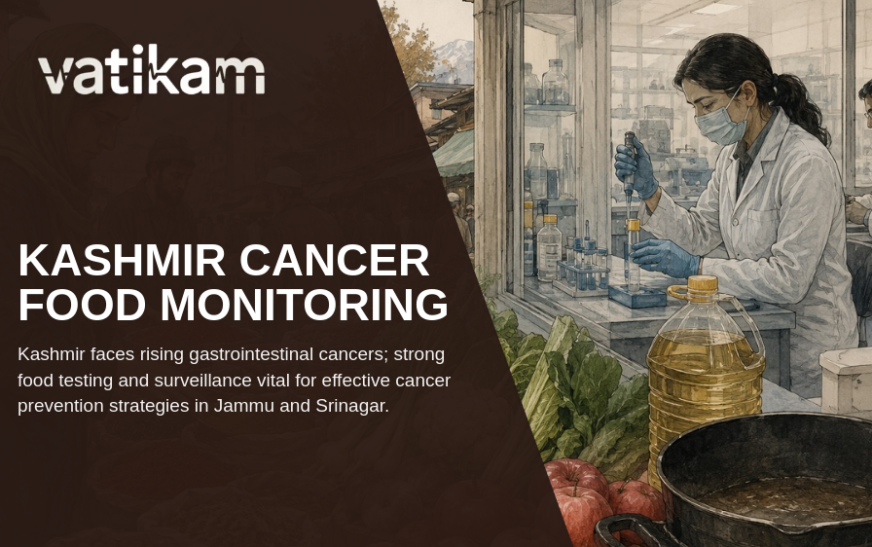
Cancer prevention often starts far before a patient reaches a hospital or screening camp. In Jammu and Kashmir, where gastrointestinal cancers are notably on the rise, the foundation of an effective cancer prevention strategy lies in rigorous monitoring of everyday food safety. This approach targets the very sources from which potential carcinogens may enter the body — local markets, kitchen spices, cooking oils, and food supply systems.
Rising Burden of Gastrointestinal Cancers in Jammu and Kashmir
Jammu and Kashmir is witnessing a growing incidence of stomach and colorectal cancers, posing complex public health challenges. This has garnered attention from the Indian Council of Medical Research (ICMR), which has intensified cancer screening and prevention programs across the region. But prevention must extend beyond hospitals to encompass environmental exposures, dietary habits, and the quality control of food products consumed daily.
Why Food Safety is Central to Cancer Prevention
Food safety directly impacts public health. Contaminated foods can be a vector for carcinogens and other harmful chemicals. The World Health Organization (WHO) has emphasized unsafe food as a major health risk linked to biological, chemical, and environmental contaminants. Exposure over time to substances like arsenic, lead, mycotoxins, and banned chemicals has been scientifically linked to various cancers and chronic diseases.
Worldwide, regulators detect industrial dyes, pesticide residues, heavy metals, and other contaminants entering food chains. Kashmir’s cancer profile makes such vigilance crucial.
The Case of Harmful Industrial Dyes
Synthetic dyes such as Sudan I, II, III, and IV, which are prohibited in many countries, have shown genotoxic and carcinogenic potential in scientific studies. Similarly, other dyes like Metanil Yellow and Rhodamine B present toxicological risks leading food safety agencies to closely monitor and restrict their use.
Beyond Dyes: Broader Food Contaminants
Food safety concerns also include pesticide residues, heavy metals including lead, cadmium, arsenic, mercury, contaminants formed during food processing, and harmful compounds generated by the repeated heating of cooking oils. Each of these has a documented impact on health and cancer risk.
Focus on Aflatoxins
Aflatoxins, especially aflatoxin B1, are potent naturally occurring carcinogens produced by fungi in improperly stored grains, nuts, and spices. Their strong connection to liver cancer makes regular aflatoxin surveillance a critical element of any food safety program.
Challenges with Cooking Oils
The reuse of cooking oils—common in many commercial kitchens—produces oxidation products and trans fats linked to harmful health effects including cancer. Regulating oil quality in eateries is essential for public health.
The Need for Scientific Evidence and Rigorous Testing
Currently, no conclusive public data confirms the widespread use of banned carcinogenic dyes or contaminants in Jammu and Kashmir’s food. While rumors of contamination circulate, only scientific testing can provide credible evidence to confirm or dispel such claims.
Authorities and regulators should pose critical questions to uphold food safety, such as:
- Are spices screened for prohibited industrial dyes?
- Do food colorants comply with legal limits?
- Are processed foods, sweets, and snacks regularly checked for adulterants?
- How often are fruits and vegetables tested for pesticide residues?
- Is there routine monitoring of heavy metals in food?
- Are aflatoxin levels regularly tracked in susceptible commodities?
- How closely are street-food vendors monitored for food safety compliance?
- What systems evaluate the quality and reuse of cooking oil in commercial settings?
Answers to these questions should be based on verified data, not assumptions.
Leveraging Modern Technology for Food Surveillance
Advanced analytical techniques, including High-Performance Liquid Chromatography (HPLC), Gas Chromatography-Mass Spectrometry (GC-MS), and Liquid Chromatography-Mass Spectrometry (LC-MS), enable precise detection of food contaminants. Building laboratory capacity in Jammu and Kashmir to conduct routine comprehensive food testing is vital for effective surveillance.
Ensuring Transparency Builds Public Trust
Regulatory authorities should publish detailed reports on food safety testing outcomes — numbers of samples tested, products examined, contaminants detected, violations identified, and enforcement actions taken. Transparent communication enhances public confidence and accountability.
Conclusion
Kashmir’s escalating cancer rates, particularly gastrointestinal cancers, demand a multifaceted strategy that integrates enhanced food quality monitoring as a cornerstone. Beyond screening and treatment, strengthening food safety surveillance can prevent carcinogenic contaminants from entering the food chain, reducing future cancer risk.
Scientific evidence, modern testing technology, and transparent public health policies must unite to safeguard the health of Jammu and Kashmir’s population.
Author: Dr. Umer Majeed Khaja, a cancer biologist and research scientist at SKIMS, Srinagar.