
Breakthrough Pancreatic Cancer Drug Trial Led by Indian-Origin Researcher Offers New Hope
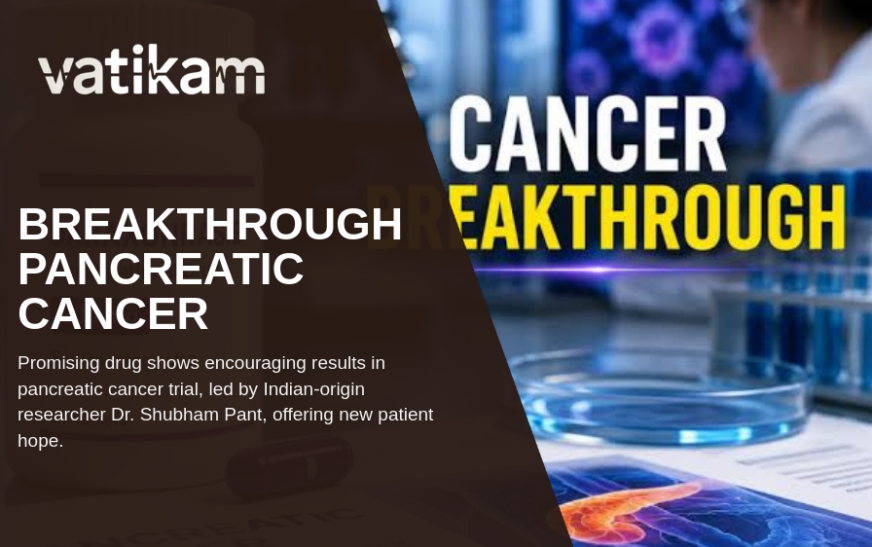
Pancreatic cancer, one of the deadliest and most challenging cancers to treat, has witnessed a promising breakthrough thanks to a major clinical trial led by Indian-origin oncologist Dr. Shubham Pant. The experimental drug, Daraxonrasib, demonstrated remarkable results in extending survival and improving quality of life for patients with advanced pancreatic cancer.
Understanding the Challenge of Pancreatic Cancer
Pancreatic cancer is notorious for its poor prognosis and limited treatment options. Approximately 80% of patients are diagnosed at Stage IV, when the cancer has already metastasized to other organs, such as the liver and lungs. This late diagnosis is primarily due to the pancreas’s deep location, which makes early symptoms hard to detect. Symptoms like indigestion, unexplained weight loss, and back pain are often mistaken for less serious illnesses, causing delays in diagnosis and treatment.
Survival rates for metastatic pancreatic cancer have remained largely unchanged for decades. Patients diagnosed at this advanced stage typically survive for about a year or less.
Daraxonrasib: A Targeted Therapy Revolutionizing Treatment
The breakthrough drug, Daraxonrasib, is a targeted therapy designed to inhibit the KRAS gene mutation, which is present in roughly 90% of pancreatic cancer cases. KRAS mutations drive cancer growth, making them critical targets for new therapies.
In the Phase III RASolute-302 clinical trial, patients who had already undergone one chemotherapy treatment were divided into two groups: one received the standard treatment while the other was administered Daraxonrasib. Historically, these patients have a median survival time of about six months.
However, the trial results showed that patients treated with Daraxonrasib achieved a median survival of 13.2 months—more than doubling the previous survival expectations. In addition to increased survival, patients reported better quality of life, including reduced pain, improved appetite, weight gain, and enhanced physical activity.
Significance Beyond Pancreatic Cancer
The implications of this discovery extend beyond pancreatic cancer. KRAS mutations are also common in other cancers, including lung and colorectal cancers. Consequently, researchers are now investigating the potential benefits of Daraxonrasib for treating these diseases as well.
Further global studies are underway to examine its effectiveness in newly diagnosed patients and those with earlier stages of cancer post-surgery.
Looking Ahead: Collaboration for Greater Accessibility
While experts emphasize that Daraxonrasib is not a cure, they acknowledge it as a pivotal advancement in combating one of the most challenging cancers. To maximize patient impact, there is a collective call to action for governments, healthcare providers, and pharmaceutical companies to collaborate, ensuring that innovative treatments like Daraxonrasib become accessible and affordable worldwide.
This breakthrough represents not only scientific progress but also renewed hope for patients and families affected by pancreatic cancer globally.
About Dr. Shubham Pant
Dr. Pant is a gastrointestinal oncologist at MD Anderson Cancer Center and served as a co-investigator on this pivotal study. His expertise and leadership reflect the vital contributions of Indian-origin researchers in advancing global cancer treatment.