
Global Cancer Workforce Crisis: A Looming Challenge Amid Rising Cancer Incidences by 2050
The world faces an unprecedented cancer workforce crisis as projected cancer cases surge by 75% by 2050, according to a recent Lancet Oncology Commission report. This alarming rise will coincide with a significant global shortfall of nearly 100 million cancer care workers, threatening to overwhelm health systems worldwide and exacerbate cancer-related mortality, especially in low- and middle-income countries (LMICs).
Rising Cancer Incidences: A Global Health Concern
The Lancet Oncology Commission on Cancer Workforce: A Global Crisis highlights that by 2050, the annual number of people diagnosed with cancer will reach 35 million, with estimated deaths soaring to 19 million. This staggering increase underscores the urgent need for a robust and well-equipped cancer workforce to meet the escalating demand for cancer diagnosis, treatment, and care.
Notably, more than 70% of new cancer cases are expected to emerge in LMICs, where healthcare infrastructure and workforce capacity remain limited. Current challenges include high rates of undiagnosed cancer cases—exceeding 60% in some parts of Africa—and significantly lower five-year cancer survival rates projected for Africa (34%) and Asia (39%) compared to over 60% in high-income countries such as the US and France.
The Cancer Workforce Shortage: A Critical Barrier to Effective Care
The report forecasts a looming deficit of approximately 100 million cancer care workers by 2050. The largest gaps are predicted among:
- Nurses and community health workers (about 68 million)
- Cancer diagnostic staff (about 16 million)
This shortage risks overwhelming healthcare systems and impeding the delivery of essential cancer care services globally. Even high-income countries will face workforce challenges that could compromise advancements in cancer outcomes.
Economic and Human Costs of Inaction
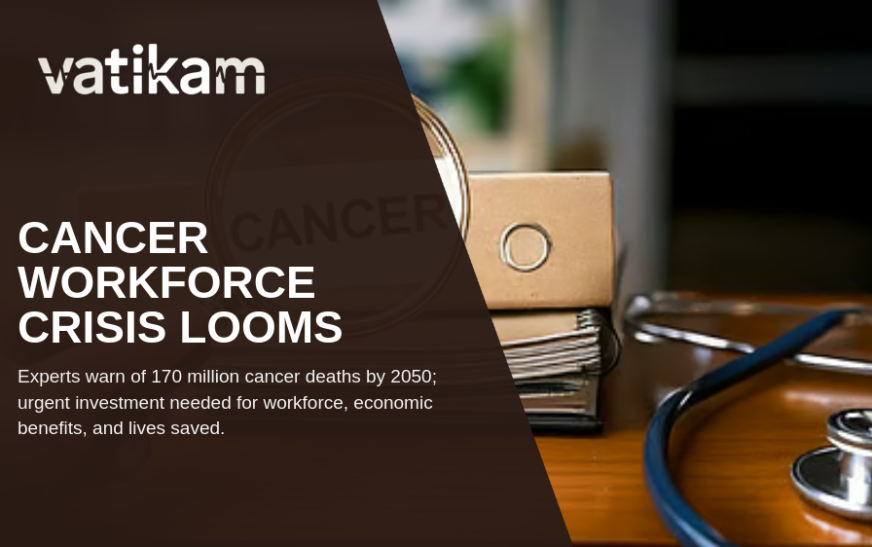
Investing in the global cancer workforce is not only a health imperative but also an economic priority. Experts warn that failure to act could result in 170 million preventable cancer deaths between 2030 and 2050. Conversely, strategic investment in workforce development could deliver $120 trillion in economic benefits and generate a $4 return for every $1 invested.
A Call to Action: The 7-Point Global Cancer Workforce Plan
The Lancet Commission calls for immediate, coordinated efforts to address the crisis through a comprehensive 7-Point Global Cancer Workforce Plan, which includes:
- Adoption of digital health and artificial intelligence (AI) technologies to optimize cancer diagnosis and treatment
- Country-specific strategies tailored to distinct personnel needs and cancer profiles
- Smarter workforce utilization and task-shifting to maximize existing human resources
- Future-ready education and training programs
- Sustainable financing models leveraging public-private partnerships
Expert Insights on Navigating the Crisis
Professor Mark Lawler from Queen’s University Belfast emphasizes the urgency: “The predicted rise in cancer cases contrasted with a shrinking workforce is a wake-up call that demands immediate action globally.” Similarly, Dr. Hedvid Hricak of Memorial Sloan Kettering Cancer Centre warns of a looming crisis if workforce shortages are not addressed urgently.
Dr. Zachary Ward from Harvard T.H. Chan School of Public Health explains the methodological rigor behind the projections, underscoring their robust policy implications for diverse settings worldwide.
Dr. Patrick Loehrer from Indiana University highlights the need for personalized national cancer control plans that reflect each country’s unique workforce requirements and sustainability measures.
Professor Andrew Scott from Olivia Newton-John Cancer Research Institute points to the critical need for prioritizing imaging workforce resources to ensure accurate diagnoses and treatment pathways.
The Role of Innovation and Digital Tools
Digital health technologies and AI are poised to play crucial roles in mitigating workforce shortages by reducing administrative burdens and enhancing diagnostic accuracy and treatment effectiveness. Professor Lawler notes that beyond cost savings, these tools empower healthcare professionals to focus more on patient care than paperwork.
Conclusion
The anticipated surge in global cancer cases coupled with an alarming shortage of cancer care personnel presents a formidable public health challenge. Immediate, strategic investment in workforce development, technology integration, and tailored national policies is essential to avert millions of premature deaths and harness significant economic benefits. The time to act is now — global health systems must prepare for this inevitable future to safeguard cancer care outcomes for all.